30 years of the Audi A4: The story of the Ingolstadt B-type
From B5 to B9, from 80 successor to company car favourite, the history of the A4


The Audi A4 is 30 years old? Really? I have some difficulty seeing the cars of my youth as emerging classics or even vintage cars. I feel like it was only yesterday that I was tinkering around with them. Instead, aren't they actually good young used cars?
And now I'm sitting here writing down the 30-year history of a model that still seems so young and fresh to me, as if I had just yesterday pressed my nose against the window of the local Audi dealership with my dad, while he dreamily raves about what it must be like to drive such a car as a family vehicle - as an estate, of course.
Gallery: Audi A4 all generations since 1994

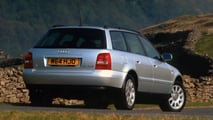
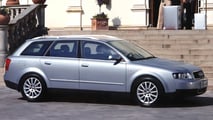
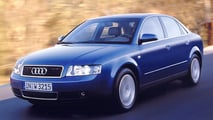
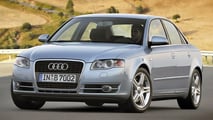
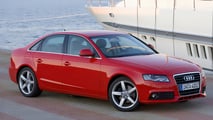
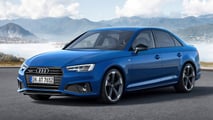
But well, we all have to cope with ageing on our own, but before Audi puts an A5 on the fossil-fuelled versions of its most-produced model, let's take a look at 30 years of the Audi A4. It sounds absurd even the second time I write it, but oh well, what the heck.
Audi A4 B5 (the 80 heir)
And to reassure us all a little, Audi can't really let go either, not only from the fossil-fuelled drive variants, but also from the Audi 80 back then, because the Ingolstadt-based company presented the A4 as its successor as early as November 1994. However, it took a few more years before they were able to completely break away from the B4 model with 826,000 units sold.
The Avant was produced until December 1995, the Audi Coupé until the end of 1996. And the convertible? In a nutshell: The timeless classic only came to an end in September 2000. A whole six years after the A4 was launched.
Audi A4 B5 Avant
However, the A4 B5 was not just a name change, as was occasionally the case with the A6. In terms of design, it replaced the dusty 1980s look of the Audi 80. Significantly rounder proportions, more courage to use kinks and edges, such as the one above the rear lights at the rear of the saloon. Although there was hardly any more space inside compared to its predecessor, travelling has now arrived in the future.
A completely new chassis with four-link front suspension has also been added to Audi's new mid-size class. For those who have not yet driven it, it was also an enormous step up from the 1980s in terms of driving dynamics: crisp, sporty, direct. Although not exactly maintenance-friendly, because the four wishbones tend to form an intimate, non-detachable connection with the steering knuckle. The result was that everything had to come out! A little tip for classic car enthusiasts: this can be expensive.
Gallery: Audi A4 (1994) driving report
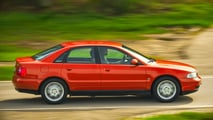
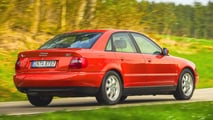
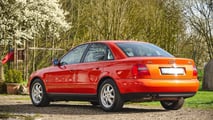
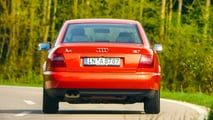
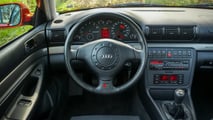
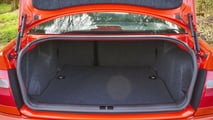
At the start of 1994, there were three four-cylinder, two six-cylinder petrol engines and a four-cylinder diesel engine, each with front-wheel or optional all-wheel drive. These included the striking 1.8-litre turbo five-valve engine with 150 PS right from the start. It was not until 1997 that the 2.5-litre six-cylinder diesel engine was added to the portfolio.
It wasn't until early 1996 that the A4 Avant replaced the Audi 80 as the estate version that my dad adored so much. Things got a little sportier a year later with the S4, while the RS4 Avant only joined the A4 community in June 2000 with a 2.7-litre bi-turbo V6 and an impressive 380 PS. Over the entire seven-year production period, Audi only introduced model maintenance details before the B5 was gradually replaced by the B6 at the end of 2000. In the end, almost 1.7 million B5 variants were placed on the market.
Audi A4 B6 (the "small" A6)
The front only changed slightly, but the higher side beltline and the rear in particular adapted to the lines of the A6. The kink disappears and gives way to a more rounded car end. Always criticised in the predecessor, the exterior dimensions also grew by a few centimetres in this generation. The Avant follows the adapted design language in 2001.
Audi A4 B6 Avant
The four-link front axle is revised, with Audi saving an additional eight kilos of weight by using aluminium. The twist-beam rear axle gives way to a double wishbone rear axle with independent suspension, which was previously reserved for the Quattro. For the first time, the continuously variable "Multitronic" automatic transmission for the front-wheel drive models has been added to the selection lists.
Further improvements have also been made to safety, the braking system, noise insulation, rigidity and equipment. For example, head airbags have been added to the standard versions. The engine range is completed by a 2.0-litre four-cylinder engine with 130 PS and a 3.0-litre V6 with 220 PS, both with the five-valve technology familiar from the B5.
After the Audi 80 Cabriolet had lasted into the new millennium, it was finally replaced by an A4 variant from coachbuilder Karmann in 2002 and sent into retirement, a whole eight years after the saloon. Probably hard to imagine today.
Once again, Audi hardly reworks the B6. At the end of 2003, the sat nav and technology were revised and the optional xenon headlights were replaced by bi-xenon technology. The model update that followed in the autumn of 2004 was simply called the B7 by the Ingolstadt-based company. With 108,595 units sold, 2001 was the most successful year for the A4 in Germany.
Audi A4 B7 (the one with the radiator grille)
The single-frame radiator grille, which extends far down into the bumper, celebrated its premiere in the A4 at the end of 2004. The front headlights now tapered slimly into the side line. The bulbous A6 rear lights disappear again. The new variation is narrower and can also be found in two parts in the tailgate. Inside, only the steering wheel, seats and the instrument cluster have changed compared to the predecessor.
Audi is once again working on improvements to the suspension, steering, brakes and safety equipment - standard and optional equipment remain largely unchanged. The only new features are adaptive curve lighting, a rain sensor and an automatically opening tailgate.
Audi A4 B7 Limousine
The engine range will receive a new 2.0-litre petrol engine with turbocharging and 200 PS, which replaces the 1.8 and a newly developed 3.2-litre six-cylinder engine with 255 PS, which replaces both older variants. For the diesel fraction, a new 2.0-litre with 170 PS and a 3.0-litre with 204, later 233 PS will be offered. The popular 2.5-litre TDI is also sent into well-deserved retirement by a 2.7-litre variant with 180 PS.
In the mid-2000s, an awareness of climate issues slowly manifested itself in the social debate, which is why Audi added a particulate filter to its programme at the end of 2005, before it went into series production at the beginning of 2006. In 2007, these debates also led to the introduction of the 2.0-litre TFSI e. Small E for "economy" - it was that simple back then. Shift indicator in the instrument cluster, a long sixth gear ratio, aluminium bonnet, low-rolling resistance tyres, a little aero and "you're good to go". The TDI e received the same "environmental package".
But it helped. In 2007, the A4 was not only the company's most-produced vehicle, it also took fourth place in the German registration statistics behind the VW Golf, VW Passat and BMW 3 Series, all of which are long-term bestsellers. Fancy another fun fact? The RS 4, which was launched in 2005 and now has 420 PS, cost a slim €69,900 (approx. £58,000) at the time. In 2006 it was even available as a convertible. At the beginning of 2008, however, this "facelift series" came to an end and the B8 took over.
Audi A4 B8 (the commercial favourite)
The fourth-generation A4 celebrates its premiere in 2007 at the IAA, when it is still a grand and pompous guest appearance in Frankfurt. The Avant followed in early 2008 at the Geneva Motor Show. The A4, internally known as the B8, follows the A5 on the VW modular platform, the MLB platform - translating from German to "Modular Longitudinal Matrix".
The exterior design is also more of a continuous development in the fourth attempt. The large radiator grille remains, the lower front has more striking corners and edges with an aerodynamic twist. The front and rear headlights have been relaxed somewhat, the exterior mirrors now come with integrated side indicators.
Audi A4 B8 Limousine
Once again, the A4 has gained almost eleven centimetres in length and five centimetres in width. Inside, there is much that is already familiar from the A5. The centre console is oriented towards the driver, and a 6.5 or 7-inch screen now appears in the centre of the cockpit, depending on the navigation system. Because of the A5, the A4 Cabriolet also has to give way to the B8.
For the first time, Audi is offering equipment packages called Attraction, Ambition and Ambiente as basic, sport and comfort versions. Audi "drive select" is also a new feature. This allows the accelerator pedal characteristics, automatic transmission tuning and power steering assistance to be customised. A suspension package with electronic shock absorber control can also be used to adjust the firmness.
Also optional: a steering system with adjustable steering angle that takes over in dangerous situations. Sounds like the age of driving aids is slowly dawning? That's right, Lane Keeping Assist, Lane Change Assist and Adaptive Cruise Control are also on the options list.
The front axle has been repositioned 15 centimetres further forwards. The result: improved driving dynamics and weight distribution, better pedestrian protection and a longer wheelbase. A newly developed 1.8-litre turbo engine with 160 PS heralds the sound of leisurely downsizing.
The revised 3.2-litre six-cylinder engine was dropped completely with a facelift in November 2011. The 2.0-litre diesel received common-rail injection. The iconic pump-nozzle unit is dead. The new dual-clutch transmission with seven gears made its debut at the beginning of 2009.
A further model update in 2013, also due to the upcoming Euro 6 standards, significantly extended the life cycle of the A4 compared to previous generations. In 2014, 88.1 per cent of all Audi A4s sold in Germany were commercially registered, but it wasn't just the A4 that was an absolute commercial favourite at the time. 87.6 per cent of all A4s were delivered with a diesel engine in the same year. Another fact that now sounds almost impossible. It wasn't until 2015 that the last fossil-fuelled generation, the B9, took over.
Audi A4 B9 (the award winner)
MLB platform becomes MLB Evo platform. At 4.73 metres, the B9 presented in June 2015 is now a good 30 centimetres longer and ten centimetres wider than the first A4 generation. In 1994, these were almost the same dimensions as the A6. Nevertheless, there is a change in its long history: for the first time, the Avant and saloon are being delivered at the same time.
Audi A4 B9 Avant
The single-frame radiator grille is now flared further forwards. The side line, on which the headlights are also orientated, now begins at its edges. The aerodynamics say thank you and allow the wind to glide relaxed towards the rear. There, the rear lights are once again given a slimmer appearance. As a result, the Ingolstadt-based company wins the Golden Steering Wheel in the mid-size class in the same year.
There are more changes in the interior. The eye-catcher is now the 7- or 8.3-inch infotainment screen in the centre of the dashboard. The most important vehicle functions can be set via an additional row of switches. Depending on the equipment level, operation via a joystick and touchpad function is also possible in addition to rotary and push-button controls. The basic equipment lines are now called A4, A4 Sport and A4 Design.
Audi A4 B9 Limousine
Xenon and daytime running lights are now standard, with LED or Matrix LED headlights available as an option. The analogue instrument cluster has had its day and is replaced by a 12.3-inch LCD screen. Coupling via Bluetooth, Apple CarPlay and Google Android Auto are evidence of a new era. Emergency Brake Assist can now be found in the series. Head-up display, traffic sign recognition and parking assistant are offered as options.
Otherwise, weight reduction and optimisation measures dominate. A new 1.4-litre turbo four-cylinder engine speaks of efficiency, a natural gas-powered variant of alternative fuels. Multitronic is passé, long live the dual-clutch transmission.
More about the Audi story:
Upgrades and model enhancements await in 2018 and 2019. All petrol models will be equipped with a 12-volt mild hybrid system, while the instrument cluster and infotainment system will grow in size once again. Individual subscription models can now be ordered for this equipment. The A4 B9 has only the name in common with the original A4 B5.
Evolution becomes revolution in 2024. The A4 will soon be purely electric, and the hybrids will become super combustion engines like the A5 - for the time being. And my dad is still pressing his nose against the car dealership window, even though his family has long been driving their own cars.
RECOMMENDED FOR YOU
Audi Will Put Its New Face On The A4 In 2028
Is This The New Dodge Charger SRT?
‘Carvana Is Ruining My Life’: Woman Buys Audi At Carvana. Then It Spends A Month In The Shop—And It Still Isn’t Fixed
Your Gas Station Has Three Fuel Grades. So Why Does It Only Have Two Fuel Lines?
Reborn Audi A2 Reveals Funky Styling After Losing Camouflage
2027 Toyota Tundra Gets An Overlanding Trim Straight From The Factory
The Audi Q7 Gets A Price Hike, While The SQ7 Nears $100,000