Brabus Has Big Plans Beyond Mercedes: 'It's Time To Change'
CEO Constantin Buschmann tells Motor1 how the company is moving beyond Mercedes and why the Bodo is just the beginning.
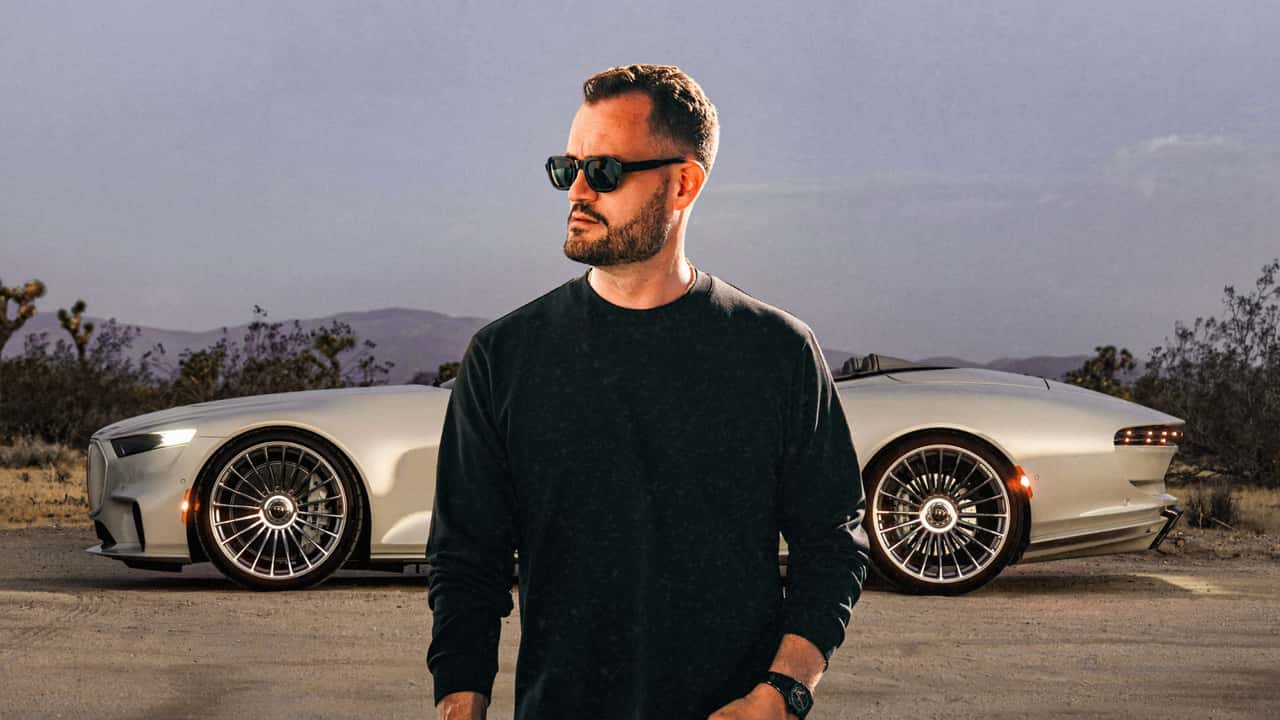

Throughout nearly the entirety of its 50-year history, the Brabus name has been synonymous with heavily modified Mercedes-Benzes, tweaked AMGs, and modernized Maybachs. But half a century later, the company has grown into something much bigger than a tuning shop for Stuttgart’s finest.
Brabus designs yachts, furniture, and fashion. Hell, the company is even working on an entire residential island in Abu Dhabi. Now, Brabus has turned its attention to something extreme that we’ve never seen from Bottrop before: the Bodo.

Brabus Bodo Cabriolet
Making its world debut at The Quail in Monterey, the Bodo is a fully bespoke, coachbuilt hypercar based on the Aston Martin Vanquish. It takes the Vanquish’s twin-turbocharged V12 and wraps it in a completely new Brabus-designed body and interior.
While the Bodo is Brabus’ first truly bespoke road car of the modern era, it likely won’t be the last. Speaking to Motor1 in Monterey, CEO Constantin Buschmann said the project represents an important part of the company’s future—and something we could see more of going forward.
'I said to the team back then, 'We're going to do one uncomfortable thing a year. We're gonna put ourselves outside of our comfort zone one time per year, minimum.' And we've done that ever since… [Bodo] kind of feels like coming full circle. Because this car shows what you've been developing through going out of our comfort zone. Over and over and over again.'
The Bodo also represents an entirely new way of thinking for Brabus. Rather than starting with a donor car and figuring out what the company could do with it—as it does with many of its other projects—Brabus started with the idea and worked backward to find the right platform.
'So we said, 'We're gonna build this car. What delivers the technology? What can we work with so that we get to the specs that we want?' And [the Vanquish] turned out to be the solution.'
Brabus Bodo Cabriolet Silkstone
According to Buschmann, the company considered several platforms, including a few Mercedes-Benz options. The team studied everything from the A-pillar and wheelbase to the front and rear overhangs, turning radius, and underlying electronic and mechanical architecture.
The goal was to find a platform that could support the car Brabus wanted to build. The company ultimately landed on the Aston Martin Vanquish.
'It was not a project with the Vanquish… To be very honest, I've quite literally never seen a Vanquish [and Bodo] side-by-side. This is not something I have ever compared.'
The result is the car we saw in Monterey: a stunning, coachbuilt 2+2 grand tourer named after Buschmann's father and Brabus founder, Bodo Buschmann. Its modified V12 produces 1,000 horsepower, while Brabus says the car can hit 62 miles per hour in 3.0 seconds and reach a top speed of 224 mph. Just 77 examples will be built.
But the Bodo’s importance goes beyond those numbers.
Buschmann says the company’s expansion beyond Mercedes-Benz wasn’t necessarily part of some grand master plan. Instead, it happened largely because customers kept asking Brabus to work on cars outside its traditional comfort zone.
'We expanded the brand because people kept coming to us and saying, 'I know your quality. I've been your customer. I bought your product. I like it…' And then I asked the team, ‘Why are we not doing this? Why are we not doing that?’ And they said, ‘Because we've never done this.’ When that's the answer, it's time to change. That's what we do.'
That philosophy has pushed Brabus into increasingly unfamiliar territory. The company now works on everything from Porsche 911s and Bentleys to Range Rovers, boats, and motorcycles.
For Buschmann, though, simply putting a Brabus badge on something isn’t enough. The company has to understand the segment it’s entering.
'If you design a boat, you can't design a boat as a car designer. You have to design it as a boat designer.'
That mindset eventually helped lead Brabus to the Bodo.
After years of experimenting outside its traditional business, Buschmann says the company has developed enough confidence in its design language and engineering capabilities to create something entirely from scratch.
That doesn’t mean Brabus is about to stop building its familiar Mercedes-based monsters. Those cars remain the heart of the business. But the company is no longer asking whether it should change; it’s asking how quickly it can change.
'We are actually only discussing the degree of change in the company, not whether we change. It's the speed of change, and how much more we can take, and how much more growth we can take.'
That growth is already forcing Brabus to build new teams and acquire companies to keep up with the opportunities coming its way. Buschmann credits the company’s long-standing reputation for professionalism, combined with a younger team willing to experiment, for creating that opportunity.
The Bodo is a pretty clear example of where that approach can lead.
More Motor1 Interviews
RECOMMENDED FOR YOU
The Toyota Celica Is Coming Back. Here's Everything We Know
2027 Genesis GV90 Debuts As A Flagship SUV With Coach Doors
I Rode In Mercedes-AMG's New SUV. It Leaves The EQ Models In The Dust
Finally: Skoda's New Sedan Has Messaging Rear Seats
'This Is The Enthusiast's Choice:' Porsche's American CEO On Why The Manual Still Matters And What's Next
Mazda Pushes CX-30 Redesign To 2031
I Drove Two Of Mercedes' Most Extreme Cars, 52 Years Apart: 300 SLS Vs SLR Stirling Moss