Woman Puts Bath & Body Works Air Freshener In Her Car. Then She Sees What She Comes Back To: ‘Sent Her A $1,500 Check’
"A lady ... got 3rd degree burns while driving because hers exploded."
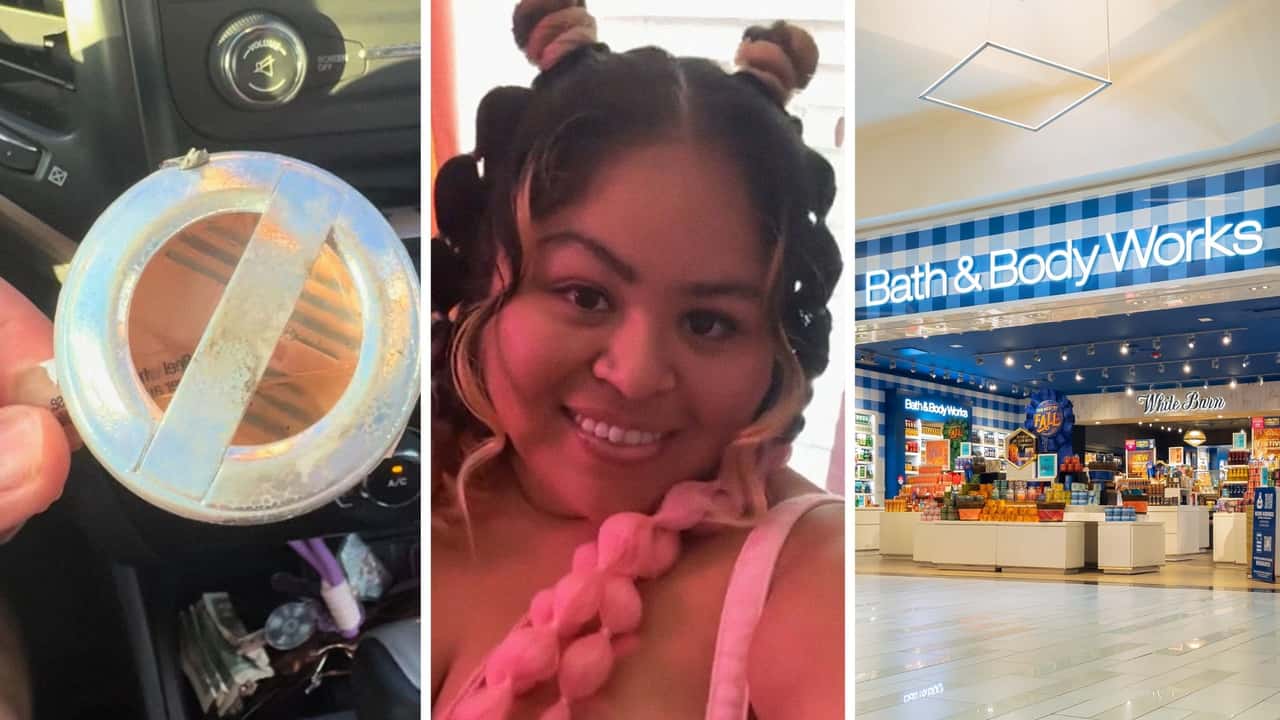

A San Diego Bath & Body Works customer is accusing the brand’s car air fresheners of peeling paint.
The driver, Kyna Kali (@kyna_kali), published a video online showing the aftermath of the air freshener spill inside of her vehicle. She begins her footage by holding up a fragrance puck to the camera lens. Initially, it looks like some gunk had evacuated the container and got stuck to her car’s dashboard.
However, upon closer look, it’s apparent that this isn’t residue build-up at all.
“I don’t know what Bath & Body Works put in their little scent things, but this is what I came back to in my car. The liquid melted the paint,” she says, showing off the damage on her vehicle’s dash. Indeed, the coating on her interior fixtures appeared to have crumpled and deformed in areas that came into contact with the air freshener's scented material.
In a caption for the post, Kali opined further on the purportedly destructive properties of the air freshener. “The fragrance was leaking somehow. Bath and Body Works car fragrance literally peels paint,” she wrote.
What’s Inside Bath & Body Works Car Air Fresheners?
According to the retailer’s website, its fragrance cartridges are made with “consciously clean ingredients.” The label reads that it’s composed of: “Fragrance (Parfum)(Fragrance Ingredient), Hydroxycitronellal(107-75-5), Benzyl Salicylate(118-58-1), Limonene(5989-27-5), Citral(5392-40-5), Citronellol(106-22-9). , Phenoxyethanol.”
Now, that's a lot of consonants and words that you don’t use in everyday conversation. And online research highlights that at least three of the constituents in the Bath & Body Works air freshener can degrade paint, plastics, and other materials just by making contact.
This Alliance Chemical write-up highlights how Limonene chemically reacts with styrofoam. If one were to take a container of the chemical and place some polystyrene inside of it, the foam would “appear to melt out of existence,” as per the article.
However, actual melting doesn’t take place. But rather, limonene dissolves the thin plastic walls of the styrofoam, getting rid of the air keeping it together. Once that air’s gone, the foam’s structure completely collapses. Making it look like that witch in "The Wizard of Oz." But could limonene be behind the harm done to Kali’s car?
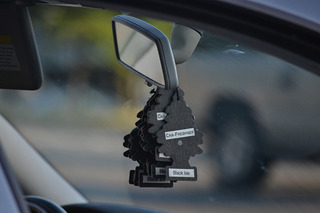
Gallery: The Story Behind the Little Trees Air Fresheners


Other Fragrance Ingredients That Can Deform Surfaces
The National Institutes of Health also identifies benzyl salicylate as a plasticizer, as does the Cosmetic Index Review. The latter agency assesses the implementation of various chemicals widely used in fragrances and mentions benzyl salicylate as one of them. Plasticizers are typically incorporated into materials in order to modify their texture. That’s because, by design, they innately render the compounds they’re added to more flexible.
That also means when plasticizers like benzyl salicylate are administered to specific surfaces, it can alter their appearance. This is due to how they merge into a polymer’s structure. So if a specific paint finish or plastic isn’t formulated to be resistant to plasticizers, then they could be subjected to the same type of reaction as shown in Kali’s video.
Additionally, there’s also research that shows phenoxyethanol can prompt stress fractures and cracking in certain acrylics and polycarbonates. This Google patent document, which documents a “method for removing paint layers on plastic parts," lists phenoxyethanol. The chemical is included with others as part of “a paint stripping bath” designed to clear coatings from surfaces.
More Reports Of Car Air Fresheners 'Melting' Dashboards
This Reddit user uploaded an image of the damage caused to their car’s interior to the site’s r/howto sub.
One YouTuber published a video warning folks against using even card-style air fresheners in their vehicles. In his clip, he showed off the aftermath of leaving a branded placard-type air freshener in a plastic bin. The chemicals in the product seem to have affected the container, leaving a foggy, caked-in residue simply from coming into contact with it. This ultimately prompted the content creator to urge folks to keep these products from brushing up against their vehicle’s internal fixtures.
And then there’s this JustAnswer forum discussion where a disappointed car owner expressed a situation similar to Kali’s.
“My air freshener had a chemical reaction with the dashboard and caused the plastic or whatever material to bubble,” they penned. A Nissan mechanic chimed in, telling the driver, "What you’re experiencing is surface material breakdown … a chemical reaction between the dashboard trim and the solvents or oils in the air freshener.”
As far as remediation goes, one person who replied to Kali's video recommended that she reach out to Bath & Body Works for cash. "Contact customer service ... this happened to my coworker and they sent her a $1500 check to get her dash fixed," the commenter wrote.
Motor1 has reached out to Bath & Body Works via email and Kali via TikTok direct message for further comment.
RECOMMENDED FOR YOU
Lexus Driver Goes To Dealership For Bathroom, Free Coffee. Then She Gets Called Out
Can You Actually Drive On A Flat Tire? It Depends On The Tire
Man Hits Woman’s Car By Chick-fil-A, Offers Insurance Info, Leaves Before Police Arrive. Then The Victim Pulls An UNO Reverse
The Chevy Express Finally Gets Something From This Century: A Color Touchscreen
Man Opens Ford Bronco's Trunk. Then He Realizes They Come With This Unusual Feature: ‘F-150s Have One On The Tailgate'
BMW Never Built A V10 Manual X5. So This Company Is Making One
Woman Buys Chevy Cruze On Facebook Marketplace. Then She Tries To Transfer The Title: ‘They Messed Around…So I Wouldn’t Find Out'