Chevrolet Driver Spends $1,000 In Diagnostics At 3 Shops. Then Someone Finally Discovers The Simple Problem
"After all of that..."
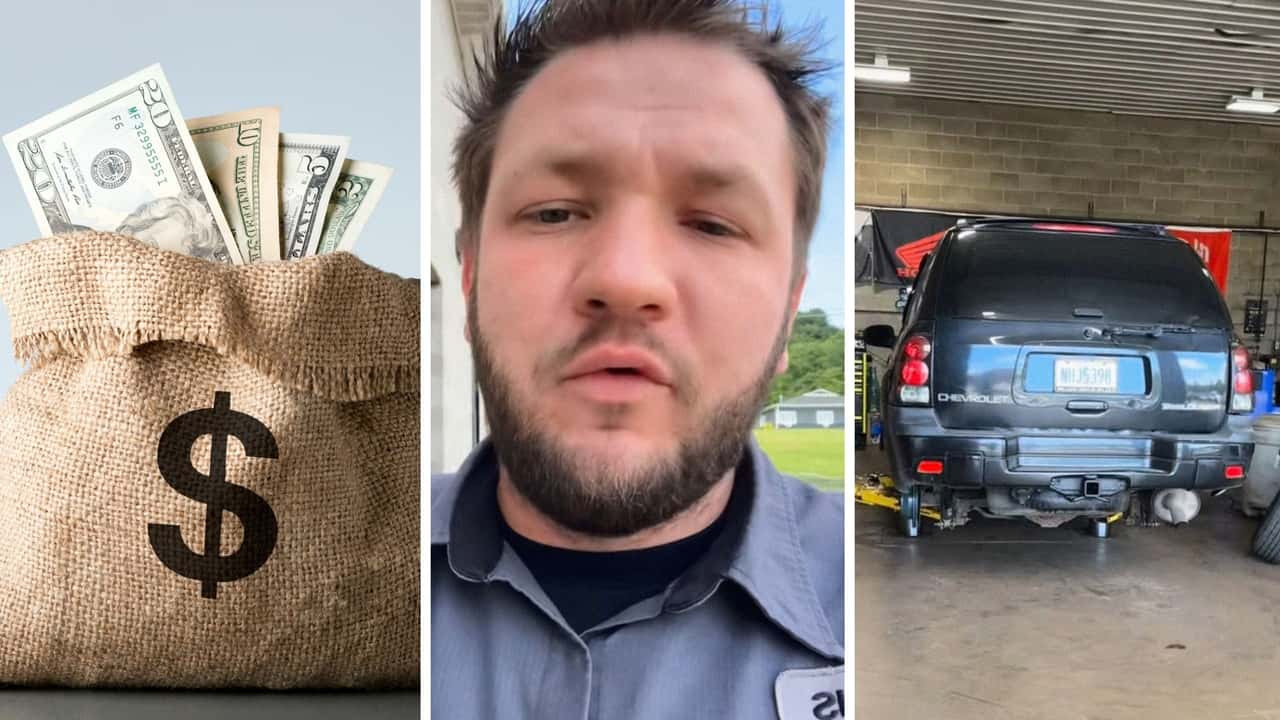

For a while, the owner of a troubled Chevrolet Trailblazer had to have felt like she was in a very expensive game of bingo. Every trip to a maintenance center resulted in a different problem being called out, each of them costly and ineffective.
The Facebook Reel from Chris Losser, co-owner of Bessemer Ave. Automotive Rehab in Pennsylvania, gives a breakdown of the repair steps that had been taken prior to the Chevy's arrival. First came a replacement brake caliper, hose, and pads, then there was more than $800 in dealership diagnostics, an engine-replacement recommendation, and a fresh set of ignition coils.
And none of it stopped the Trailblazer from losing power, fighting the steering wheel, and shaking down the road.
“After all of that, the problem was still there. When she brought it to us, we didn't assume anybody was right or wrong, so we just diagnosed it ourselves,” Losser said as he walks viewers through the diagnosis process in the video that has been viewed more than 418,000 times. “The unfortunate part is the customer spent well over $1,000 on diagnostics and repairs that did not solve the complaints you originally had.”
Solving The Trailblazer Puzzle
The true root problem came to light after the Trailblazer had been driven by the repair team long enough for the trouble to develop. Once the vehicle warmed up, the shop found that pressure was remaining in the braking system instead of releasing normally.
“After driving it and testing it, we found all four brakes were staying applied after the vehicle got warmed up,” Losser said.
That finding let the shop connect complaints that had previously seemed to be happening in isolation. With every wheel resisting forward motion, the engine had to work against a constant drag, creating the sensation that the SUV had lost power.
Losser also linked that extra strain to the steering becoming harder to manage during turns. The sustained friction generated enough heat to damage the rotors, providing an explanation for the shaking that could be felt through the front of the vehicle.
“Think about what happens when all four calipers are applying pressure when you're trying to drive,” he said. “The vehicle feels sluggish because the brakes are fighting against the engine.”
The finding also helped to explain the dealership’s conclusion that the engine was operating at 100% load. While it’s true that the motor was working extra hard, Losser argued that the source forcing it to work so hard had to be identified.
From his perspective, at least part of the problem came from the SUV attempting to move while its brakes remained engaged.
“It’s entirely possible that the engine has thrust bearing wear,” he said. “But replacing the engine would not have fixed the brake system issue that caused the lack of power, tight steering, and shaking.”
Gallery: 2024 Chevrolet Trailblazer


Fluid Problem Becomes Big Repair
Losser traced the pressure problem back to brake fluid he said had gone unserviced for an extended period.
Unlike a sealed component that remains unchanged over the life of a vehicle, brake fluid can absorb moisture and collect contamination as it ages. The shop said the degraded fluid contributed to the failure of the master cylinder, which controls hydraulic pressure throughout the braking system.
Material from that damaged component then reportedly traveled into the ABS hydraulic unit and interfered with the system’s ability to release pressure after the driver lifted off the pedal. Debris from the failing master cylinder clogged the ABS hydraulic unit, preventing the brakes from fully releasing.
By that point, changing the fluid alone was no longer enough, so the shop installed a replacement master cylinder, sourced a used ABS hydraulic unit, and flushed the system. The pads and rotors also had to be replaced after repeated overheating from the dragging brakes.
Viewers Question Fix Process
Even after a thorough explanation, some viewers questioned whether every component the shop installed had truly failed. One commenter suggested that the earlier caliper and hose work may have been bled incorrectly, and argued that the ABS system could have retained pressure without needing a new hydraulic unit or master cylinder.
“Well it did or we would not have replaced it,” Losser responded. “You can see the debris in the master cylinder.”
Losser later added that those repairs had been completed more than two weeks before the video was recorded. The customer was allowed to take the Trailblazer and confirm that the original symptoms had disappeared before returning to replace the pads and rotors damaged by the excess heat.
For other viewers, the episode illustrated the difference between testing a vehicle and repeatedly swapping parts. “There is a huge difference between mechanics and part changers,” one wrote. Another recalled advice from an early instructor: “One test is worth 1000 expert opinions.”
Difficult automotive problems are not always evidence of dishonesty or incompetence. Some faults only appear under particular conditions, with this one needing to climb to operating temperature before acting up.
Both AAA and the Federal Trade Commission recommend considering a second opinion before approving an expensive or complicated repair. They also recommend obtaining a written estimate and asking the shop to clearly explain the work it believes is necessary.
Losser told Motor1 that the Trailblazer was far from the first vehicle to arrive at his shop after unsuccessful repairs elsewhere.
“We see it quite often, honestly,” he said.
In his view, the problem often comes down to technicians leaning too heavily on scan tools and diagnostic codes without spending enough time reproducing the customer’s complaint and examining how the vehicle behaves under real driving conditions.
“It’s not always just plug a scanner in, read the code, and change the part,” Losser said. “Reading stuff on paper is easy, and trying to diagnose things that are already in front of your face, that’s easy when you’re learning at school. But when you’re actually living it and doing this stuff, it’s different.”
Losser said his shop starts with the symptoms described by the customer, then follows those clues through the vehicle’s systems rather than assuming that the first code or unusual reading identifies the underlying failure. Working on a broad mix of makes and models also gives the shop a wider base of hands-on experience than technicians who repeatedly service the same brand, he said.
“A lot of it is basic,” Losser said. “You just have to take the basic information that you know, the information the customer has given you, and go off of that.”
Once the Trailblazer arrived, the shop needed two days to diagnose and complete the repair. Losser said the first day was spent identifying the brake-pressure problem and locating a used ABS hydraulic unit. The supplier pulled and shipped the part the following day, allowing the shop to install it and return the SUV to its owner.
“We’ve been doing this a while, so it’s not like it’s our first rodeo,” he said.
RECOMMENDED FOR YOU
Man Test-Drives New Volkswagen. Then He Returns It 50 Days Later
Why Costco Gas Is Always Cheaper Than Everyone Else
Florida Man Drives Chevrolet Camaro. Then He Notices An Anonymous Letter On His Windshield
Volkswagen Built A 1,000-Horsepower Mega Golf, But It Didn't End Well
Man Puts His Mazda Filter in a New Box. Then He Tries To Get AutoZone To Refund It
Bentley's First EV Has A Curved Screen That Already Looks Familiar
Man Goes To The Shell Gas Station. Then He Realizes The Pumps Have 2 Different Prices