Man Pre-Pays For Gas. Then He Spots A Suspicious Sticker On The Pump: 'Do Not Put This In Your Car'
'This is what's breaking everyone's cars.'
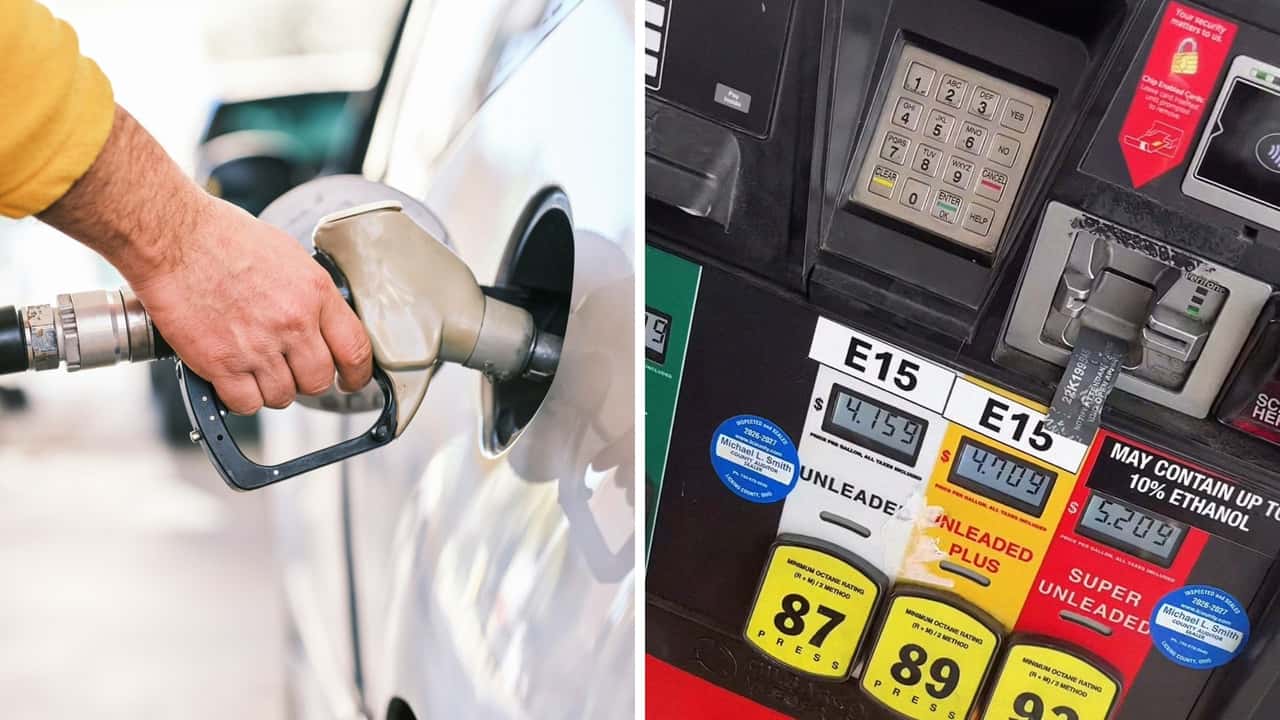

With gas prices at a recent high, everyone is looking for ways to be smarter at the pump. But could one small decision be ruining your engine?
Over the years, drivers have shared a variety of tips that those refueling their vehicles should know. Drivers have warned about the issues with topping off your gas and detailed ways to fill up your car faster.
Now, a tip about refueling and which fuel you should use has gone viral. Here’s what to look for at the pump.
What’s Wrong With These Gas Pumps?
In a Facebook Reel that has garnered over 3 million views, user Cm Spencer issues a warning about certain gas pumps.
“If you see these stickers on the gas pump, do not put this in your car,” he starts. He’s referring to stickers on the pump reading “E15.”
“If it says E15, it is breaking everyone's cars,” he continues. “I just went in there and canceled my payment.”
In the caption, he elaborates.
“Not every vehicle or engine is designed for E15 fuel, and using the wrong fuel can cause expensive problems,” Spencer advises. “Before you squeeze that handle, take 2 seconds and read the sticker on the pump.”
What Is E15 Gas?
E15 gas refers to gasoline that has been blended with between 10.5% and 15% ethanol. This gas has been approved for use by the EPA since 2011.
That said, not every car is advised to use E15. The Department of Energy website states that motorcycles, heavy-duty vehicles, off-road vehicles, and conventional vehicles older than 2001 are prohibited from using E15 fuel.
While the Department of Energy insists that newer vehicles can use regular and E15 gas interchangeably without issue, some argue that this isn’t the case and that using such fuel can damage your car. So, who is correct?
Regarding potential engine damage, several automakers and industry groups have claimed that rubber, plastic, metal, and other engine materials could degrade faster with an ethanol blend than with gasoline alone.
While this fear is understandable, there’s just not enough evidence to conclusively say this is the case—and plenty to suggest that using E15 gasoline is just fine for your vehicle.
Why E15 Is Fine For Your Car
In 2012, the Oak Ridge National Laboratory published a study measuring 82 vehicles over two years and six million miles. The study found that E15 fuel did not cause extra damage to the catalytic converter or emissions control system compared to ethanol-free gasoline.
Today, many auto manufacturers explicitly state that E15 can be used in their vehicles. In fact, the Renewable Fuels Association found that, as of 2024, approximately 95% of all new cars and light trucks are explicitly approved to use E15 fuel.
That doesn’t mean E15 fuel is without issue. The U.S. Department of Energy states that vehicles tend to travel four percent to five percent fewer miles per gallon on E15 fuel compared to regular gasoline. This is because ethanol contains about a third as much energy as gasoline. Advocates say that the lower price of E15 fuel offsets the reduced efficiency.
Furthermore, there are some concerns about the fuel itself. Critics note that the production of ethanol requires the use of fossil fuels. Depending on the method used, it can take between 0.10 and 0.75 gallons of fossil fuel to create a single gallon of ethanol. There are also some environmental concerns regarding E15 use.
Still, if you have a newer car, note that E15 is unlikely to harm your engine.
Drivers Don’t Trust E15
In the comments section of the video, users expressed skepticism about E15 fuel.
“Part of the plan. Get old, fixable, non surveillance- able cars off the road,” claimed a user.
“People don't realize they are better off using ethanol-free fuel, no exceptions,” declared another.
“Use pure gas people. You’re not saving money with E 10,” stated a third. “The mileage savings make sure cost per mile almost the same.”
Motor1 reached out to Spencer via Facebook and Instagram direct messages. We will update this story if he responds.
RECOMMENDED FOR YOU

This Car Just Won't Start. Then The Mechanic Working On It Discovers The Embarrassing Reason Why: 'Take Their Keys'
'Boot' Tries To Take Out Mercedes Driver Every Time They Open It. Then They Take It To The Shop: ‘Feels Calculated And Personal’
Car Salesman Says You Don’t Need To Go To A Dealership For A Test Drive. Are Takeout Test Drives The Next Big Thing?: 'Way Easier'
Man Buys Ford Mustang. You Won't Believe The Trouble It Costs Him With His HOA: 'Threatened To Call The Police On Me'
Man Buys BMW With ‘Clean Report.’ Then He Finds Out It’s Totaled. Here's What Could Have Saved Him
Why Every New Car Seems To Have A Giant Screen Now
Customer Comes Into Shop At 8 A.M. They Put Something Unthinkable In Their Windshield Washer Fluid Reservoir: ‘Charge Them Double’