‘That Can Happen?:’ Woman Pumps Gas by Herself For the First Time. Then the Nozzle Breaks Off and It Spews Out
"I didn’t even know that could happen."
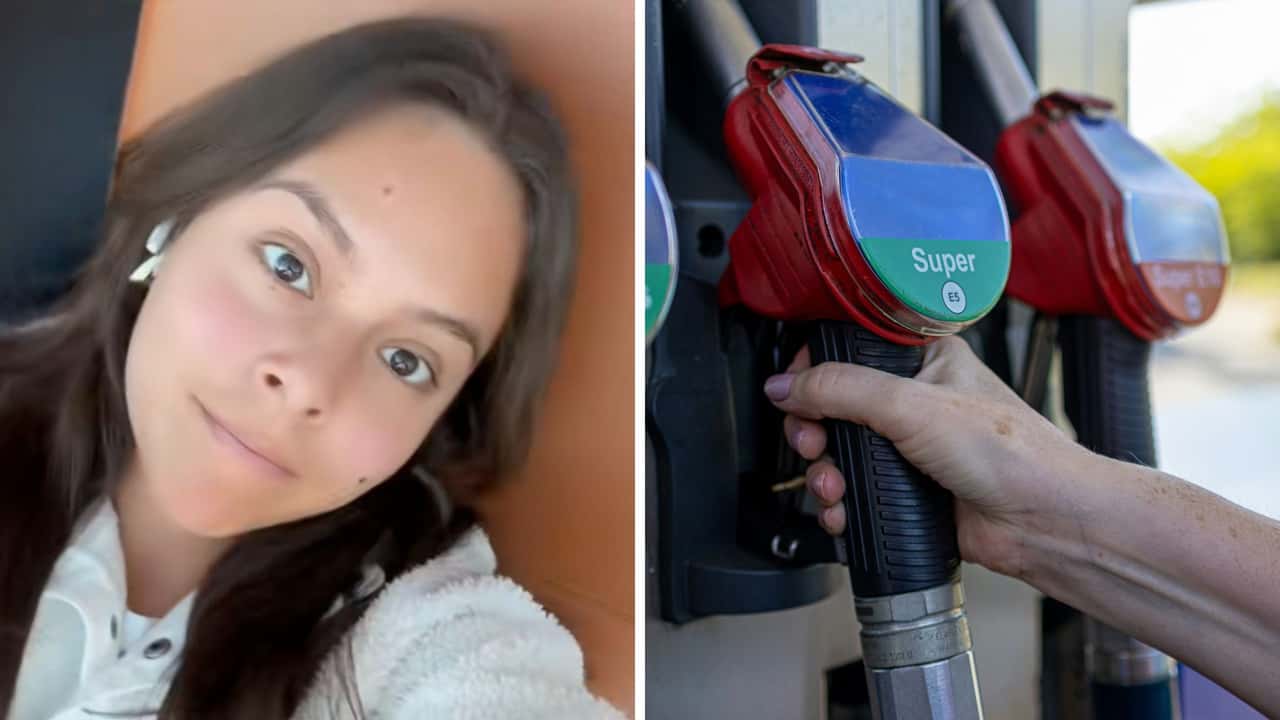

One moment, the pump is doing its job. The next, the nozzle is dangling in midair, spewing fuel like a busted garden hose.
In a video that’s equal parts awkward and alarming, a woman’s first time at the pump becomes a crash course in how gas station equipment fails—or works exactly as designed.

The clip from creator Kate (@arq.kate) shows her excitedly prepping to pump gas into her vehicle for the first time. But disaster strikes when she attempts to remove the nozzle. The equipment falls apart in her hands and sprays gas all over the car’s exterior.
“I didn’t even know that could happen,” she writes in a caption on the clip, which nearly 2 million people have viewed.
Yes, It Can Happen, and It’s Meant to
What you’re witnessing in the clip is a safety feature at work. At the heart of that sudden disconnect is a breakaway coupling, an engineered fail-safe designed to protect both drivers and fuel stations during fueling mishaps.
Breakaway couplings exist to prevent a much worse scenario than a nozzle hose separation, such as when a driver accidentally drives off with the nozzle still attached.
More on Gas Stations
If that happens, there’s potential to rip the entire pump assembly from its base, damage underground fuel lines, or cause a large spill, all of which could lead to environmental hazards, fire risks, costly repairs, and downtime. The breakaway is intentionally calibrated to separate under excessive force, preserving more critical equipment behind the pump.
These couplings are composed of two interlocking halves joined by a mechanism, like shear bolts or locking clips, that disconnects once a specific tension threshold is exceeded.
Upon disconnection, internal spring-loaded valves on both sides snap shut, instantly halting the fuel flow and preventing significant leakage. This design effectively contains the spill to a small volume at most.
The breakaway coupling is a critical safety component integrated into nearly all compliant fueling systems.
It operates with precision: engineered constants determine exactly how much force will trigger separation. The coupling can then be reconnected quickly, often by station staff—without replacing the entire nozzle or hose assembly.
Messy, Yet Contained
To the untrained eye, a spray of gasoline across the side of a car looks like the opening scene of a disaster movie.
In reality, the amount released during a breakaway event is far less dramatic than it appears on camera. Because the coupling valves shut almost instantly, the spill is generally measured in ounces, enough to create a sheen on paint and pavement, but not a pool on the forecourt.
That doesn’t mean you can shrug it off. Gasoline’s volatility means even a small amount evaporates into flammable vapors almost immediately, and those vapors are heavier than air, allowing them to drift and linger near the ground. In hot weather, that evaporation and the fire risk that comes with it accelerate.
What to do in the moment:
- Stop fueling immediately: This prevents further spillage and potential hazards.
- Assess the damage: Determine if the break-away coupling has separated, or if the hose itself has pulled away from the pump.
- Gather the nozzle and hose: If the break-away coupling has worked, carefully pick up the nozzle and hose and take them to the attendant.
- Report the incident to the attendant: Inform them of what happened. They will likely be able to assess the situation and determine the next steps, including whether repairs are needed.
- Be prepared to discuss payment: The gas station may ask you to pay for the damage, especially if the breakaway coupling didn't function as designed. However, they may also have insurance to cover the costs.
- If the hose was pulled from the pump: You'll likely need to speak with the station owner or manager to discuss the situation and any potential repair costs.
Even a modest spill can leave lasting stains on concrete, seep into soil if left unchecked, and contribute to local air quality issues through evaporative emissions.
That’s why most fueling stations keep spill kits stocked with absorbent pads, sand, or specialized granules within quick reach.
Proper cleanup isn’t just about safety; in many jurisdictions, it’s also a regulatory requirement, with fines for stations that fail to follow protocols.
In short, while the mess in the TikTok clip looks worse than it likely is, it’s still a moment for caution, control, and a swift handover to the people who have the tools and the legal obligation to handle it right.
Motor1 reached out to Kate via direct message. We’ll update this if she responds.
More From Motor1
RECOMMENDED FOR YOU

Toyota 4Runner Driver Doesn't Want To Pay $20 Subscription To Start Car. Then She Discovers Key Fob Trick: 'The Things You Learn'
Polestar Won't Fight US Ban, Effectively Ending Its American Future
Man Goes To Mercedes Dealership With Navy Federal Check And $10,000. Then He Goes To Carvana: ‘They Wanted A Copy Of My Degree’
The New Maybach GLS Shows Its Face For The First Time
Volkswagen Driver Says She Puts Diesel In At The Pump—And The Men Around Her Always Say The Same Thing: ‘Men Come Running'
What Every Nissan Brake Caliper Color Means
Woman Flirts With Man At A Family Dollar. Then She Makes A Comment About His Toyota: ‘Don’t Ignore That Red Flag’