Two-way charging saves Europe billions
A study shows how V2G can reduce energy costs by up to 9%. And extend the life of electric car batteries.
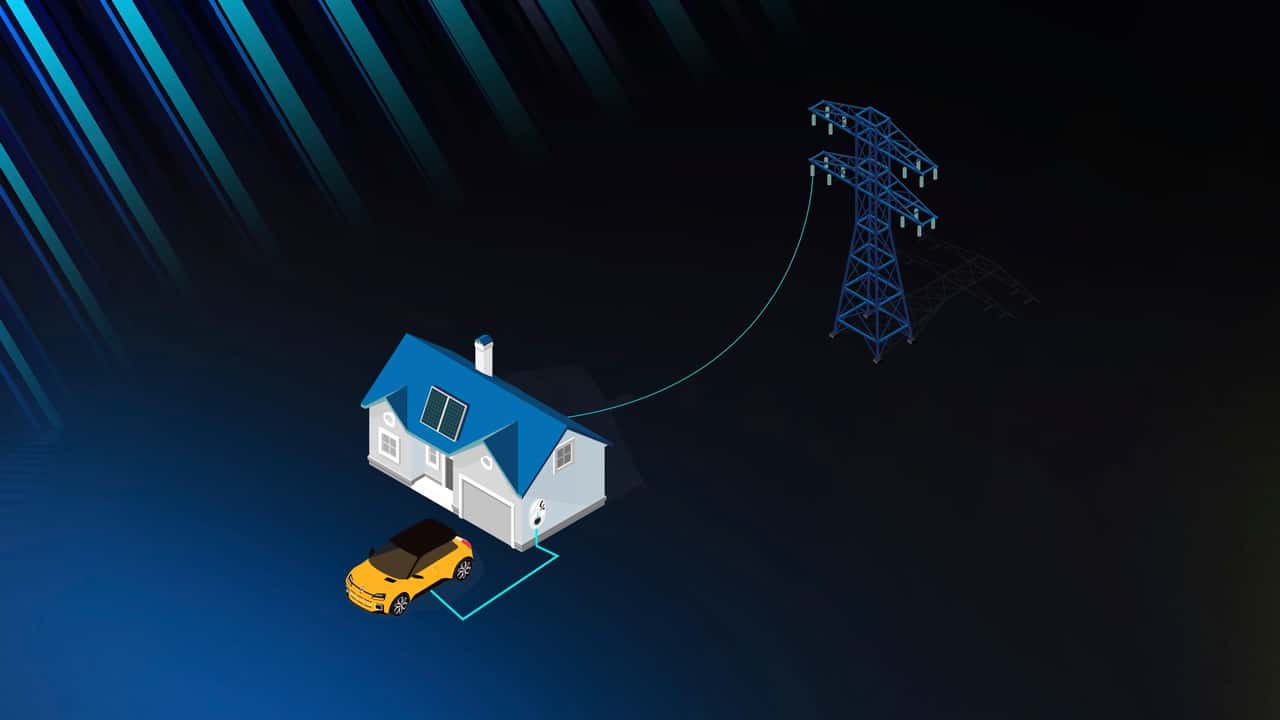

Bidirectional charging of electric cars has a twofold benefit. On the one hand, it reduces peaks in electricity consumption thanks to the fact that zero-emission cars can transfer part of their energy to the grid. Secondly, it enables external devices to be powered.
But two-way charging will also have a considerable impact on energy costs; a positive impact with obvious savings. This is according to the German Fraunhofer Institute, which carried out a study commissioned by Transport & Environment.
V2G saves money
According to the researchers, the widespread introduction of cars equipped with a two-way charging system could reduce the annual costs of the EU's energy system by 8.6% between now and 2040. In absolute terms, the figure is €22.2 billion.
"By storing excess renewable energy produced, which would otherwise be lost, the fleet of electric vehicles on the road in Europe could contribute to meeting 9% of the EU's annual energy needs by 2040."
This percentage would make electric vehicles the fourth-largest source of energy supply. At peak times alone, electric cars could provide up to 15-20% of the energy needed.

Stellantis tests V2G recharging at Mirafiori
Appropriate regulations are needed
Electric vehicles equipped with V2G technology could in fact be compared to stationary storage systems, at least during the period when they are parked outside the home or office.
Although there aren't many cars equipped with two-way charging yet, there are already a few on the roads. So what's stopping this V2G, whose technology is mature, from being exploited to its full potential? The problem is one of regulation. Different EU countries are working at different speeds. While France and the UK are the most advanced, Germany, where electric cars are widespread, is still lagging behind in terms of legislation.
According to the study, if countries were to properly regulate the energy supply of the various national networks, taking V2G technology into account, the savings achieved at EU level could reach €100 billion between 2030 and 2040. The efficient use of V2G would make it possible to increase energy production from renewable sources, by increasing installed photovoltaic capacity by 40%. It would also have a positive impact on wind power.
Volkswagen launches two-way charging on certain ID models in Europe
Bidirectional charging extends battery life
And if electric vehicles with two-way charging enabled their owners to earn money by selling energy, much as Tesla does in some parts of the world, the energy transition would certainly accelerate.
But that's not all. Two-way charging can also make electric car batteries last longer. This is a surprising finding, given the popular belief that with V2G, batteries do not last as long. The health of the batteries is preserved by the fact that they are recharged and discharged at low speed and very regularly.
More about V2G:
RECOMMENDED FOR YOU
Toyota's Next-Gen Batteries For Hybrids Arrive In 2027
Watch A Honda Prelude Tackle The Infamous Moose Test
Ferrari Goes Beyond Electric: New Models And Biofuels Coming
Ram's Hemi V8 Is Losing Its Hybrid System—And Automatic Stop/Start
Mazda CEO Says The Miata Could Go Electric—Eventually
Mercedes-AMG's New Sedan Just Claimed A Nürburgring Record: 'Fastest Car In Its Class'
Mercedes Reinvents Its Smallest SUV For The EV Era