Home
Volkswagen
Transporter
News
VW shows rare camping Bullis at the May Beetle meeting
Three variants of the legendary SO series based on the first Transporter will take centre stage in 2024

By: Roland Hildebrandt
Published by: Brian Potter
May 1, 2024 at 7:36am ET
Add Motor1.com as a preferred source in Google
- (https://twitter.com/intent/tweet?url=https%3A%2F%2Fwww.motor1.com%2Fnews%2F718093%2Fvolkswagen-shows-rare-campers-may-beetle-show%2F&text=VW%20shows%20rare%20camping%20Bullis%20at%20the%20May%20Beetle%20meeting&via=motor1com)
- copy
Share
Comment
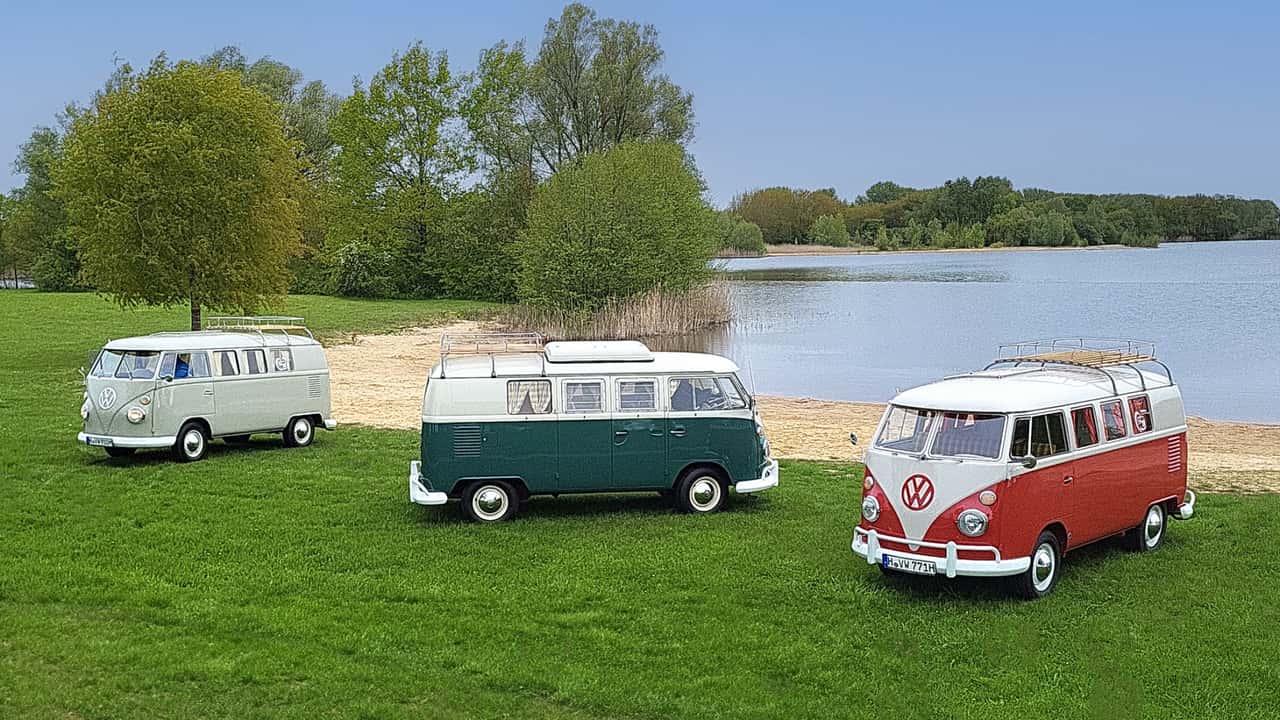
The camping season for the Volkswagen Commercial Vehicles Oldtimer (VWNO) team begins this year with the May Beetle Meeting, which traditionally always takes place on 1 May in Hanover. They will be represented at the exhibition centre with three cult campers from the first generation.
In the sales programme back then, these compact camper vans were simply called SO for special version and had a two-digit number behind them. Despite this sober designation, they are probably the most emotional vans that rolled off the production line back then. They travelled around the world with their owners or to the quarry pond next door and still tell the most adventurous stories of their journeys today. This also applies to the SO22, SO34 and SO42 models - all from the 1960s - which VWNO will be exhibiting on its stand.
Gallery: Three variants of the legendary SO series based on the first VW Transporter

7
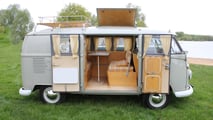
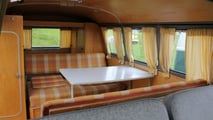
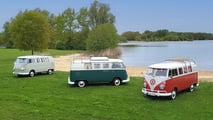
The requirements of Camper drivers are very individual. This was already the case at the beginning of the "motorhome" movement. In order to meet these demands, there were a variety of different models based on the VW T1, which was already popular at the time. After the start with the Campingbox, the model programme of camping vehicles based on the VW camper quickly grew to include more.
In brochures and price lists, they were only listed with the factual model designation SO for special version. Only much later were names such as Los Angeles, Madrid or Offenbach and the legendary Berlin and Helsinki models to follow.
In Hanover, the VWN Oldtimer specialists are exhibiting the three models SO22, SO34 and SO42. But what characterises these three camper vans and how do they differ?
SO 22 from 1965 (Costa)
Westfalia from Rheda-Wiedenbrück presented the "Mosaic" programme for self-builds at the start of the 1961 camping season. In addition to the fully equipped caravans ex works, the bench seats, table and cupboards could be purchased individually and fitted as required.
The SO22 from VWN Oldtimer is also equipped with these components. The interior fittings consist of various parts from the Mosaic programme, cupboards, folding table, bench seat/sleeping bench with storage compartments transform the rather sparse Transporter Kombi into a practical, comfortable camper van. Sitting, cooking, washing and, of course, sleeping are all possible.
For children, a canvas can be fitted in the driver's cab, on which a child can sleep while the parents enjoy a cosy evening in the "living room". A roof hatch brings light and air into the interior; an awning extends the space for everyone, an unbelievable luxury compared to the car tourists who were travelling with a tent.
SO22 Expansion from the Mosaic programme
With the most powerful engine of the first generation, this Camper is a real touring car. The 32 kW (44 PS) allowed it to reach travelling speeds of up to 65 mph (with a little patience). This Camper proved that it is a touring car by travelling over 100,000 miles through Europe. Its proud owners travelled with it through Italy, Switzerland, France, Hungary and Greece.
SO 42 from 1965 (Irene)
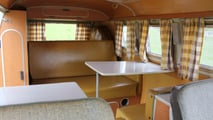
A true success story began with the special version (SO) 42. The lifting roof (120 x 110 cm, 35 cm high), available for the first time, brought additional space, light and air into the interior. The new bench seat could be converted into a bed in a few simple steps - and can still be found in the California today in a further developed form.
By the end of production of the first Transporter generation in 1967, more than 12,000 SO 42s had rolled out all over the world. This made this version the most popular layout and therefore the right answer to most buyers' motorhome needs.
SO42 "Irene" - year of construction 1965
The secret of the SO42's success was its improved suitability for everyday use: for shopping and passenger transport during the week, for example, but ideal for leisure and relaxation at the weekend, not to mention holidays. These characteristics have not changed to the California of today.
Irene and Roland from Wisconsin in the USA bought this camper van in 1966 and used it regularly. They took meticulous care of their hotel on wheels. Every inspection was recorded in the service booklet. In the harsh Wisconsin winter, the camper was lovingly stored on wooden planks in a clay-plastered garage. It travelled 62,000 miles across the United States before joining the VWN Oldtimer collection via the Netherlands.
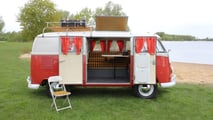
SO 34 from 1962 (Henrik the Red)
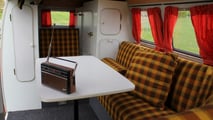
Even at first glance, the SO34 is very different from its two brothers. In 1961, a white "Getalit" plastic surface was used for the first time instead of dark wood veneer. This polarised the traditionalists, but attracted the avant-gardists, particularly from North America, to purchase this "modern" VW camper van.
SO34 "Henrik the red" - year of construction 1962
The interior appeared less cramped and more airy despite the large amount of furniture. It wasn't just the furniture surface that was new, the layout was also a testament to the creativity of the engineers. Who would have believed until then that it would be possible to integrate up to seven seats and full camping equipment into a camper van? The clever move by the engineers was to integrate the driver's cabin into the living area.
The backrest of the three-seater bench seat in the driver's cab could be rotated to create a sofa area together with the side bench seat. Opposite, a single seat awaits between the side-mounted cupboards and the seventh person can take a seat on a folding chair (secured with a toggle bolt), which was actually authorised for passenger transport.
SO34 extension with light-coloured interior
The table around which the travelling party sat in the vehicle could also be used outside as a camping table using the spare wheel as a base. However, there are space limitations when it comes to bed construction, so that two children and two adults can sleep in the vehicle. Only the awning remained for the remaining three passengers.
Noch mehr Bulli-Nostalgie:
Volkswagen, the curious history of water-cooled boxers
UK: VW Bus with Audi S3 engine and matching camper has us seeing double
What do you think?
View
Comments
The vehicle from VWN Oldtimer accompanied the previous owners' families throughout Europe. In order to have more luggage space for the long journeys, the first owner bought a trailer in a matching colour, which still travels reliably behind the vehicle today.
Fans of Volkswagen camper vans can also look forward to 7 May. On this day, VWN will present the next generation of the legendary "California" camper van.
We want your opinion!
What would you like to see on Motor1.com?
Take our 3 minute survey.
- The Motor1.com Team
Share this Story
- (https://twitter.com/intent/tweet?url=https%3A%2F%2Fwww.motor1.com%2Fnews%2F718093%2Fvolkswagen-shows-rare-campers-may-beetle-show%2F&text=VW%20shows%20rare%20camping%20Bullis%20at%20the%20May%20Beetle%20meeting&via=motor1com)
- copy
GO TO COMMENTS
(
)
Got a tip for us? Email: tips@motor1.com
View all comments ( )
Popular
12 Cars With Names That Make Absolutely No Sense
BMW Kept This Hatchback A Secret For Decades
Bugatti Restores One-Off Veyron With A Mirror-Like Aluminum Body
The Gas BMW M3 Isn't Dead: Next-Gen Prototype Roars
latest articles
- Driver Goes Through Car Wash With Full Truck Bed—Then He Learns The Hard Way Why You Shouldn't Do That Oct 20 - Trending -
- Every Rolls-Royce Has A Hidden Feature Most People Don't Know About Oct 20 - Motor101 -
- Subaru Built A 510-HP Electric Wagon Without Toyota's Help Oct 20 - Official -
- The Strange Reason The Golf GTI Had A Golf Ball Shifter Oct 20 - Motor101 -
- Photos: Porsche's Mission S Concept Takes Over New York City Oct 20 - Design -
- The 2027 Honda Passport TrailSport Looks Noticeably Taller Next To Last Year's Model Oct 20 - Off-Road -
- 12 Cars With Names That Make Absolutely No Sense Oct 20 - Lists -
RECOMMENDED FOR YOU
The Strange Reason The Golf GTI Had A Golf Ball Shifter
Driver Goes Through Car Wash With Full Truck Bed—Then He Learns The Hard Way Why You Shouldn't Do That
12 Cars With Names That Make Absolutely No Sense
Every Rolls-Royce Has A Hidden Feature Most People Don't Know About
This German City Exists Because Of Volkswagen
Subaru Built A 510-HP Electric Wagon Without Toyota's Help
10 SUVs That Get 30 MPG Without Hybrid Power