Home
Porsche
News
Porsche’s Next Audio Upgrade Is Doing More Than Sounding Better
Gallium nitride hardware debuts in Porsche’s Burmester 3D High-End Surround Sound System from 2027, cutting amplifier size, heat, and cabin weight.
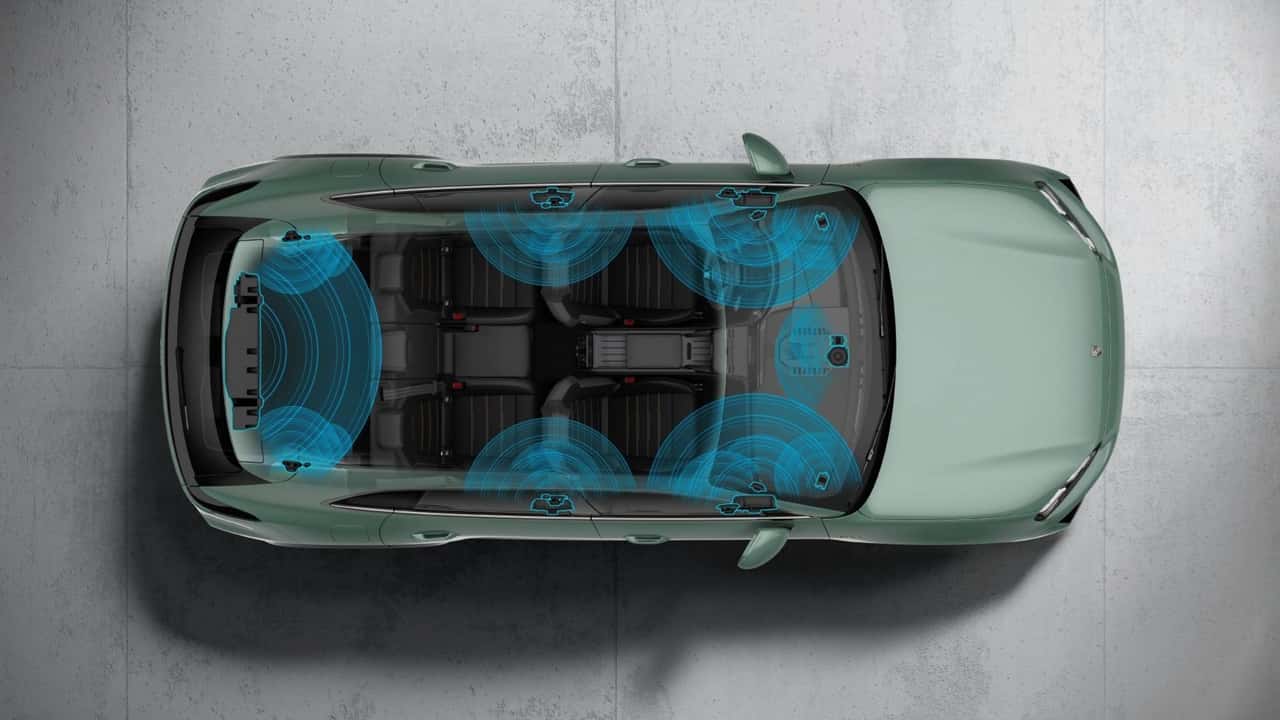
Photo by: Porsche
Brian Potter 
By: Brian Potter
Aug 25, at 4:43am ET
Add Motor1.com as a preferred source in Google
- (https://twitter.com/intent/tweet?url=https%3A%2F%2Fwww.motor1.com%2Fnews%2F805979%2Fporsche-next-audio-upgrade-uses%2F&text=Porsche%E2%80%99s%20Next%20Audio%20Upgrade%20Is%20Doing%20More%20Than%20Sounding%20Better&via=motor1com)
- copy
Share
Comment
- Porsche’s Burmester 3D system is the first production-ready automotive audio setup built around gallium nitride, arriving in 2027.
- Porsche will apply GaN to a 400-watt subwoofer amplifier, cutting heat loss versus silicon and improving efficiency.
- GaN lets engineers shrink amplifier heat sinks about 20% and reduce passive component size without losing output.
Porsche just filed several patent applications for a car speaker upgrade, and the story is not really about volume. The company says its new Burmester 3D High-End Surround Sound System is the first production-ready automotive audio setup built around gallium nitride, a semiconductor material better known from phone chargers than sports cars.
Gallium nitride, or GaN, handles voltage conversion with far less wasted heat than the silicon chips automakers have relied on for decades. Porsche is putting it to work on the 400-watt subwoofer amplifier first, with series production slated for future Porsche generations starting in 2027.

Burmester audio Amplifier, with Gallium nitride technology
Photo by: Porsche
Porsche's Next Audio Upgrade
The headline claim is efficiency, not decibels. GaN transistors switch faster and lose less energy as heat than their silicon equivalents, according to Porsche's own explanation of the project. That matters more in a sports car than in a living room stereo, where weight and heat management are constant engineering tradeoffs.
Porsche is framing this as a technology and efficiency play rather than a simple sound-quality bump, which matches how the company built the project alongside Burmester and the University of Stuttgart's Institute for Robust Power Semiconductor Systems, starting with a prototype amplifier in spring 2024.
Burmester audio speaker in Porsche
Photo by: Porsche
What Actually Changes
The practical payoff is smaller, lighter hardware. Porsche says the reduced heat load lets engineers shrink the amplifier's heat sink by about 20 percent and downsize passive components like capacitors and inductors without giving up output. Less aluminum in the heat sink also means a smaller manufacturing footprint, since aluminum production is energy intensive.
None of this touches cars already on the road. The GaN-based Burmester system is reserved for a future production vehicle arriving in 2027. It is a forward-looking hardware decision, not a software update layered onto the volume knob Porsche insists every car needs.
What do you think?
View
Comments
This fits a pattern at Porsche of treating the cabin as a place to differentiate, not just decorate. The brand has patented a tunnel mode feature for reshaping cabin acoustics, engineered synthetic gearshift sounds for its electric cars, and reworked the Cayenne's electric interior layout around screens and controls rather than switchgear.
Motor1's Take: Treat this as a proof of concept more than a consumer-facing upgrade. The chip's real value is that it proves engineers can shrink heat and packaging budgets without redesigning whole systems. That gives designers a new lever to free up space and thermal headroom, which is worth more to a sports car program than another marketing line.
More From Porsche:
Porsche Denies It's Killing The Taycan, 2030 End Date Still Unclear
Europe's Sports Car Market Is Shrinking. But The Porsche 911 Is Still Winning
Only 100 Will Exist: Meet The Nürburgring-Born Porsche 911 GT3
Source: Porsche
We want your opinion!
What would you like to see on Motor1.com?
Take our 3 minute survey.
- The Motor1.com Team
Share this Story
- (https://twitter.com/intent/tweet?url=https%3A%2F%2Fwww.motor1.com%2Fnews%2F805979%2Fporsche-next-audio-upgrade-uses%2F&text=Porsche%E2%80%99s%20Next%20Audio%20Upgrade%20Is%20Doing%20More%20Than%20Sounding%20Better&via=motor1com)
- copy
GO TO COMMENTS
(
)
Got a tip for us? Email: tips@motor1.com
View all comments ( )
Popular
12 Underrated Performance Cars That Nobody Bought
Toyota's Baby Land Cruiser Goes Full Off-Road Mode
Hyundai's New Tucson Finally Gets A Hybrid Off-Road Trim
I Drove Porsche's Electric Boxster Prototype. It's Still A Driver's Car
Slate Is Betting You Don't Need More Than 205 Miles Of Range
Latest Stories
- Volvo Invented The Modern Seatbelt. Then Gave Away The Idea For Free Nov 25 - Motor101 -
- Hyundai's New Tucson Finally Gets A Hybrid Off-Road Trim Nov 25 - First Look -
- Volkswagen Adds Sporty R-Line Treatment To ID. Cross Nov 25 - First Look -
- Why The 24 Hours Of Le Mans Is Exactly 24 Hours Long Nov 25 - Motor101 -
- The New Suzuki Ignis Is Another Cheap EV For Europe That America Isn't Getting Nov 25 - Green -
- Genesis GV90 Uses Two Different Infotainment Systems At Once Nov 25 - Technology -
- Toyota's Wild Hilux One-Off Is A Pickup That Forgot To Be A Truck Nov 25 - Concept Cars -
RECOMMENDED FOR YOU
I Drove Porsche's Electric Boxster Prototype. It's Still A Driver's Car
How Does A Turbocharger Actually Make More Power?
Porsche Has A Wild Idea To Make Its Cars Corner Faster
Ineos Will Build Its Rugged Off-Roader In America Starting In 2028
Porsche's Legendary 550 Spyder Gets A Tiny Electric Reboot. It Costs $92,000
Your Engine Can't Do Its Job Without A Transmission
These Retro-Inspired Sports Cars Keep The Air-Cooled Porsche Spirit Alive