Chevrolet Driver Goes To Mechanic Because He Thinks The Check Engine Light Is On. Then He Sees What It Really Is: 'Tires Are Good'
"My truck used to do the same."
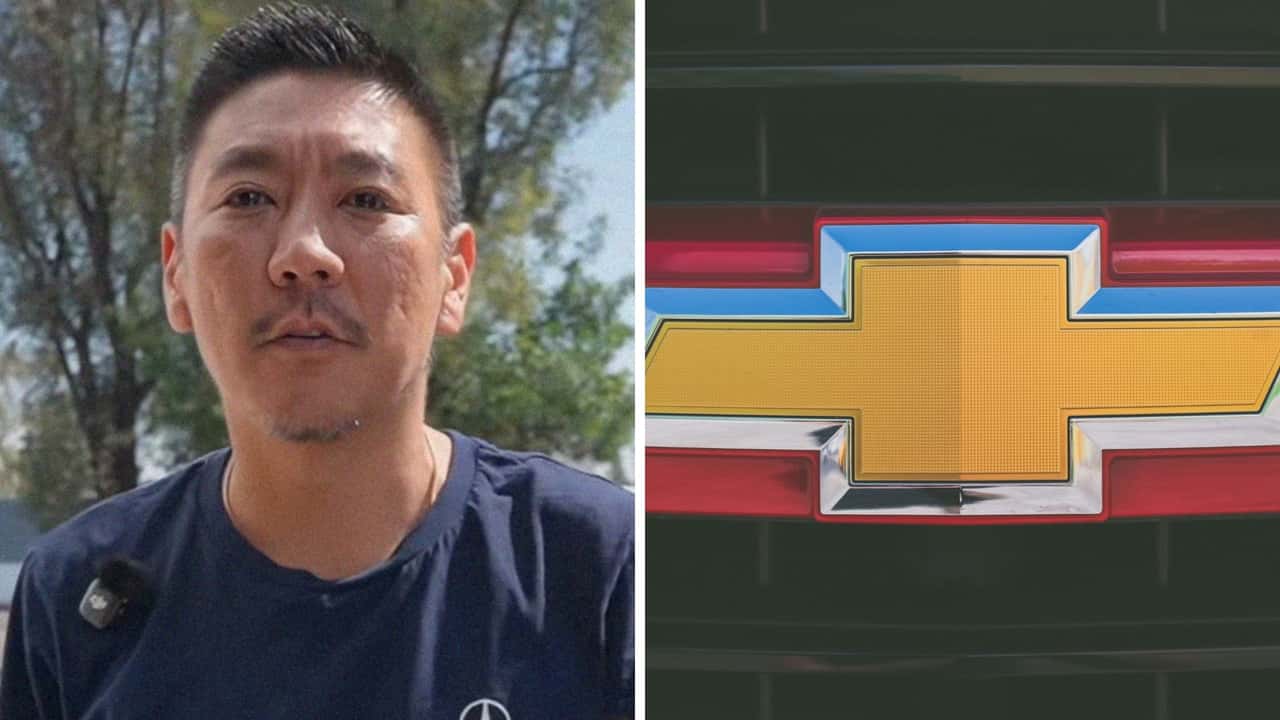

A Southern California Chevrolet owner brought her 2014 Silverado 1500 into a repair shop with a customer complaint slip that read “feels skippy on the freeway, tires are good, check engine light flashed.” In the video that captured the mechanic's assessment, that description became a running joke.
The shop’s main technician walked around the truck for about a minute, looked at the rubber, and made a very different assessment, finding that the tires were bald, the spare was leaking, and the light she saw flashing was the traction control system catching wheels spinning, not a Check Engine warning.
The 2-minute, 38-second video was posted recently by Concept 3 Performance (@concept3performance), a Santa Fe Springs, California, auto shop channel with 2.1 million followers, part of whose appeal is the sharp banter from its boss and head tech, William. It has drawn more than 81,700 views.
The Hang Tag
The video opens with the tech reading the paperwork clipped to the truck. “Customer complaint on this one, 2014 Chevy Silverado 1500 LT. Notice the last few days, when she’s accelerating going on the freeway, it feels skippy. Tires are good. One time did that, the check engine light came on, flashed. Spark plugs done last year in September, no coils. Only happens on harder [acceleration]. Coworker did the plugs, said he used all your plugs. Fuel type 89 regular.”
He re-reads the line: “It feels skippy. Tires are good.”
Then he looks around the truck, swiftly zeroing in on the tires. “It’s bald,” he says of the tread, almost the second he gets to the wheel. He notes that one of the four tires is a different brand from the others and that its wear bar is showing through. “This is the only one that’s not original, you know why — she went to a Mexican tire shop. Look, it’s on the wall.” The spare is in similar shape. “Her spare is leaking. That good? And you have a [expletive] needle here,” he says.
By the time he gets back to the front of the truck, his read on the customer’s complaint has completely changed. The flashing light was not the Check Engine light. “There was no check today. She was [seeing] a [expletive] traction light.” Then, in a quote-back to himself of the customer’s framing: “For real, get your [expletive] out here. It feels skippy, tires are good.” A co-worker laughs in the background. They decide they want to drive the truck. “She’s able to recreate it. We should go get sideways with her somewhere.”
After the test drive, the tech is more confident: “Pretty bald, going on the freeway it feels skippy. I don’t think the [expletive] CEL light flashed — it’s the traction control, I think so. My truck used to do the same [expletive]. Every time you lose a little bit of traction it flashes.”
Is There A Warning Light For Bald Tires?
Is there a dashboard light that warns you when your tread is gone? In US passenger vehicles, no. The federal standard that puts a tire-warning system into every new US car only calls for monitoring air pressure and warning the driver when one or more tires is 25% or more below the vehicle manufacturer’s recommended pressure. There is no federal mandate for tread monitoring, so a dedicated tread wear warning is not standard equipment on US passenger cars.
What measures tread is the tire itself. Every modern passenger tire has built-in tread-wear indicator spots at six locations around the casing. As Pirelli explains, the indicators are “chunks of rubber that span the grooves in the tread,” set at 2/32 of an inch from the bottom of the groove. When the surrounding tread wears down flush with those bars, you are at the federal minimum. “Most state laws require a tire to have at least a tread depth of 2/32nds of an inch,” Pirelli notes. That is also what the penny test catches — Lincoln’s head is exactly 2/32 of an inch tall, and if you can see all of it, the tire is at or below the legal limit.
The closest the car itself comes to flagging a bald tire is what the Silverado owner saw but didn't understand. As Chevrolet’s dashboard light guide puts it, when the traction control indicator flashes, it means the system is actively working — stepping in because a wheel has slipped. That is exactly what happens when a high-torque truck with worn tires takes a freeway on-ramp.
There’s a gap, however, between legal requirements and optimum safety. AAA research released in 2018 found that tires worn to just 4/32 of an inch — well above the 2/32 legal minimum — added an average of 87 feet of stopping distance for a passenger car and 86 feet for a light truck, on wet pavement at highway speeds, compared with new tires. The same study found a 33% reduction in passenger car handling on wet roads at the same depth. AAA’s recommendation is to start shopping for replacements at 4/32, not 2/32.
“The Grooves Are Almost Flat, Bro”
Most of the comments under the video were either tradesmen laughing along with the bit or viewers second-guessing the tech. “The other ones were rough, but c’mon man this one looked OK,” wrote Defective Gas Station Hotdog, defending one of the four tires. Replies corrected him quickly. “Below 3mm is recommended replace, below 1.8 is dangerous,” wrote ddggbb. “The grooves are almost flat, bro,” wrote slapuhhoe.
One comment was funny but very, very wrong. “If the tires are nearly bald, wouldn’t that improve traction, as in making them slicks?” whistler wrote. Race tires for dry tracks are bald by design; passenger tires that travel roads in a variety of conditions are the opposite.
A more pointed comment came from jlexteck, who understood the video as proud workmanship rather than an attempt to shame a paying customer. “Now that is a service advisor—refreshing to get a write-up where the writer asked the questions.”
Motor1 reached out to Concept 3 Performance via email for additional comment. We’ll be sure to update this if they respond.
RECOMMENDED FOR YOU

Mechanic Works On Land Rover Discovery—He Accidentally ‘Totals’ It: 'Don't Tell The Customer'
Toyota's Next-Gen Batteries For Hybrids Arrive In 2027
Man Buys Lease On New Car. The Salesman Steps In To Clarify—Toyota Leases Are Different: 'I Do This With Subaru'
Audi Claims The New A2 E-Tron Is Its Most Efficient Car Ever
Man Returns Brand-New Acura To The Dealership. Then The Salesman Gaslights Him: 'That's Bare Metal'
Why EVs Don't Have Traditional Grilles
Nissan Saleswoman Says She ‘Doesn’t Have Time’ To Show Car. Then She Learns Who She's Talking To