'Technology Has Come a Long Way:' Man Gets New All-Season Tires. You're Supposed to Click Them on Before Driving
"I got the Bluetooth ones..."
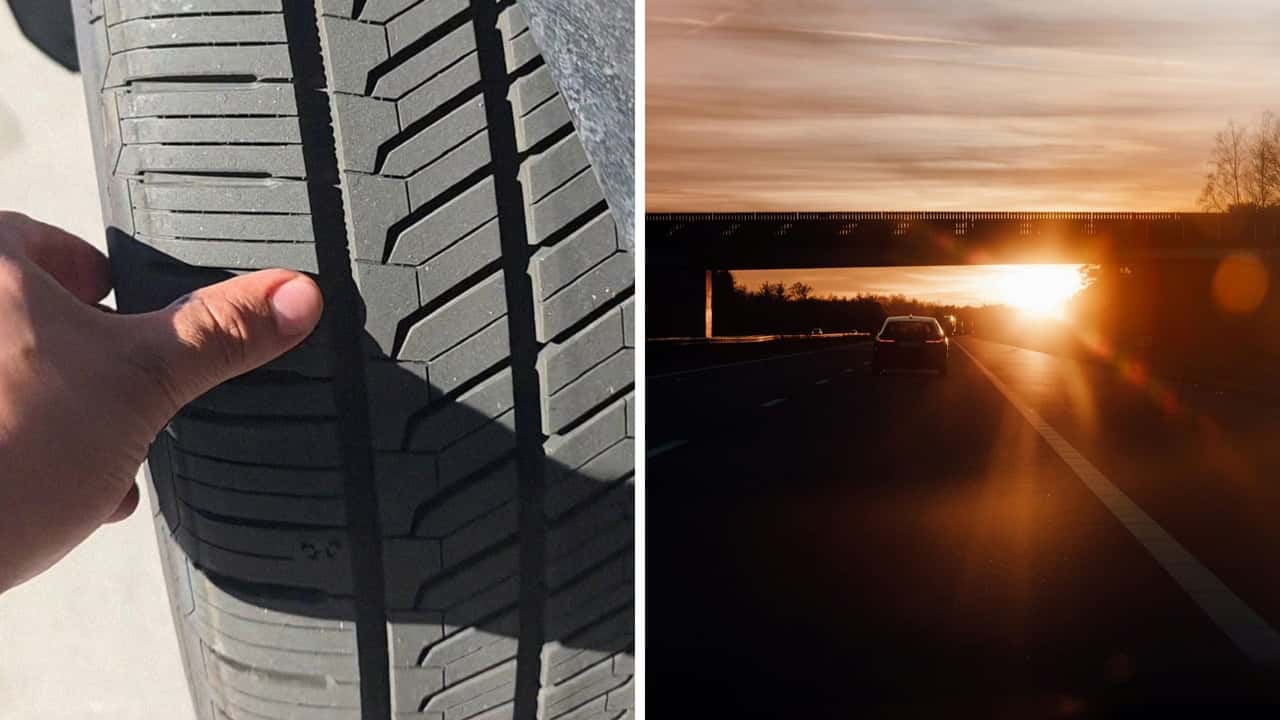

A man’s joke about all-season tires was prompted a discussion about different tire types.
TikTok user Marcos accrued over 1.3 million views with a humorous clip about the different "modes" his fresh set of tires supposedly comes with. At the beginning of the clip, he records himself walking toward his vehicle.
"Technology has come a long way," he writes in a text overlay.
"So I got these new tires where, depending on the weather, you click what it is," he says to his viewers. As he does so, he leans down to inspect a tire, which is emblazoned with different environmental symbols. Aesthetically, they carry the same emojis one would find on a weather reporting app. There are three: one that looks like a rudimentary drawing of the sun, a second sigil showing a cloud with rain falling out from underneath it, and a snowflake.
Marcos jokes that if folks want to change the tire's mode, all they have to do is tap the icon that best matches the weather.
"Today’s a sunny day, so we’re gonna pick sunny," he says, placing his thumb on his tire.
What Do the Symbols Mean?
Again, Marcos was cracking a joke, so don’t rush to your car to see if your wheels have click transformation capabilities.
But if you are concerned about equipping your ride with the appropriate rubber for specific weather conditions, there’s no shortage of options you could spend your hard-earned cash on.
The type of tire Marcos shows off in his video has been discussed by others online as well, including users in a Reddit post who surmised that the different weather icons were actual treadwear markers. As one wrote, "These are incremental wear indicators. They are all different depths. When the tire wears down, the snow symbol will disappear, meaning it is no longer an optimal tire for that condition. Then rain, then sun." Other folks in the discussion pointed out that these tread indicators were featured on a Continental brand offering.
Continental offered a similar tread indication system on all-season tires. However, the icons were swapped for the letters D, W, and S, which stand for "Dry," "Wet," and "Snow," respectively. Ultimately, these tread indicators function similarly. Once the "S" or "snowflake" icon has worn down, that’s the manufacturer’s way of telling drivers that they should probably refrain from using those tires in the snow. That’s because its grip is compromised by wear.
All-Season versus All-Weather Tires
The symbols on Marcos’s tire, and others with the D, W, and S nomenclature, indicate that they are all-season tires. This distinction is different from all-weather tires, which have different properties and, in many cases, symbols that indicate them.
Discount Tire compares and contrasts the gradings of all-season and all-weather tires. According to the company, all-seasons are best suited for "the mildest conditions" in different types of weather. So if you’re in an area that gets a bit of snow, these tires should suit your driving needs. However, moderate or severe snowfall will probably leave you slipping and sliding.
All-weather tires, Discount Tire writes, provide drivers with a bit more grip. The company states that mild to moderate snowfall isn’t a tall order for this type of rubber, but severe snow will still be too much for it. So, if you’re thinking of trekking through Alaska in all-weather tires, you’re going to have a bad time. In these conditions, it’s probably best to slap on dedicated winter tires for maximum traction.
Are Winter Tires Worth It?
Depending on the climate, changing out your tires in cold-weather months could be a safer option. Since dedicated winter tires are formulated with a specific rubber compound, they can’t be driven in warmer temperatures. Typically, when the weather is 45 degrees or below, these tires are safe to keep on the road at all times. According to Goodyear, the general rule of thumb is to get some winter shoes on your ride after Thanksgiving.
The Canadian Automobile Association of North & East Ontario recommends following the "7:7" rule. I.e., if there are seven consecutive days of 7-degree Celsius (45 degrees Fahrenheit) weather, then you should put your winter tires on. Moreover, the inverse is true for when you should take them off and get back to your all-seasons or other non-winter variant tires. Once you have seven straight days of weather above 45 degrees Fahrenheit, retire your winter tires and store them.
Motor1 has reached out to Marcos via TikTok direct message and Continental via email for further comment. We'll update this if either responds.
RECOMMENDED FOR YOU

‘Genuinely The Best Tire Place’: Woman Goes To Discount Tire But Can’t Afford The Repair. What The Workers Do ‘Restores Her Faith’
This New Hybrid Engine Achieves A Breakthrough In Efficiency
‘We’re Supposed To Go 100,000 Miles’: Mechanic Checks New Transmission Fluid. Then He Compares It To Fluid After 35,000 Miles
Man’s Check Engine Light Comes On. Then He Keeps Driving Anyway: ‘My Bank Account Said No Thank You’
Audi Car Dealership Worker Needs To Close A Deal—So She Throws In A Carton Of Eggs: ‘Am I Crazy For This?’
Woman Gets A Flat Tire. Then Her Fiancé Checks What Caused It—And It Sends Him Reeling: ‘I Wish I Was Making This Up’
Toyota Tacoma’s Interior Gets Destroyed In A Fire. Then The Owner Tries To Start It: ‘4th Gen Could Never’