Porsche 912 (1965-1969): No, not a misprint!
60 years ago, the unusual number with four cylinders was supposed to pick up the customers of the 356
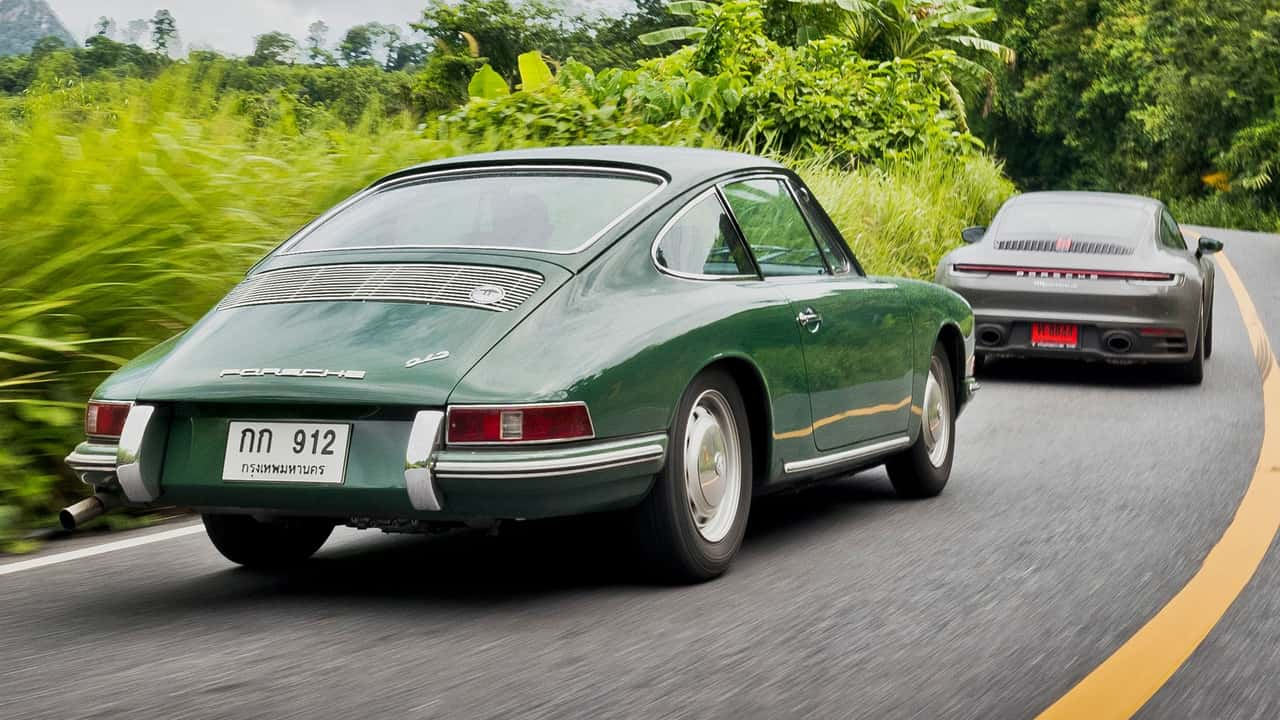

There seems to be a lot of literature to read about the Porsche 911. It is often glorified as a success story, but it didn't start out quite so golden at first. Which is why, 60 years ago, the 911 got a brother whose name looks like a spelling mistake. But it isn't. Let's take a look back at the 912.
When the new Porsche 911 finally came onto the market in 1964 (initially as the 901), the ingredients seemed to be right: a great shape plus a powerful six-cylinder engine. However, this engine made the 911 rather expensive. The price jump from the Porsche 356 1600 SC Coupé (16,450 Deutschmarks) was substantial: 5,450 Deutschmarks more (21,900 Deutschmarks) had to be paid. No mean feat, after all, you could get a VW Beetle for that difference back then.
Gallery: Porsche 912 (1965-1969)


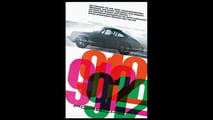
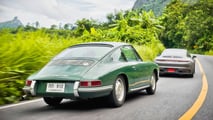
Starting in April 1965, the Porsche 912 replaced the weaker 1.6-litre 356. Its biggest advantage was that it cost "only" DM 16,250 at market launch, making it DM 5,650 cheaper than the 911. At 10 to 12 litres per 100 kilometres, petrol consumption was also considerably lower than that of the 911.
However, the Porsche management realised well in advance that the 901/911 would be quite powerful and quite expensive. In 1963, the decision was made to introduce a new four-cylinder entry-level model based on the later 911. Like this vehicle with the internal factory designation 901, the four-cylinder 912 was originally known in the company under a number with a zero in the centre, but the designation 902 was never used publicly.
The new, horizontal four-cylinder engine for the 902 was originally intended to use components from the 901 six-cylinder engine. For reasons of performance, cost and time, Porsche instead developed a third option, the familiar 1.6-litre Type 616 engine from the 356, tailored to the 902.
Porsche 912 (1965)
In its production form, the Type 912 combines a 911 body with the 1.6-litre four-cylinder engine from the Type 616/36. This car has a modified four-cylinder engine from the Porsche 356 SC in the rear, which now produces 90 PS. Despite the slightly lower output, the engine's responsiveness has improved considerably, with maximum torque now available at just 3,500 rpm. An additional improvement is the optional five-speed gearbox (surcharge DM 340). Large-volume intake silencers reduce engine noise.
In order to bring the price of the 912 closer to that of the 356, Porsche also cancelled some of the standard features of the 911. When production of the 356 ended in 1965, production of the 912 Coupé officially began on 5 April 1965.
Advertising poster for the Porsche 912 from 1965
The chassis of the 912 hardly differs from that of the 911, but the driving behaviour is more good-natured and the tendency to oversteer is less than in the first 911 because the car with the four-cylinder engine is less rear-heavy. Compared to the 911, the 912 production car has better weight distribution, handling and range.
The 912 is more simply equipped than the 911, but has received many minor and major improvements over the years. Like the 911, it has a steering column that is bent in two places, a padded dashboard at the top and bottom and a windscreen made of laminated glass for passive safety right from the start.
Up to the 1967 model, there were only three instruments: instrument cluster, speedometer, rev counter and, as an extra, clock and outside thermometer - in other words, different instrumentation to the 911 - all in green. However, with the two instruments available at extra cost, the dashboards are indistinguishable at first glance.
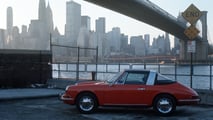
1967 in New York: Porsche 912 Targa of the 1968 model year
Styling, performance, construction quality, reliability and price make the 912 a very attractive purchase for new and old customers, and it sells significantly better than the 911 in the first years of production. Porsche produces almost 30,000 units of the 912 Coupé and around 2,500 units of the 912 Targa in just under five years. The VW-Porsche 914 became the successor. The 912 made a local comeback in 1976: The 912 E (Type 923) was produced in just 2,099 units for the US market.
As early as 1971, the plan to develop a new 912 and offer it internationally was born. It is documented that the economic viability and development of the 912 were discussed internally from 1972 onwards. However, development did not progress beyond the prototype stage. Initially, US dealers in particular were not interested in the car, as the 914 was successful as an entry-level model and was not in competition with the 911.
Gallery: Porsche 912 E (1976)
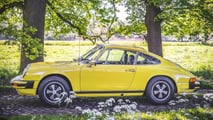
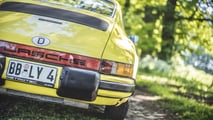
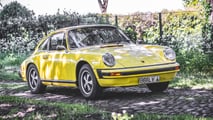
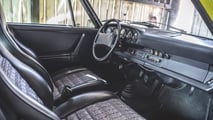
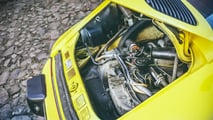
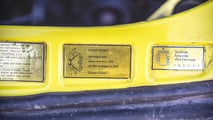
In 1974, the decision was made to bring the 912 E to the USA after all, but to cancel its worldwide launch. The VW-Porsche 914 was to be discontinued in 1976, but the Porsche 924 that followed it was not yet available in the USA in the same year - unlike in Europe.
The engine is derived from that of the Porsche 914 2.0: an air-cooled four-cylinder boxer engine with 2.0 litre capacity and petrol injection. The 912 E uses a Bosch L-Jetronic instead of the D-Jetronic of the 914. The engine in the 912 E is exhaust-gas-reduced, has a significantly lower compression ratio of 7.6 : 1 than in the 914, runs on regular petrol and produces 90 PS at 4,900 rpm; other sources even speak of just 86 SAE hp. Unlike in the original 912, the engine is not a Porsche engine, but the Volkswagen Type 4 engine, also known as the "flat engine".
More from Porsche history:
RECOMMENDED FOR YOU
The Porsche 911 Is Crushing The Taycan In Sales, Nearly 5 To 1
Woman Buys Car From Carvana. Then The Trunk Won’t Open. It’s Costs $4,500
Photos: Porsche 911 GT3 S/C
Mechanic Shows The Quickest Way To Check To See If Your A/C Is About To Go Out. It’s Easier Than You Think
The Porsche 911 GT3 Is Even Better As A Convertible: Review
Hyundai Driver Uses Auto Hold At Red Light. Then She Gets Accused Of Rear-Ending A Honda: 'Stop Using Auto Hold'
The Stick Shift Isn't Dead Yet: Every Manual Car You Can Still Buy In 2026