30 years of the Audi A8 (D2): On the road in the long-wheelbase version with W12
How the first real luxury Audi became the Chancellor's car
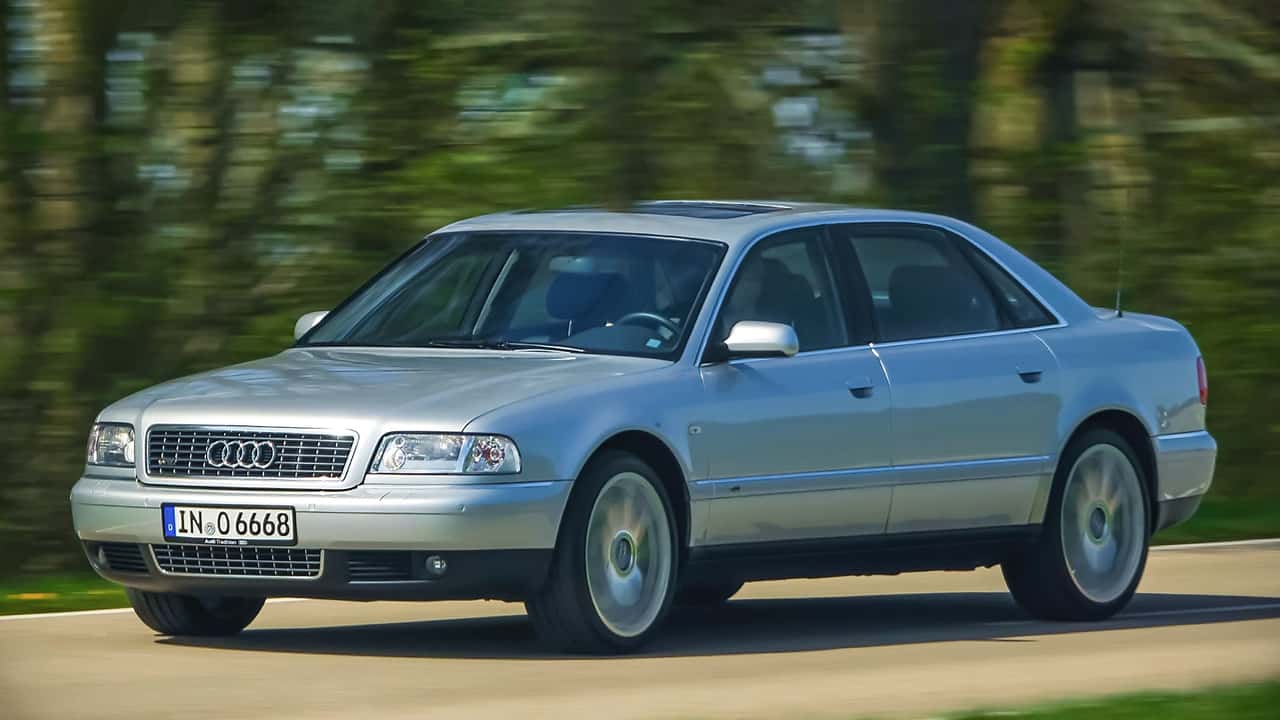

Vorsprung durch Technik: Audi feels that this slogan has become a little worn out. Things looked very different 30 years ago. The Audi A8 makes a clear statement to the competition at its launch at the Geneva Motor Show in 1994.
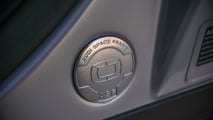
With it, Audi succeeded in moving up into the luxury class in 1994. The saloon, built in Neckarsulm, is presented at the Geneva Motor Show in March and features the "Audi Space Frame", a body made entirely of aluminium, as a technical highlight.
Gallery: Audi A8 6.0 L (2002) driving report

Let's take a look back a few years: 1988 sees the launch of Audi's new top-of-the-range model, the V8. Although technically independent, the saloon looked to many like a bloated Audi 200, and it was clear to CEO Ferdinand Piëch that the successor also had to set new standards on the outside. As early as 1982, Piëch signed a contract with the Aluminium Company of America (Alcoa) to lay the foundations for a new high-end car with a lightweight design.
Into the future with aluminium
Audi heralds the beginning of a new era with the presentation of the aluminium ASF (Audi Space Frame) study at the Tokyo Motor Show in autumn 1993. Not only is the body special, but under the bonnet is a 3.4-litre V8 TDI. A diesel engine was still rather unusual for luxury saloons at the time.
Perhaps "study" is not the right word, because the ASF is more of a near-production prototype of the first generation of the A8. It is shown with an unpainted polished aluminium body to emphasise the lightness of the vehicle.
And the later A8 is also light. The aluminium body of the production vehicle launched in 1994 weighed just 249 kilograms. With the 2.8-litre base petrol engine, the five-metre car weighed just 1,460 kilograms. Without extras, of course. Those who later ordered the fattest engines in the A8, right up to the W12, came dangerously close to the two-tonne mark.
Since 1995, the four rings have been setting standards in the personalisation of premium vehicles. The Office Packages for the first generation of the Audi A8 offered a cooler box, bar compartment, VHS player with monitor, folding table and electrically operated curtains.
Failed dreams
In 1997, Audi toyed with the idea of developing a coupé version of the then three-year-old A8. The project was realised with the Munich-based company IVM Automotive. They built a near-production study in the colour "Ming Blue Pearl", which was presented at the Geneva Motor Show. Naturally, a B-pillar was missing, which is why there are seats with integrated seat belt mounts from the Audi convertible of the time.
Audi A8 Coupé
However, the A8 Coupé was thwarted by sales and marketing. They have concerns about the sales figures of a two-door A8. They fear suffering the same fate as the BMW 8 Series: Beautiful, but rather poor sales. So the Audi luxury vehicle is shelved and the prototype, which has not been shown to the public since 2002, is said to be in the possession of IVM.
Body for the chancellor
When he took office in 1998, German Chancellor Gerhard Schröder chose the A8 as his official company car, breaking with tradition as his predecessors had favoured Mercedes S-Class models.
Football fan Schröder can theoretically even watch matches: From 1998, it is even possible to watch television in the Audi A8 - at least when the car is parked. The technical prerequisite for this is the "Navigation System Plus", which can even receive teletext.
Major model upgrade in 1999
In 1999, for the 2000 model year, the front end of the A8 is slightly revised, with new, larger, clear headlights, a revised radiator grille and a lower front apron with fog lights as standard. In the interior, the seats have been given a new horizontal stitching pattern.
In addition, the 3.7-litre V8 model with front-wheel drive has been dropped, leaving the 2.8-litre V6 and the 4.2 quattro with long and short wheelbase. These redesigned vehicles also have revised door handles and an integrated radio aerial. For the year 2000, the North American A8 range is expanded to include the A8 L.
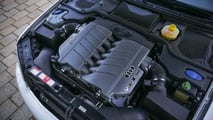
In 2001, Audi introduces its new W12 engine, a compact 6.0-litre unit developed by merging two VR6 engines at the crankshaft. The engine is soon available in the A8, but only for European and Asian customers.
In 2002, the A8 L is fitted with xenon headlights and a heated steering wheel as standard. A tyre pressure monitoring system (TPMS), an updated Symphony II stereo system and new exterior colours are also added. In 2002, all A8 variants were fitted with a release lever for the boot to facilitate escape if a person was trapped inside.
Upper A8 with six litre displacement
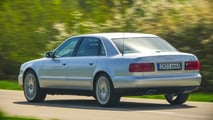
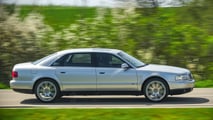
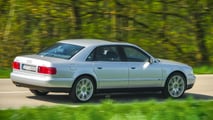
Only 750 examples of the D2 W12 were produced between its introduction and its retirement in 2003, 650 according to other sources. We drove one of these rare examples, the long-wheelbase version measuring 5.16 metres, but you can't really tell by looking at it.
Nevertheless, an Audi employee is delighted when we take the photos. Such a beautiful car! To see something like this for once. It's great! He can still remember when the W12 was the ultimate. No wonder, you might add, as it once cost around DM 212,000 (approx. £90,000).
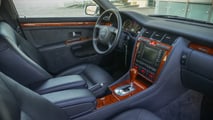
Fortunately, you notice this in the interior. Everything is milled from a solid block and has a high-quality feel. However, the fact that "our" A8 W12 is practically in new condition with only 3,000 kilometres (1,864 miles) on the clock also helps. The cockpit is as sumptuous as it is Alcantara, leather and wood, a high office of buttons, only the pixelated displays betray its age), but the rear is just as opulent. Electrically adjustable seats, plenty of legroom, footrests, cushions, mirrors and lamps. That's how it should be. A real showpiece from the Piëch-Winterkorn era.
From the depths of space
But now the W12 makes its entrance. Turn the key and ... yes, where is it? Only a glance at the rev counter reveals: it's running. Idle speed 700 rpm. When accelerating, the twelve-cylinder engine rumbles quietly from the depths of the engine compartment. Turbo? Nothing there. According to the data sheet, the maximum torque of 550 Nm is only available between 3,500 and 4,750 rpm. But the powerful engine gets its power from the large displacement.
And so the acceleration of 5.6 seconds is barely perceptible to the driver, were it not for the distinct shift jerks of the 5-speed automatic gearbox. You almost have to force yourself to rev the engine above 2,000 revs.
The range display on the on-board computer glows with the figure 700, tempting me to simply take the A8 W12 on the long trip to South Tyrol. But I would probably be in for a rude awakening at the petrol station, where Audi quotes a good 15 litres (18.8 mpg-UK) of combined consumption. But when you arrive, you get out of the car and ask yourself: What happened?
As Audi wrote in an A8 brochure back in 1995, "The Audi A8 will one day be among the cars that have made history." There is something to that. Production of this generation will end on 4 August 2002 with the number 105,092, so you should slowly secure your share of history now.
More from the Audi history:
RECOMMENDED FOR YOU
Reborn Audi A2 Reveals Funky Styling After Losing Camouflage
Woman Leaves 1-Star Review For Nissan Dealership. Then The General Manager Fights Back
The Audi Q7 Gets A Price Hike, While The SQ7 Nears $100,000
The New Nissan Leaf Nismo Is All Show Without The Extra Go
Audi Q7 Vs BMW X5: Which New Luxury SUV Is Worth Your Money?
Woman Sits In Line For An Hour At Take 5. Then They Say They Don’t Have Her Oil Filter—And Ask Her To Do Something That Shocks Her
Spotted: Audi Is Making An RS Model It's Never Offered Before