Drifitng an AWD Car on Pavement Requires Every Ounce of Commitment
More grip on entry means you need to be going a whole lot faster to get sideways. Here's how to do it right, according to the experts.


Compared to drifting a rear-wheel drive car, sliding a car with all-wheel drive is an entirely different skill. With power going to the front wheels, there's a whole lot more grip involved, so the car reacts differently to your inputs. Learning can be tough, but if there's anyone who can teach us, it's the folks at the Team O'Neil Rally School.
Instructor Wyatt Knox brought a brand-new Subaru WRX to Canaan Motorsports Park in Canaan, New Hampshire to give us a step-by-step guide to drifting a car with AWD. The video is the first in a new "How to Gymkhana" series from the school, honoring the late Ken Block.

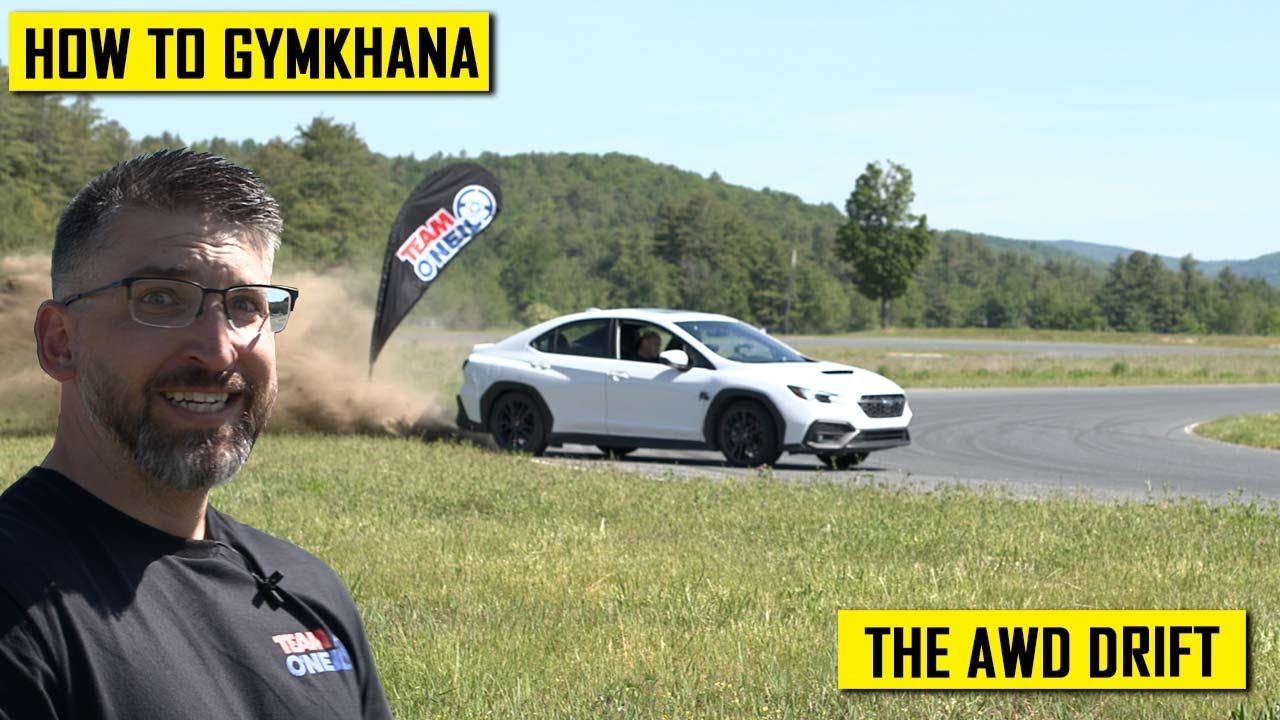
It's quickly revealed that getting an AWD sideways requires a whole lot more speed and commitment than something with rear-wheel drive. Because there's power going to the front wheels, the car will naturally want to keep going straight, which means you need to throw the weight of the car in a far more aggressive manner to induce a slide, at a much quicker rate of speed.
Once you get past the intimidating speeds, though, drifting an AWD car is straightforward. As Knox explains, you have to lift off the throttle and turn the wheel to initiate a slide, immediately followed by a small amount of braking to tuck the nose. He says you have to be patient, allowing the car to rotate before eventually getting back on the gas for a smooth exit. Unlike a rear-drive car, you can't just mash the gas and hope to power out. On most AWD cars, that'll just result in understeer.
How to Drift

RECOMMENDED FOR YOU

Watch Scott Speed Set Mount Washington Record In Subaru WRX Project Midnight
Mazda's Fictional Rotary Sports Car Is Returning For A Hardcore Version
What Is The Most Reliable Car Brand? Here's What The Data Says
Mini Rooftop Edition Turns Its Signature Contrast Roof On Its Head
I Drove The Base Subaru WRX. It's Exactly What Enthusiasts Have Been Asking For
Mercedes-Benz C-Class Facelift Hides A 255-HP Mild-Hybrid Surprise
The Stick Shift Isn't Dead Yet: Every Manual Car You Can Still Buy In 2026