BMW 1 Series (2004-2011): Classic of the future?
You read correctly: the little Bangle BMW is also turning 20

Our valued readers have probably already read the "Do you remember?" series. There we present cars from the past that are now almost forgotten. But what about the models that are still on the road in large numbers? The types that everyone knows, that have been on the road for well over 20 years, but in some cases much less.
Will they become classic cars one day? This is a source of controversy. We want to present some of these models in our "Classic of the future?" series.
From the 02 to the 1 Series
The legendary BMW 2002 (1966-1977) was still Golf sized, but with the 3 Series, the brand's entry-level model became bigger and bigger. In the 1990s, rivals such as Volkswagen made a cheeky attack with the Golf VR6, while Audi launched the A3 in 1996. BMW countered somewhat half-heartedly from 1994 with the first 3 Series Compact, but this became a design flop in the second generation at the latest.
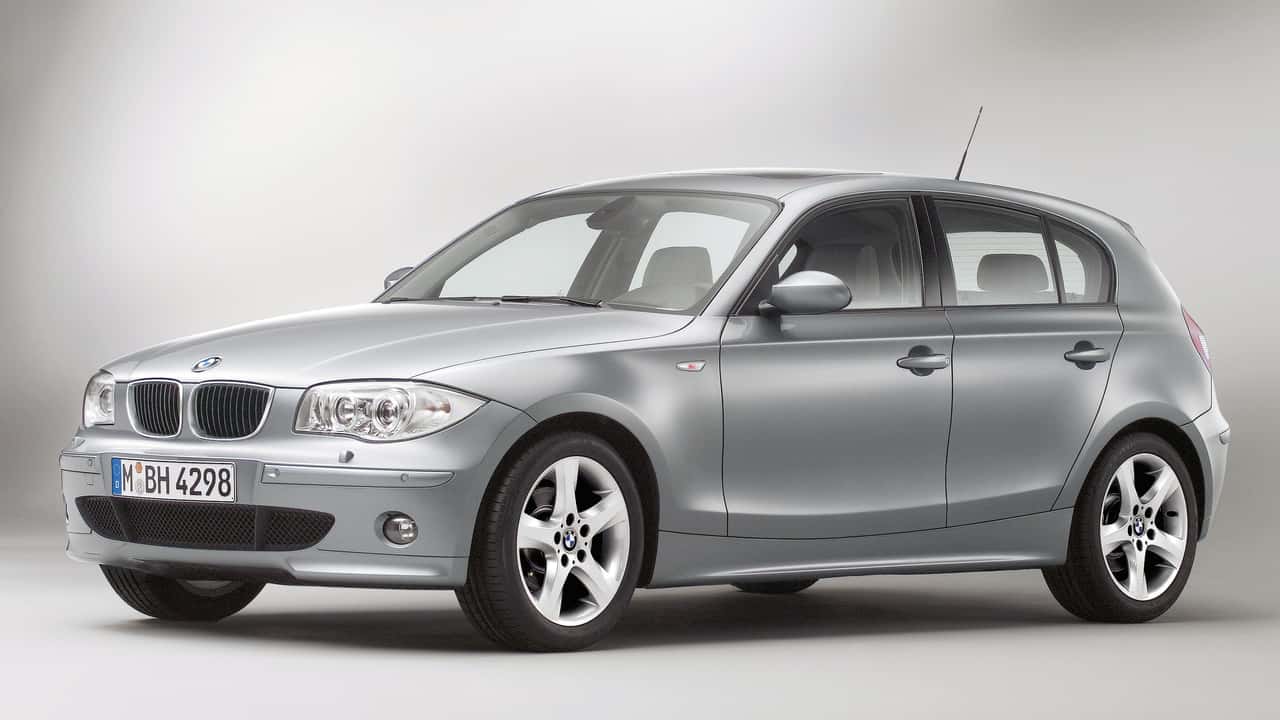
Consistent action was needed and so, 20 years ago, BMW presented the first 1 Series. Although it also utilised a lot of technology from the 3 Series, it was clearly independent.
Gallery: BMW 1er (E87, 2004-2013)

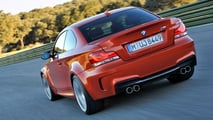
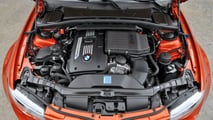
The first generation of the BMW 1 Series consisted of the compact cars BMW E81 (3-door hatchback saloon), BMW E82 (coupé), BMW E87 (5-door hatchback saloon) and BMW E88 (convertible). The E81/E82/E87/E88 generation was produced from 2004 to 2013 and is sometimes referred to as the E8x.
Design between Rover and Bangle
BMW originally considered adopting the design programme of the planned Rover R30 compact model for the upcoming 1 Series. In this way, at least certain investments were to be saved after leaving Rover in 2000. However, it was then decided to develop the E8x in parallel with the E90 3-series, which was launched in 2005. The E8x shares around 60 per cent of its components with the E90, including front and rear suspension, structure, chassis, engines, drivetrain, hardware and electronic elements.
BMW 1 Series (E87, 2004-2013)
The first BMW 1 Series is developed under the direction of head of design Chris Bangle. A hint of the Rover R30 project still resonates visually. However, the typical Hofmeister kink at the rear side window is emphasised, and the sagging line in the lower section of the doors is typical of Bangle. At the time, the appearance of the 1 Series three- and five-door models was not uncontroversial, but today they certainly look timeless. At the 2002 Geneva Motor Show, the CS1 Concept gave a foretaste of the design of the 1 Series, with Christopher Chapman responsible for the exterior design of the hatchback models.
BMW presented the first production models of the 1 Series - in the five-door hatchback variant E87 - at the Paris Motor Show in September 2004. With an initial length of 4,227 mm and width of 1,751 mm, the five-door model enters the compact class. The wheelbase of 2,660 mm is the same for all variants.
With the model update in spring 2007, the dimensions of the five-door correspond to those of the three-door. Visually, the window line of the three-door is even flatter towards the rear than that of the five-door, and both doors have frameless window panes. The variable luggage compartment has a capacity of 330 to 1,150 litres and the 60:40 split folding rear seat backrest comes as standard. The three-door model is designed as a four-seater ex works, but can also be ordered as a five-seater at no extra charge.
BMW 1 Series (E87, 2004-2013)
The BMW 1 Series owes its unique position within the compact class to two features: Rear-wheel drive and in-line six-cylinder engine. At the start of production, three petrol and two diesel engines with four cylinders were initially offered (116i with 1.6 litre; 118i, 120i, 118d and 120d with 2.0 litre displacement). Both the diesel and petrol engines are in-line engines with four-valve technology. One year after the start of production, the 130i is introduced, an in-line six-cylinder engine with a displacement of 3.0 litres and an output of 265 PS. It remains an insider tip in terms of understatement to this day.
Facelift, coupé and convertible from 2007
With the facelift in March 2007, all engines were revised and all models received the BMW Efficient Dynamics measures (with the exception of the 116i, which was converted to Efficient Dynamics in September 2007). Three new engines are introduced with the launch of the Coupé and Convertible in the same year. The six-cylinder 125i and the 135i are used exclusively in the coupé and convertible variants, while the 130i is reserved for the three- and five-door models.
The 2007 facelift is only visible to connoisseurs at first glance: the front view differs mainly through a wider air intake with horizontal trim and integrated rectangular fog lights. The bi-xenon version of the headlights has light rings with daytime running light function.
BMW 1st Coupe und Cabriolet
The rear view is characterised by new rear light graphics with LED technology and a wider-looking rear apron. In the interior, the centre console has been redesigned, among other things. Door mirrors, integrated door pockets and chrome applications are added, and qualities and equipment from the higher model series are introduced.
With the facelift, a series of efficiency measures were introduced as part of the Efficient Dynamics packages - such as new petrol engines with direct injection and stratified charging or an automatic start-stop system.
The chassis features an aluminium multi-link suspension and rear-wheel drive with a longitudinally mounted engine, which ensures a weight distribution of 50:50 - a rare configuration for a hatchback, as most vehicles in this market segment are equipped with front-wheel drive.
1 Series M Coupé: the top-of-the-range 1 Series
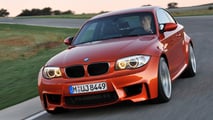
The most powerful variant of the first 1 Series is the 1 Series M Coupé with the BMW N54 inline six-cylinder turbo engine, which is coupled with a six-speed manual gearbox. 340 PS and 500 Nm via overboost accelerate the 1.5 tonne car to 62 mph in 4.9 seconds. For historical reasons, BMW has dispensed with the obvious name M1.
BMW 1 M Coupe (2011/12)
BMW 1 M Coupe (2011/12)
BMW 1 M Coupe (2011/12)
In addition to the engine, the M Coupé has other features to set it apart from the regular 1 Series models. These include a lightweight sports suspension, a mechanical differential lock (variable locking value up to 100 per cent), a compound brake system and 19-inch light-alloy wheels with mixed tyres. The chassis has a track widening of 60 mm at the rear axle and 40 mm at the front axle, which also requires a corresponding widening of the mudguards.
Additional changes to the body include the modified rear apron with spoiler and the modified front with ventilation openings for the additional cooling system. In the interior, the car has leather upholstery and Alcantara interior trims, each with contrasting stitching.
The 1 Series M is only produced in the coupé version and is regarded as the predecessor to the BMW M2. The first models will be delivered in May 2011, with production already coming to an end in summer 2012. A total of 6,331 units roll off the production line.
More potential future classics from BMW:
Following the introduction of the second 1 Series F20/F21 in 2011, the hatchback models E81/E87 are gradually phased out of the programme, while the coupés and convertibles E82/E88 are still produced until 2013, when they replace the 2 Series F22/F23. Over one million units of the first 1-series were produced between 2004 and 2013.
RECOMMENDED FOR YOU
Electric BMW M3 Will Have More Power Than The Gas Car, Without Going Overboard
Toyota Driver Goes To Walmart. Then She Parks Her Celica In The Cart Return Bay: ‘Banned From The Store’
BMW Explains Why It Finally Gave The M2 All-Wheel Drive
A Mercedes Executive Reportedly Said The Electric GT 'Shouldn’t Exist'
Audi Q7 Vs BMW X5: Which New Luxury SUV Is Worth Your Money?
‘Toyota, Do Better’: Mom Gets Toyota Highlander Recall Notice In The Mail. She Can’t Believe The ‘Fix’
The Electric BMW M3 Will Wear The Same Badge As Its Gas Sibling