Citroën CX (1974-1991): The DS heir turns 50
Today, the saloon and estate have long been cult classics


How do you inherit a living legend? This question does not only arise in sport or music. Successors to famous names also often have a hard time in the automotive sector. On 26 August 1974, 40 years ago, the Citroën CX was presented for the first time. As the
successor to the legendary Citroën DS, the upper mid-range model is the synthesis
of all Citroën's technical developments.
In 1969, the go-ahead was given for the development of a successor to the DS model series. The aim was to create a vehicle that would build on the charm of its predecessor, which had been in production since 1955, but would be significantly cheaper to produce. This was also urgently needed, because at the beginning of the 1970s, Citroën was experiencing economic problems. The later CX became the brand's last independent new development before the takeover by Peugeot.
Gallery: Citroën CX (1974-1991)

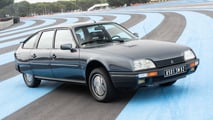
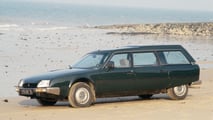
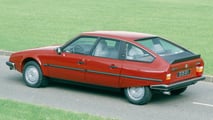
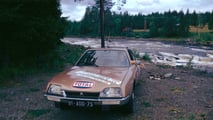
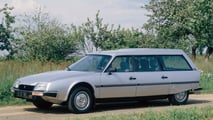
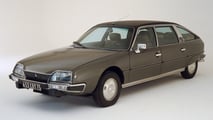
The Citroën CX was presented to French President Giscard d'Estaing shortly before the 1974 Paris Motor Show. 25 journalists were given the opportunity to take part in the "Raid Arctique" with the Citroën CX following the international press presentation in Lapland, which led from Galliväre near Kiruna to Paris over a distance of around 3000 kilometres (1,864 miles) in a wide variety of road surfaces and weather conditions.
The name of the Citroën CX is derived from the French term for the Cw value (drag coefficient). The Cw value of the Citroën CX was 0.39 50 years ago and thus at a very good level.
The CX is regarded as a synthesis of all Citroën's technical developments. For example,
it had a transverse drive unit, hydropneumatic suspension with constant ground clearance, independent suspension, disc brakes on the front and rear wheels and a dual-circuit servo brake system. The "Diravi", a speed-dependent and self-resetting power steering system, was added later.
The concave rear window - just like the later Citroën C6, for example - allowed rain to run off in the centre and meant that there was no need for a rear wiper. The body of the Citroën CX, designed under the direction of chief designer Robert Opron, is only slightly orientated towards its predecessor, the DS. Only the reduced track width of the rear axle and the hatchback are taken up again stylistically. The small boot lid instead of a large tailgate has been criticised.
Proven engines
Two familiar engine variants are used for the drive. The Citroën CX 2000 takes over the engine from the DS 20 with a displacement of 1,985 cc and 102 PS, the vehicle reaches a top speed of 108 mph. The CX 2200 is equipped with a 2,175 cc, 112 PS engine from the DSuper5, with which it can accelerate to 111 mph.
Car of the year 1975
In 1975, the Citroën CX was named "Car of the Year". It also received the "Prix de la
Sécurité" and the "Prix Style Award". In the same year, the CX 2200 appears in the luxuriously equipped "Pallas" variant. Shortly afterwards, the first diesel engine, which had already been used in the Citroën C32 and C35 since 1973, was available in the CX 2200 D.
Citroën CX Break
In September 1975, the CX Break estate version followed, which had a 25 cm longer wheelbase than the saloon. The Break is also available as a Familiale: an estate with a third rear bench seat and space for up to eight people. The second new model to be launched a few months later was the classy CX Prestige. From 1977, it could boast electronic petrol injection, which led to an increase in performance to 128 PS and a top speed of 118 mph.
Fastest car with a diesel engine
In 1978, the Citroën CX was further developed both visually and mechanically. After extensive conceptual work on the existing engine, the Citroën CX 2500 D with 75 PS is launched on the market. With this engine, the CX can claim the title of fastest car with a diesel engine at 97 mph.
Significant facelift in 1985
From July 1985, the Citroën CX was available with a major facelift - including plastic bumpers and round instruments instead of roller tachometers in the interior. The Citroën CX once again claimed the title of the world's fastest diesel vehicle with its revised turbodiesel engine and a top speed of 121 mph.
.
Citroën CX from 1985
From then on, the Citroën CX was also the first French vehicle to be equipped with ABS. Due to its length and space, the CX Break also served as the basis for special solutions without body modifications - for example as an ambulance and hearse. Tissier turned it into an express van with three axles. Thanks to the hydropneumatic suspension, the Citroën CX has a very high payload of over 700 kg for a passenger car.
More classics from Citroën:
The luxury version Citroën CX Prestige is used by some heads of state as an official car. For example, the vehicle fleet of GDR head of state Erich Honecker included several CX Prestige vehicles, which were also extended and offered space for a third row of seats.
Between the late summer of 1974 and 1991, a total of 1,041,560 units of the Berline (saloon) and 128,185 Break (estate) series were produced. The XM is launched as its successor. (Not today's BMW, of course ...) In Germany, Citroën sold a total of 111,049 units of the CX. The Citroën CX became particularly well known in Germany in the 1980s as the official car of the Duisburg TV inspector Horst Schimanski. Like his car, it has long since become a cult car.
RECOMMENDED FOR YOU
Rare Mazda 767B Engulfed In Flames At Laguna Seca
Woman's Land Rover Headlight Goes Out. Then She Finds Out How Much It Costs To Fix: ‘AutoZone Put Them In For Free’
1958 Ferrari Reappears With A Shocking $5M Estimate
911 GT3 Buyers Helped Convince Porsche To Give The Carrera S A Manual
This Lovely Mercedes 190 Evo II Restomod Packs 765 Horsepower
You Can Make a Fiat Topolino Street Legal. Here’s How
This Is One Of The Rarest Mercedes G-Classes Ever Made, And It Just Sold For $143,000