Renault 16 TX (1975): Seat test in a classic car
The legendary Frenchman made the hatchback acceptable in the mid-size class.


Racing legend Stirling Moss called the Renault 16 "the most intelligently designed car" he had ever seen. The magazine "mot Auto-Kritik" even felt "a slap in the face for German automotive engineering" and euphorically elevated it to the "new benchmark" for the industry. In fact, the premiere of the Renault 16 in March 1965 was nothing less than a revolution, as the French car broke with all the conventions of the automotive world at the time.
The far-sighted Renault President Pierre Dreyfus, who had already initiated the Renault 4, invited the heads of the development department to his office in the summer of 1961. His brief: to build a completely new type of family car. It was to be as elegant as a saloon, yet as spacious and versatile as an estate car, because large families, he calculated, needed a lot of space. In order to utilise the rear without restriction, Dreyfus relies entirely on front-wheel drive. Otherwise, the developers have free reign.
Gallery: Renault 16 (1965-1980)


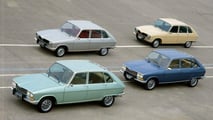

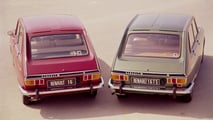

Development in record time
In the late summer of 1961, 31-year-old Gaston Juchet drew the pioneering design for a four-door hatchback with three side windows, marking the birth of the groundbreaking Renault 16 concept. Development took place in a record time of less than four years. At the same time, Renault builds a completely new plant for the Renault 16 in Sandouville near Le Havre in just 18 months. Series production of the newcomer began in January 1965, with the Renault 16 making its motor show debut two months later at the Geneva Motor Show.
The dimensions of the newcomer: 4.24 metres long, 1.65 metres wide and 1.36 metres high, with four doors as standard, and even five if the large boot lid is added. The press response: overwhelming. "Victory of common sense: bigger on the inside than on the outside", cheered the magazine "hobby".
In fact, the Renault 16 is not only out of the ordinary with its tailgate, the long wheelbase and the roof also contribute to its unmistakable appearance. The raised body edges are more than just a design gimmick. They give the vehicle excellent torsional rigidity despite the lack of a transverse wall between the passenger compartment and the boot.
Above all, however, the Renault 16 impresses with unprecedented interior versatility. The seating landscape can be adapted to a wide variety of situations in a total of seven positions. If you have a lot to transport, the rear seats can be folded down, pushed forward by up to 15 centimetres or removed completely. This increases the load volume from 346 to 1,200 litres.
Another configuration - now out of fashion - allows the backrest of the rear bench to be hung under the roof lining, while the seat cushion is tilted forwards and leant against the front seats from behind.
The front passenger can choose between two reclining combinations for their seat, one for travelling, the other for a nap at the rest stop. And in the "mum" position, mum - as the name suggests - moves the front passenger seat close to the rear bench so that the sleeping offspring does not tumble into the footwell during emergency braking. Speaking of offspring, the R16 was a favourite erotic playground for the 1968 generation.
One detail is particularly appreciated by men who wear hats. Thanks to the high door cut-outs and the generous interior height, they can take a seat in the car without running the risk of the roof bar shaving their headgear off their head.
Renault has also thought of details such as the solid boot cover. It avoids the impression of sitting in a dull estate car, which at that time was still purely a utility vehicle.
Gallery: Renault 16 TX (1975)


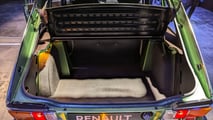


Another well thought-out and convenient detail: the "Grand Luxe" equipment, which is almost exclusively in demand in Germany, has a centre armrest with a practical storage compartment. It allows that unmistakably relaxed Renault 16 driving position, which does not have to be abandoned even when changing gear. This is because gear changes are always made at the steering wheel. The elbow can continue to rest on the armrest.
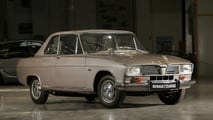
We want to try this out in the here and now, almost 60 years later. To mark the launch of the new Symbioz (more on this soon), Renault brought along a 16 TX from 1975. Weighing 1,065 kilograms, with 93 PS from a displacement of 1,647 cc and five gears. Well, we can't take it for a drive, but we can try out the seats.
What do you notice? Soft but cosy seats, the steering wheel gearstick, of course, and the round instruments. Early 16s still had a kind of tape speedometer. Door closed - sounds quite solid. Immerse yourself in the 70s: there is an ashtray on the front of the dashboard and one in each of the rear doors. You grip a large, thin steering wheel, typical of the era, and marvel at the great all-round visibility.
Admittedly, the amount of space in the rear and the boot are average by today's standards. But back then you usually needed an estate car for that. And let's not forget that the R16 is slightly shorter than a current VW Golf.
Renault 16 TX (1975)
Renault 16 TX (1975)
Modern engine in aluminium construction
In terms of drive technology, the Renault 16 also has groundbreaking features to offer. Under the bonnet, it houses Renault's first engine made entirely of aluminium. Initially, the light alloy four-cylinder engine mobilised 55 PS from a displacement of 1,470 cc. Over time, the output increased to 93 PS in the top-of-the-range TX version presented in 1973. This was accompanied by a steady increase in displacement up to 1,647 cubic centimetres.
"In terms of smoothness, elasticity and performance behaviour, the engine is one of the best that exists today in the four-cylinder mid-range," was how "auto motor und sport" praised the engine at the time, which would later make motorsport history in a more powerful form in the Renault Alpine A110 and A310 sports cars.
Just a prototype: the Renault 16 as a coupé
As in the R 4, the four-cylinder engine is installed far to the rear towards the centre of the car. The developers mounted the gearbox in front of it. It is based on a front-mid-engine principle, with only 55 per cent of the total weight on the front axle.
One car, two wheelbases
The big brother also inherits the torsion bar suspension from the R 4. This not only ensures excellent suspension comfort, but also contributes to the good load volume of the Renault 16, as no annoying spring domes protrude into the boot. A curious side effect of this solution is that the avant-garde Gaul has a wheelbase that is 67 millimetres longer on the left than on the right. At an impressive 2,717 and 2,650 millimetres respectively, this is only noticeable to the extremely experienced eye.
Success all along the line
The mixture of variability, economy and a luxury-class feel appeals to the target audience. In 1966, the first full year of sales, Renault sells 68,916 vehicles of its new top model in France alone. By 1969, the figure had risen to 92,488 cars. That year, Renault sold 179,991 Renault 16s worldwide, a figure that was even surpassed in 1970, when 193,698 vehicles left the Sandouville plant.
This boom was also fuelled by the R 16 being voted "Car of the Year" in 1966 by 32 European trade journalists. The introduction of the more powerful TS model in 1968 with 83 PS and the automatic version in 1969 with 67 PS also boosted sales.
For the 1971 model year, the R 16 underwent its first facelift. Among other things, the car was given larger and rectangular rear lights, which were also positioned slightly lower. The basic version now produced 67 PS, as had previously been the case with the automatic model.
The model upgrades kept the career going. At the beginning of 1972, the one millionth Renault 16 rolled off the production line in Sandouville. By this time, the successful model was no longer only being built in France. Assembly plants could be found in 14 other countries around the world, including such far-flung places as Trinidad, Venezuela, Madagascar and Australia.
More Renault classics:
In 1975, Renault presented its designated successor, the Renault 20, also with a hatchback, at the Geneva Motor Show. However, this did not mean the end for the Renault 16, as a large number of dedicated fans remained loyal to it. In 1976 alone, 103,179 Renault 16s were sold worldwide. Renault therefore produced both models side by side for four years. In January 1980, after 1,845,959 units had been produced, the 16 finally made way for the younger generation.
RECOMMENDED FOR YOU
How Renault Outsmarted Cheap Chinese EVs, And Profited
Lamborghini Isn't Worried About China... Yet
Rare Mazda 767B Engulfed In Flames At Laguna Seca
Volvo Wants Its PHEVs To Drive Like EVs
1958 Ferrari Reappears With A Shocking $5 Million Estimate
RIP: These SUVs Are Dead For 2027
This Lovely Mercedes 190 Evo II Restomod Packs 765 Horsepower