Renault 25 (1984-1992): Classic of the future?
40 years ago, the big Frenchman with the talking on-board computer entered the scene


Driving like the French president: when François Mitterrand and other political dignitaries of the Fifth Republic drove up in the mid-1980s, they usually did so in a Renault 25.
As early as 1977, Renault began working on the successor to the rather unsuccessful models 20 and 30, with Robert Opron and Marc Deschamps in the design department drawing up an initial design based on the Fuego which appeared in 1980. Gaston Juchet drew a vehicle with the name "Bic Aero". Ultimately, all the concepts were combined to form "Project 129" which later became the Renault 25.
Gallery: Renault 25 (1984-1992)


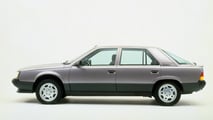
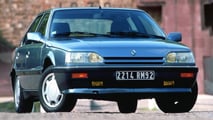

The stately saloon with the striking glazed hatchback was launched in 1984. It is 4.70 metres long, and 442 to 1,238 litres of luggage fit under the large tailgate. The wheelbase of 2.72 metres ensured opulent space and the long equipment list provided the luxury to match. When it was launched the R25 was the production car with the best drag coefficient on the market (0.28), better than the Audi 100 (C3), for example.
The Renault 25 is intended as the French answer to the German luxury class. The technical effort that Renault puts into the R25 is correspondingly high. For example, the brand offers a talking on-board computer as a new feature for its top model, which monitors important vehicle functions and indicates maintenance intervals. The futuristic instrument panel, from which the tinny voice sounds, was created by star designer Marcello Gandini.
In contrast to the previous Renault 20/30 series, the four and six-cylinder engines are once again combined under one model number. The drive range extends from the diesel with 63 PS (46 kW) to the V6 turbo petrol engine with up to 205 PS (151 kW), which allows a top speed of 145 mph (233 km/h), an absolute peak value at the time, as does the cw value of 0.28. Depending on the version, the engines and gearbox are electronically controlled.
The effort paid off: the Renault 25 won the "Golden Steering Wheel" in Germany in 1984 and was only beaten by the Opel Kadett E in the European "Car of the Year" competition in 1985. Renault was able to sell 40,458 units of the 25 in Germany by 1992.
Classy: clothes bag under the parcel shelf of the Renault 25 Baccara
Things went much better in France, where the long-wheelbase version with 22.7 centimetres more wheelbase was on the road as a state saloon from 1985. In spring 1985, a version with a wheelbase extended by 22.7 cm was launched on the market as the Renault 25 saloon, with correspondingly more rear legroom.
It can be recognised from the outside by its longer rear doors and wider B-pillar. The model was built by Heuliez and was primarily intended for political dignitaries. Between April 1985 and June 1986, 832 vehicles of this type were built.
Renault 25 in the standard version
In 1986, our colleagues at "auto motor und sport" tested the Renault 25 Turbo with a displacement of 2.5 litres. Garrett T3 supercharger and 182 PS at the time. The "smooth and low-vibration" running of the V6 was praised, but the turbo lag was criticised. Only from 3,000 rpm does the engine strike "almost mercilessly". Test consumption of the expensive (but rather fully equipped at DM 47,900) car was 14.6 litres.
From 1988, the 25 is available as a "Quadra" version with all-wheel drive. The Renault 25 also made it to the USA, namely with a notchback as the Eagle Premier and from 1990 as the Dodge Monaco.
Renault 25 facelift
In June 1988, the R25 received a facelift for the 1989 model year. The body shape is rounded off at the front, the new rear lights are wider. The dimensions of the body remained unchanged, but the interior was slightly modified. The seats are offered with new upholstery fabrics and are more ergonomically shaped. The dashboard received modified ventilation slots and was upholstered in the early 1990s.
Renault - past and future:
Renault also adapted the engines to technical developments. All petrol engines were equipped with a 3-way catalytic converter. The top model is called the Baccara and is equipped with automatic air conditioning, leather upholstery and burl wood applications, among other things. The highlight is a leather garment bag under the parcel shelf.
Renault built a total of 780,976 vehicles of the 25 until 1992, followed by the Safrane, also with a hatchback, and of course there is also a talking on-board computer at the start.
RECOMMENDED FOR YOU
Rare Mazda 767B Engulfed In Flames At Laguna Seca
What Does 'Horsepower' Actually Mean?
1958 Ferrari Reappears With A Shocking $5M Estimate
The 2027 Kia EV3 Is One Of America's Cheapest EVs
This Lovely Mercedes 190 Evo II Restomod Packs 765 Horsepower
Hyundai Is Making A Real Truck To Take On Tacoma. Here's Everything We Know
This Is One Of The Rarest Mercedes G-Classes Ever Made, And It Just Sold For $143,000