Renault Siete/7 (1974-1983): Spanish notchback
The unknown saloon brother of the Renault 5 turns 50
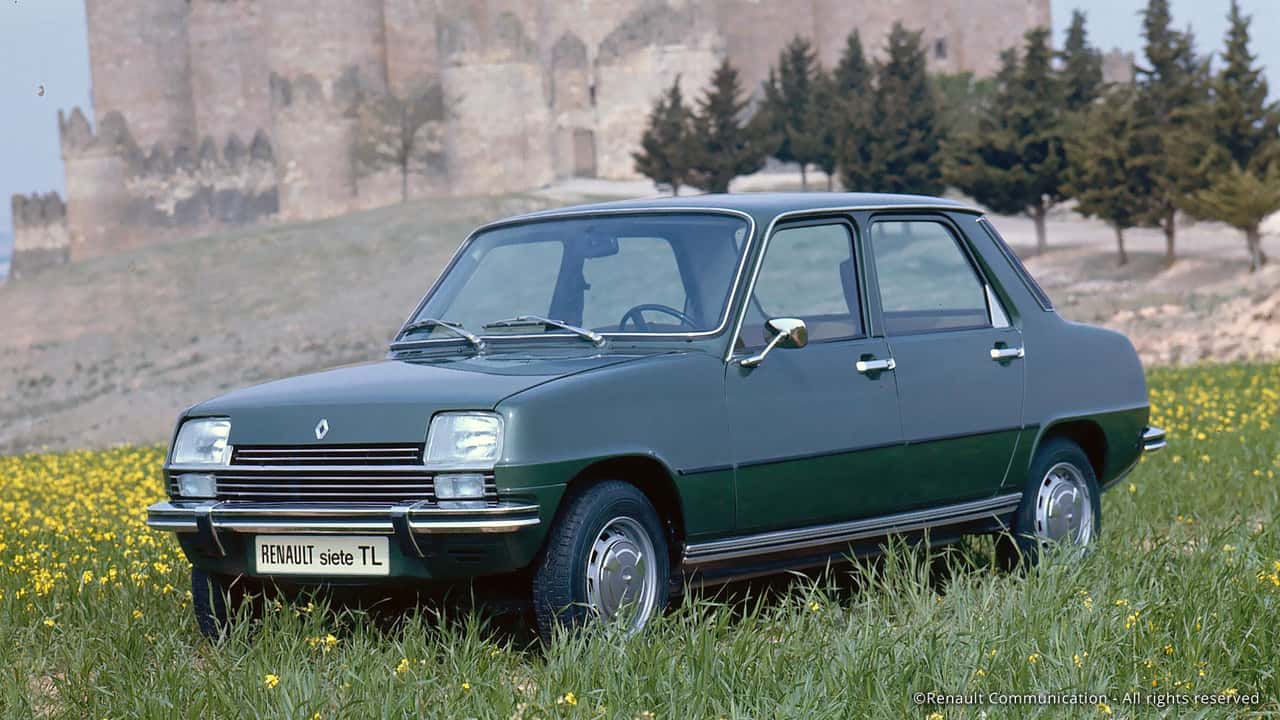

The new Renault 5 E-Tech Electric caused quite a stir at its recent world première, with 50,000 people reportedly already interested. No wonder, as the upcoming small electric car takes up the look of the first R5, which appeared in 1972. As a result, we take this opportunity to take a look at a little-known offshoot of the original model: the Renault Siete/7 with notchback appeared 50 years ago.
But let's go back a little further: Bernard Hanon is regarded as the spiritual father of the Renault 5. Under his direction, the compact car began its career in 1967 as "Project 122". Hanon had just arrived from the United States, where he was a professor of management at New York University alongside his work for Renault. He brings two insights from there: That the younger generation has a penchant for the unconventional, and that society is facing profound upheavals. The student revolt that began shortly afterwards proved him right.
Gallery: Renault 7 (1974-1983)

Pierre Dreyfus, CEO of Renault S.A., asked his developers to create a car that would appeal to young people, small families, second car owners and, above all, women. The new car should have a large tailgate like the Renault 4, but look more modern and youthful.
It should also be small enough to whizz through city traffic and have a variable interior to cope with large shopping trips, holidays and long weekends for two. In order to save costs and make the car attractive for novice drivers, the technical relationship to the Renault 4 is expressly desired.
Renault head of design Gaston Juchet commissioned Michel Boué, his youngest employee, to design the newcomer. The talented young designer's second design was so convincing that it became the basis for the Type 122 with just a few retouches. Boué conceived the little Renault as "a car that is capable of crossing social boundaries - because the woman of the world, the doctor and the labourer can meet with it in front of a red light and feel equally comfortable," said the designer.
Renault 5 (1972)
The 3.51 metre long Renault 5 struck a chord with customers, who were so enthusiastic that Renault struggled to cope with the flood of orders. In Germany, the market launch originally planned for spring 1973 was brought forward to autumn 1972.
After its market launch, the Renault 5 is initially available exclusively as a two-door model. This did nothing to dampen the international success of the small hatchback model. What went down extremely well in Western and Central Europe, however, did not really appeal to conservative Spanish tastes. South of the Pyrenees, notchbacks and chrome trim were in demand for a long time.
Renault Siete/7 (1974-1983)
Originally, the Renault 5 was to be built in three body variants: as a three- and five-door hatchback saloon and as a four-door notchback saloon.
Although prototypes of the saloon were developed up to the production stage, they were discontinued at the last moment. The reasons for this could have been that it would have deterred customers from buying the larger Renault 6, but also that the lack of the distinctive rear end would have diluted the image of the R5 as a compact compact car.
However, as facilities had already been purchased for production in France, the decision was made to start production at the Spanish Renault subsidiary FASA in Valladolid as the Renault Siete for Southern Europe, as purchasing behaviour there was different from that in Central Europe.
Renault Siete (1974)
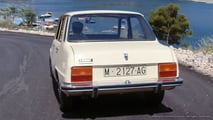
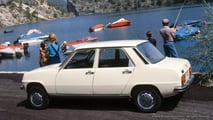
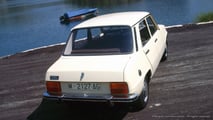
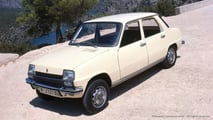
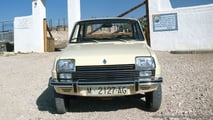
In line with the special requirements of the domestic market, a highly unique interpretation was launched on the market in Spain in 1974: the wheelbase increased by ten centimetres, the rear had a classic notchback boot with a volume of 400 litres and the entire vehicle was 3.89 metres long.
And the Renault 5 variant, henceforth known as the "Siete" (Spanish for seven) until 1979, was the first model in the series to have four doors. The plastic bumpers, which were received with great enthusiasm in the rest of Europe, gave way to chrome-plated steel bumpers on the Iberian Peninsula, and instead of the door openers elegantly concealed in recessed handles, there were conventional door handles in chrome with a push button. The Renault Siete is powered by a four-cylinder petrol engine with a displacement of 1,037 cc and an output of 50 PS.
Even if the Renault Siete did not completely win over the design purists, it was far ahead of the visually much more appealing original in one respect: four doors were only available on the Renault 5 from the end of 1979 - then, incidentally, with the well-behaved door handles of the Spaniard.
Renault Siete/7 (1974-1983)
Renault 9 (1981-1988)
Renault Siete/7 (1974-1983)
With the subtle revision of the Renault 5 in the summer of 1978, the Renault Siete was also revised and presented in mid-1979 as the Renault 7.
As planned, the five-door version of the R5 only went into series production in the summer of 1979 as a supplement to the three-door model. In 1981, the Renault 7 appeared as the GTL with a 1.1-litre engine producing 45 PS.
After exactly 159,533 units, production of the R7 ended in January 1983 and there was no direct successor. Instead, there was another odd-numbered model with a notchback. Namely the Renault 9, which was introduced in 1981 and was around four metres long.
Incidentally, the second-generation Renault 5 was also based on the R9. The 1984 model year marked the end of the career of the first Renault 5 of the first generation. After 5,544,695 vehicles had been produced in 13 years, the "Supercinq" ("Super 5"), another completely redesigned successor, was presented at the Paris Motor Show. However, it does not have its own notchback.
More about the new Renault 5 E-Tech Electric:
RECOMMENDED FOR YOU
How Renault Outsmarted Cheap Chinese EVs, And Profited
Metal AMG Badge Allegedly Burned Drivers
This Lovely Mercedes 190 Evo II Restomod Packs 765 Horsepower
Mouse Causes $3,200 In Damage To Car. Honda's Design Might Be At Fault: 'Warranty Won't Pay'
This Is One Of The Rarest Mercedes G-Classes Ever Made, And It Just Sold For $143,000
Half-Million Camrys Recalled Again—Speedometer Can Go Dark
Morgan's Best Performance Car Is Coming To America Without An Important Feature