MG HS plug-in hybrid (2024) first drive: Alphabet squad
Is the SUV an alternative to the VW Tayron and Dacia Bigster?


It sounds like a song by the Fantastic Four: ESP, TPMS, AEB, LKA, ISA/MSA, UDW, BSD, LKA, RCTA. These are not parties, but a selection of the many assistance systems that the new MG HS has on board. Yours sincerely from China. There have also been literal changes to the name: The plug-in hybrid mutates from EHS to HS in the second generation, although our test car still had EHS emblazoned on the rear.
What is that?
But as Goethe had his Faust say: Name is smoke and mirrors. But not quite, because the historic brand name MG has so far ensured the best sales figures of any Chinese brand in Germany. To ensure that this continues, the plan is to have up to 250 dealerships and workshops by 2025.
Gallery: MG HS (2025) first drive

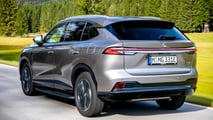
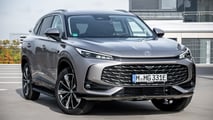
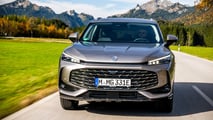
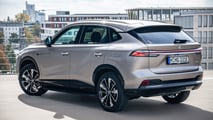
Because there is always more to look after. The new MG3 here, the new ZS there. And now the second generation of the HS with combustion engines, the 1.5-litre turbocharged petrol engine solo with 170 PS, manual or automatic transmission or the plug-in hybrid with 272 PS power output that we tested. A diesel is not planned.
Exterior | Interior | Drive | Driving impressions | Equipment/prices | Conclusion
| Fast data | MG HS PHEV (2024) |
| Engine | 1.5-litre petrol engine 142 PS plus electric motor 194 PS, 299 PS system output |
| Gearbox | Two-speed automatic |
| Torque | 230 Nm (petrol engine), 340 Nm (electric motor) |
| Boot capacity | 441 - 1,291 litres |
| Price | from £31,495 |
Exterior
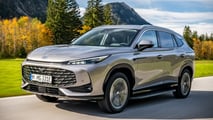
Let's take a closer look at the new MG HS. It has become sleek, but despite its striking combustion grille, it is not necessarily a face in the crowd. The most striking feature is the shark nose, everything else seems to have been seen before, particularly at the rear, for example, on the Jaguar SUVs. That doesn't have to be a bad thing. The running boards below the doors look rather strange.
With a length of 4.67 metres, the HS is in the same segment as the Toyota RAV4, Skoda Kodiaq and the two newcomers Dacia Bigster and VW Tayron. However, the MG does not offer seven seats. The plug-in HS already has rear parking sensors and a camera on the base model, which definitely doesn't hurt. However, we would go for the €2,000 more expensive top-of-the-range "Luxury" equipment because of the good 360-degree camera. 19-inch aluminium wheels are always standard.
| Dimensions | MG HS PHEV (2024) |
| Length | 4,670 mm |
| width | 1,890 mm |
| Height | 1,663 mm |
| Wheelbase | 2,765 mm |
| Luggage compartment | 441 - 1,291 litres |
| Unladen weight | 1,930 kg |
| Payload | 400 kg |
| Drawbar load | not known |
| Towing capacity | 1,500 kg |
Interior
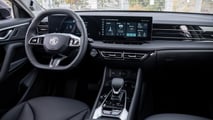
First impression after getting in: everything looks solidly modern without being too playful. The choice of materials is convincing and can keep up with VW. Here, as there, not all that glitters is chrome. Only some of the buttons and switches could be fitted more precisely. Typical for MG are the unclearly defined buttons on the steering wheel as well as the too small letters on the gear selector lever. The camera staring at the driver is typically Chinese. We will come back to this later.
The centre display, which consists of two 12.3-inch screens and flows in one piece, is striking. It pleases with good displays, including a map behind the steering wheel. The space in the rear is decent, although not quite as opulent as in the Skoda or VW. The same applies to the 441 to 1,291 litre boot (507 to 1,484 litres for the petrol-only model). However, a width of 1.89 metres without exterior mirrors also ensures a good feeling of space. Owners of standard garages should therefore measure up.
Drive
As already mentioned, there is a plug-in hybrid under the bonnet of our test vehicle. In detail: a 1.5-litre petrol engine with 142 PS plus an electric motor with 194 PS. The electric motor draws on the energy content of a fairly large 21.4 kWh battery, which is fed by a 61 kW generator. We take a look at the instruments before setting off: 75 miles of battery range, plus 382 miles from a three-quarter full tank.
Unfortunately, MG does not have a CCS connection, so there is no more than 6.6 kW via a type 2 plug. According to the manufacturer, the battery cannot be driven completely empty; there is always a small amount left. Presumably also because the HS PHEV often recuperates in hybrid mode.
Driving impressions
Which brings us directly to the actual driving report: According to MG, a total of six driving options are possible in combination with the technology including the two-speed automatic transmission. These include pure electric operation or parallel operation of the petrol engine and electric motor. In practice, this means quiet progress, with the speed of the combustion engine often remaining at 1,400 rpm thanks to the electric assistance. You are often travelling in hybrid mode, with the recuperation system hard at work at its highest level. Even under load, the HS does not feel strained and there is no rubber band effect. Only at speeds above 93 mph do you hear any noticeable wind noise.
| Driving performance | MG HS PHEV (2024) |
| 0 - 100 km/h | 6.8 sec. |
| Top speed | 118 mph |
| Fuel consumption | 2.85 mi/kWh (electricity, WLTP), 564.96 mpg (petrol, WLTP), 47.87 mpg (with discharged battery, WLTP) |
| CO2 emissions | 14 g/km CO2 (WLTP); 131 g/km CO2 with discharged battery (WLTP) |
On the rear axle, the 1.9 tonne car rolls a little too stiffly for our taste. What annoyed us much more, however, were the assistance systems. Incessant beeping and buzzing is the rule rather than the exception. The aforementioned driver camera takes it to the extreme. If you search for a radio station for five seconds too long, you are reminded to concentrate on driving. As soon as you don't stare at the camera like in a police photo, "Big Brother" starts nagging at you. Thank goodness the camera can also be deactivated while driving.
MG HS PHEV (2024): The camera focussed on the driver
The view of the on-board computer after around 60 miles of test driving is much more pleasing: 56.5 mpg of fuel consumption on average and 61 percent remaining in the battery. MG states a consumption of 47.9 litres with a discharged battery.
Equipment/prices
As with almost all MG models, this is also the big moment for the HS. In the UK, the petrol-only model with manual transmission and decent standard equipment starts at £24,995, with an automatic transmission it is £1,500 more. The plug-in hybrid costs between £31,495 and £33,995. There is also a seven-year or 80,000 mile warranty, which also covers the battery and engine on the PHEV.
This is definitely a challenge to the competition. The new VW Tayron 1.5 eHybrid with 204 PS system output is expected to cost £40,000, while a Toyota RAV4 plug-in hybrid with 306 PS costs at least £44,175. The prices of the Dacia Bigster are not yet known.
Conclusion: 8/10
Apart from overzealous assistance systems, MG has put together a good and affordable package for the mid-range SUV class with the new HS. In terms of space and drive, the HS doesn't show any weaknesses. However, we would still be interested in driving a pure combustion engine. Either way, Ford's old slogan applies: a lot of car for the money. Everyone should decide for themselves whether they want to buy a car from China. But let's be clear: a VW has become quite expensive.
The latest news from MG:
RECOMMENDED FOR YOU
I Drove Ford's 300-HP Maverick. It Feels Like A Hot Hatch
This Is One Of The Rarest Mercedes G-Classes Ever Made, And It Just Sold For $143,000
I Really Like The Ford F-150 Lobo. Just Not For The Price
Mechanic Warns: Stop Pumping Gas Once The Handle Clicks Off. It Just Put This Chevrolet In The Shop
The Volvo EX30 Is (Was?) A Swing And A Miss
Texas Woman Shops For Used Car On Facebook Marketplace. Then She Spots A Red Flag Most People Miss
The Ferrari 849 Testarossa Earns Its Name