The Reborn Citroën 2CV Will 'Make Mobility Accessible To All'
The legendary name returns in October at the Paris Motor Show.

THE BREAKDOWN
- The retro-styled EV will cost around €15,000 ($17,400) in Europe.
- Citroën's most iconic nameplate will stay true to its origins: simple, cheap, and practical.
- The reborn 2CV debuts in October at the 2026 Paris Motor Show.
Following a 36-year hiatus, one of the most legendary names in the car industry is officially making a comeback. Citroën has confirmed the 2CV will return this October at the 2026 Paris Motor Show. More than five million units of the original were sold between 1949 and 1990, making it an icon best known for its brilliant simplicity and affordable price tag.
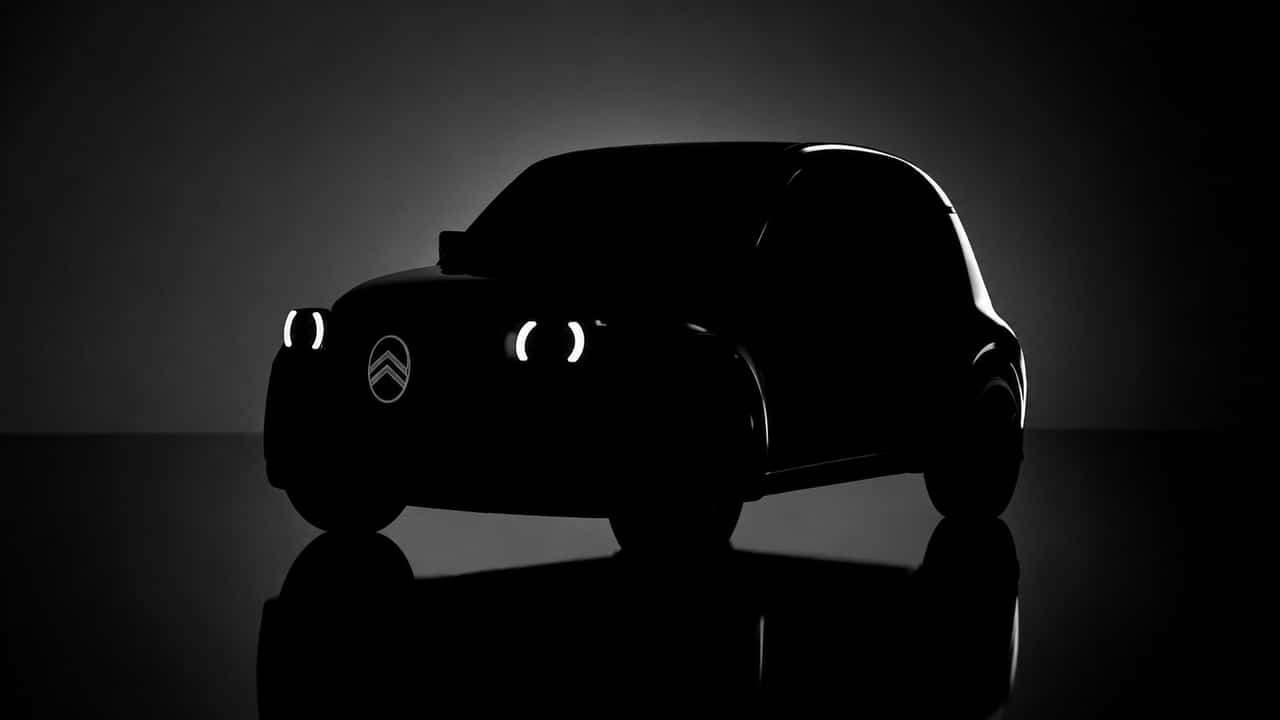
The reborn 2CV is one of 110 new models Stellantis plans to launch by the end of 2030. The announcement is accompanied by a teaser image that clearly shows a retro-inspired design, with a shadowy silhouette alluding to the blockbuster “deux chevaux.” While the long-running economy car used air-cooled, two-cylinder engines, its modern successor will be fully electric.
With a tentative starting price of around €15,000, it could become one of the most affordable EVs in Europe, if not the cheapest. Production is scheduled to begin in Italy in 2028 alongside the next generation of another popular nameplate: the Fiat Panda. Like its predecessor, the new 2CV will be a tiny car. Logic suggests it’ll be much shorter than the already petite ë-C3, which measures just 158.1 inches (4015 millimeters) long.

The 2CV revival is part of Stellantis’ “E-Car” initiative, aimed at introducing a new wave of low-cost models eligible for the European Union’s emissions-related “super credits.” Vehicles in the EU’s small electric car category (“M1E”) count as 1.3 instead of the usual 1.0, giving automakers a 30-percent advantage toward meeting CO2 compliance targets.
With the 2CV, Citroën hopes to recapture the spirit of the original and once again “make mobility accessible to all,” this time in an EV package:
'The future vehicle will embody the essential values that have always defined the 2CV: affordability, lightweight design, practicality, versatility, and a distinctive character unlike anything else on the road.'
Citroën’s decision to revive the 2CV comes after domestic rival Renault brought back familiar names like the 4 and 5 for a pair of small, affordable EVs. Although not nearly as old as those badges, the even cheaper Twingo has also returned in fully electric form.
Motor1's Take: Citroën is taking on a huge responsibility by reviving one of the industry’s most recognizable nameplates. Hopefully, the new 2CV will remain a no-frills yet impressively versatile car like the original, all while carrying a reasonable price tag. There’s clearly demand for cheaper EVs, and the 2CV will slot between the Ami quadricycle and the ë-C3 when it arrives in a couple of years.
We’re genuinely excited to see a new 2CV in a world of increasingly complicated cars. Naturally, Citroën is already building hype around the model, going so far as to say it will have “a distinctive character unlike anything else on the road.”
Renault's Retro EVs:
Source: Citroën
RECOMMENDED FOR YOU

Mazda's Fictional Rotary Sports Car Is Returning With A Hardcore Version
Man Sells Grandma's Toyota RAV4 In Pristine Condition. But He Makes A Key Sales Mistake: 'Never Let A Customer Know'
Lanzante’s 850-HP McLaren F1 Tribute Roars Into Monterey
How Did The Toyota 4Runner Get Its Name?
McLaren Teases Its First Manual Supercar In Decades
Woman Brings Honda To Tires Plus. Then They Reveal Mavis Put On 3 Different Tire Brands: ‘Discount Tire Would Never’
Gordon Murray’s New Supercar Channels F1—$20.6M Auction Spotlights Demand