These Automakers Have The Strangest Headquarters
From BMW's four-cylinder tower to Ferrari's striking design, these automaker headquarters push architecture to unusual new heights.


Automakers are known for designing cars that turn heads, but some bring that same ambition to their corporate headquarters. From buildings shaped like mechanical components to futuristic spaces that blend architecture with nature, these offices are anything but ordinary.
So, which automaker has the strangest headquarters? BMW has a compelling claim. Its global headquarters in Munich, Germany, resembles four enormous cylinders suspended in the sky. The building looks like a giant engine brought to life, and its unusual design is not just a visual gimmick. It's an architectural landmark built around a bold engineering concept.
BMW's Headquarters Looks Like A Giant Four-Cylinder Engine

BMW’s headquarters, commonly known as the BMW Tower or the “Four-Cylinder,” is one of the most recognizable corporate buildings in Germany. Designed by Austrian architect Karl Schwanzer, the nearly 100-meter-tall (328-foot) structure was completed in 1972 and officially opened on May 18, 1973. Its four cylindrical sections were designed to evoke the automaker’s engineering identity.
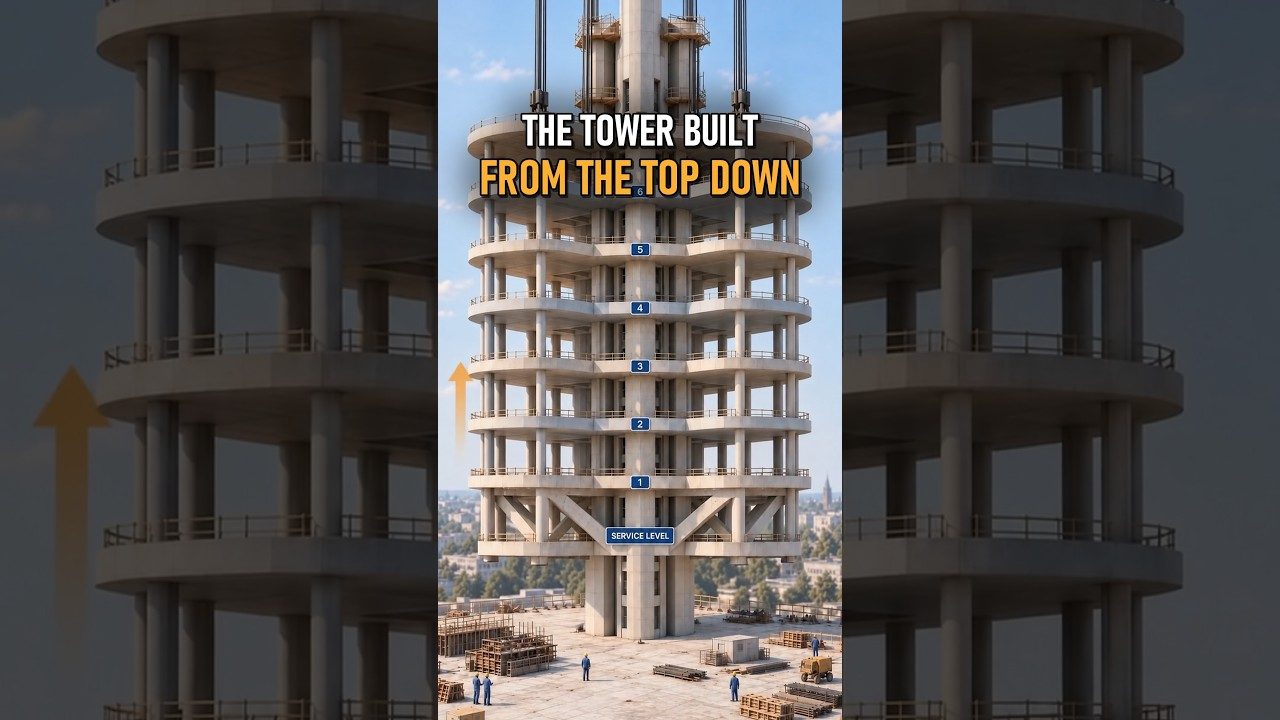
The tower's construction was just as unconventional as its appearance. Instead of building each floor from the ground up, crews constructed sections of the cylindrical office spaces at ground level and lifted them hydraulically into position. The four sections hang from a cross-shaped steel structure near the top of the building, giving the tower its distinctive suspended appearance.
The result is an office building that looks less like a conventional skyscraper and more like a giant piece of machinery. Beside it, the bowl-shaped BMW Museum and the more modern BMW Welt exhibition and delivery center complete a campus dedicated to the company's cars, history, and design.
Ferrari's Headquarters Brings Nature Into The Factory
Ferrari's headquarters in Maranello, Italy, takes a different approach to standing out. Designed by Massimiliano and Doriana Fuksas, the automaker's operational headquarters and research center was developed between 2001 and 2004 within Ferrari's industrial complex.
Rather than resembling a car part, the building combines dramatic modern architecture with water, light, and bamboo planting. One of its defining features is a large architectural volume that appears to float above a reflective water surface. The water and its reflections change the building's appearance throughout the day, while bamboo brings greenery into the high-tech industrial setting.
It's an unusual setting for a company associated with high-performance supercars, but the design reflects Ferrari's emphasis on aesthetics as much as engineering. The headquarters is striking without being as literal as BMW's four-cylinder tower.
Mercedes-Benz's Headquarters Looks Like Something From The Future
Mercedes-Benz takes a different approach to unconventional architecture in Stuttgart, Germany. The automaker's headquarters campus is home to the Mercedes-Benz Museum, a futuristic structure that looks more like a giant piece of modern sculpture than a traditional museum.
Designed by Dutch architecture firm UNStudio and opened in 2006, the building takes inspiration from a double helix, the twisted structure associated with DNA. Its exterior combines aluminum and glass, while the interior features two intertwined routes that wind through the museum's collection. The design creates a continuous flow between exhibition spaces, with few straight walls and expansive ceilings that span up to 33 meters without supporting columns.
The architecture isn't just an elaborate shell for displaying cars. The two routes represent different ways of exploring Mercedes-Benz history, with one tracing the evolution of the automobile and the other showcasing vehicles and technologies by category. Visitors can move between the paths as they descend through the building, making the architecture part of the experience.
Unlike BMW's headquarters, which takes direct inspiration from an engine, Mercedes-Benz's museum uses abstract geometry to express the brand's engineering heritage. Its twisting shape and interconnected levels give it a futuristic appearance without mimicking a specific car component.
The building opened in May 2006 and has since become one of Stuttgart's most recognizable landmarks. It's another example of an automaker turning its identity into architecture, proving that a company's most memorable design doesn't always have to sit on four wheels.
What Makes An Automaker's Headquarters Strange?
A headquarters can be unusual for several reasons. Some buildings use shapes that reference their company's products, while others experiment with construction methods or create an environment unlike a traditional office. A few features that make automotive headquarters stand out include:
- Product-inspired architecture: BMW's tower uses four cylinders to create a visual connection to its engineering heritage.
- Unconventional construction: The BMW Tower's cylindrical office sections were assembled and raised into position rather than built conventionally from the ground up.
- Nature and modern design: Ferrari's headquarters incorporates water, reflections, and bamboo into a high-tech industrial campus.
- Brand identity: Both buildings turn a corporate workplace into a physical expression of the automaker's image.
Of course, unusual architecture has to do more than look good in photographs. These buildings also need to accommodate employees and support the work taking place inside. Their designs are notable because they combine practical office functions with a strong visual identity.
Why BMW's Headquarters Stands Out From The Rest

BMW's tower has a particularly strong claim to the title because its shape is immediately recognizable and directly tied to the automotive world. From a distance, the four suspended cylinders look like a conceptual engine enlarged to skyscraper proportions.
Its engineering also gives the building a story beyond its appearance. The suspended construction required a different approach from that of a conventional office tower, while the flexible office layout was intended to accommodate the changing needs of a growing company. BMW says the building was designed by Schwanzer to combine an impressive exterior with a flexible interior.
The tower's location near Munich's Olympic Park also helped cement its status as a city landmark. More than five decades after its completion, it remains a defining part of BMW's corporate identity.
Ferrari's headquarters is arguably more understated in its connection to cars, but its use of water and greenery gives it a distinctive atmosphere. The difference is that BMW's building announces its automotive inspiration at a glance.
Fans Think BMW's HQ Looks Like Something From A Sci-Fi Movie
BMW's unusual headquarters has sparked plenty of discussion on Reddit, where users have debated its resemblance to an engine and whether its unconventional design is brilliant or simply bizarre. In a thread on r/architecture, one commenter noted that the building's four-cylinder inspiration was fitting for an automaker, while others were impressed by its unusual construction and suspended floors.
Other Redditors had more playful comparisons. In a discussion on r/ArchitecturePorn, users compared the tower to a video-game structure and a secret rocket ship from an Austin Powers movie. A separate thread on r/evilbuildings joked that the building looked like a science-fiction prop, although commenters also pointed out that its shape was based on four engine cylinders.
These reactions show why BMW's headquarters is such a strong contender for the strangest automaker office. Its design is distinctive enough to inspire admiration, jokes, and confusion all at once. And unlike a conventional corporate tower, it gives people something to talk about before they even step inside.
More From Motor101
RECOMMENDED FOR YOU
The BMW iX5 Makes A Strong Case Against The Gas X5: Driven
Aston Martin's New Valhalla Spider Can Hit 217 MPH With The Roof Down
The 2027 BMW X5 Is Hugely Improved Where It Matters Most: Driven
Porsche Says No To US Factories While Audi Pours $4 Billion Into Georgia
For Around $40,000, You Can Buy BMW's Sports Car Of The Future
Woman's Certified Pre-Owned Genesis GV70 Starts Pulling. Suddenly, There’s Fluid On The Floor
BMW's First Electric 3 Series Wagon Spied Looking Nearly Ready For Production