Home
News
Trending
‘Gave Me a Heart Attack:’ Man’s Honda Civic Alerts Him. Then He Realizes It’s Because of a Little-Known Change to New Hondas
'Mazda also does this without sensors. Weirdest system ever.'
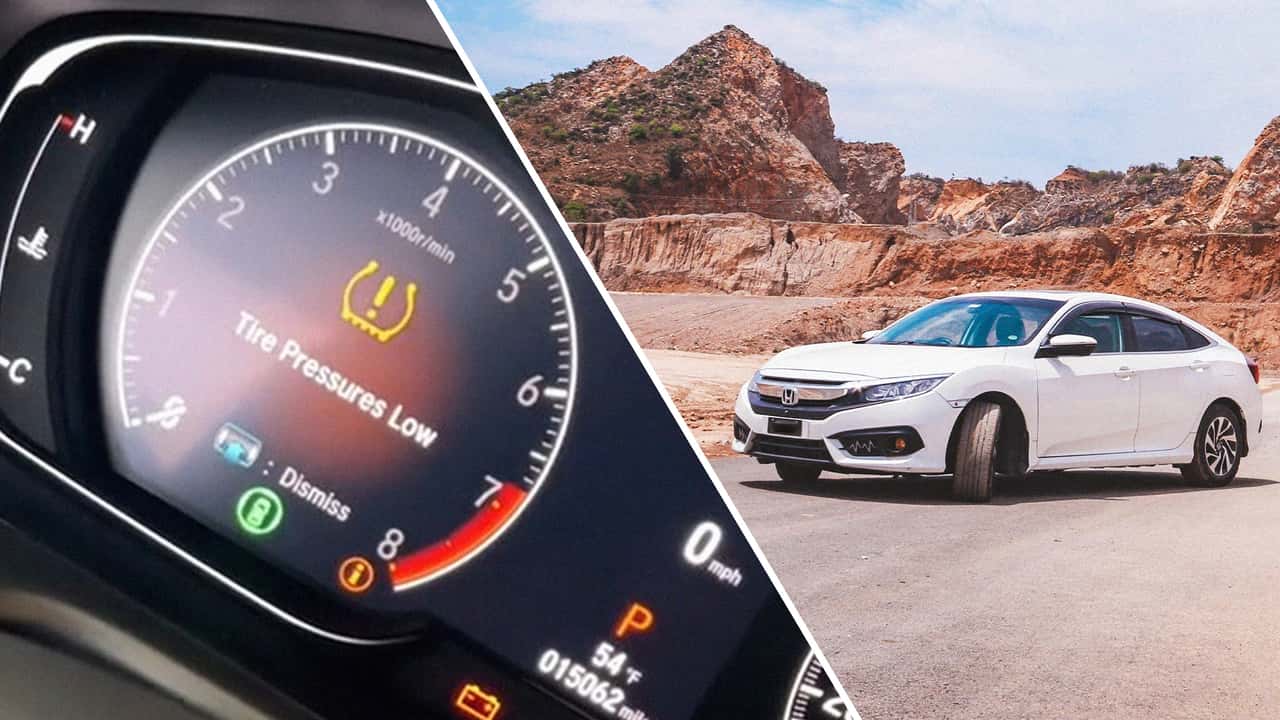
Photo by: Unsplash.com
Steve Ecker 
By: Steve Ecker
Jul 1, 2025 at 1:00pm ET
Add Motor1.com as a preferred source in Google
- (https://twitter.com/intent/tweet?url=https%3A%2F%2Fwww.motor1.com%2Fnews%2F764310%2Fhonda-civic-changes-tire-pressure%2F&text=%E2%80%98Gave%20Me%20a%20Heart%20Attack%3A%E2%80%99%20Man%E2%80%99s%20Honda%20Civic%20Alerts%20Him.%20Then%20He%20Realizes%20It%E2%80%99s%20Because%20of%20a%20Little-Known%20Change%20to%20New%20Hondas&via=motor1com)
- copy
Share
Comment
TikToker Tristen (@tristonschaos) posted a photo sharing his annoyance with Honda and how it made a minor change that caused a moment of panic.
The post has generated nearly 7,000 views as of this writing.
It prompted a discussion about indirect vs direct tire-pressure monitoring systems (TPMS) among viewers. Many shared their preference while the room was split on which one was better.
How Does TPMS Work?
According to Discount Tire, the TPMS symbol is a yellow exclamation mark inside a tire cross-section. This indicator will light up on your vehicle's dashboard when the recommended level of tire air pressure drops by 25% or more.
Having a TPMS sensor helps prevent underinflated tires from turning into a bigger problem down the road. These sensors also monitor changes in outside temperatures that cause fluctuations in tire pressure. Being on top of air tire pressure measuring will support better fuel efficiency, extend tire life, and overall vehicle stability and safety.
TPMS sensors became mandatory in 2007, TireReview reports. A study conducted by the National Highway Traffic Safety Administration (NHTSA) found that tires underinflated by more than 25% are three times more likely to be involved in a crash compared to tires with proper inflation, Consumer Reports shared. The study also mentions that tires underinflated up to 25% run the risk of overheating, leading to failure, and affecting handling and tread life.
What is the Difference Between Indirect and Direct TPMS?
In his post, Tristen reveals his frustration over how the Honda Civic alert has switched from direct TPMS to indirect TPMS.
“My tire light went off from my PSI going up from the hot weather. This gave me a heart attack for no reason,” Tristen posts.
TPMS sensors are either direct or indirect, J.D. Power reports. Direct TPMS sensors are installed directly within the tires to measure air pressure. Indirect TPMS sensors monitor wheel speed and estimate tire pressure based on the wheels’ rotation.
Tech Tire Repairs listed out the difference between indirect and direct.
Direct TPMS:
- Actual tire pressure reading. Sensor inside the tires.
- More accurate than indirect.
- The battery lasts about 10 years.
- No need to reset the indicator sign after inflation or tire rotation.
Indirect TPMS:
- Tire resolution reading. The sensor measures wheel speed
- Less accurate than direct.
- Less expensive than direct.
- Must reset the indicator sign after every inflation or tire rotation.
Direct TPMS, being inside the wheel with a longer-lasting battery, will give a more accurate reading. Indirect TPMS doesn’t measure tire pressure directly, Bridgestone Tire reports. An indirect TPMS typically relies on wheel speed sensors that the anti-lock brake system uses to notify the driver if the pressure appears to be off.
This content creator got scared when he saw his TPMS warning sign go off due to his tires' PSI increasing from the hot weather. However, because his Honda Civic has indirect TPMS, he didn’t know what the PSI was measured at, leading to panic.
Tristen responded to viewers' comments, writing, “Everyone is talking about how indirect is cheaper, but I don’t care. I want to know my PSI at all times.”
When Did Honda Switch From Direct to Indirect TPMS Sensors?
According to Tomorrow’s Technician, Honda made the switch from direct to indirect TPMS sensors in 2013.
Viewers speculated this move was made due to easier maintenance and the reduction of costs.
“Lots of companies do that now, I’d assume it's cheaper for them,” one commenter shared.
“They used indirect because it's way easier and way cheaper to maintain. Oh no, you have to hold the button to reset it sometimes, the horror,” a second commenter trolled.
While some understood the move, others agreed with Tristen on missing direct TPMS.
“Direct actually knows the pressure, indirect doesn't,” one added.
“Direct is fire cause with my Nissan when I fill it up it can honk when it’s the right pressure,” a second shared.
What do you think?
View
Comments
While the two sensors operate differently, they both serve the same purpose and activate the same indicator light. For measuring tire pressure, it’s always handy to keep a tire gauge in the car in addition to having a direct or indirect TPMS. According to Bridgestone Tire, going straight to the source with a tire gauge is always the best option for an accurate reading.
Motor1 has contacted Tristen via TikTok direct message. This story will be updated should he respond.
Now Trending

Get the best news, reviews, columns, and more delivered straight to your inbox, daily.
back
Subscribe For more info, read our Privacy Policy & Terms of Use.
We want your opinion!
What would you like to see on Motor1.com?
Take our 3 minute survey.
- The Motor1.com Team
Share this Story
- (https://twitter.com/intent/tweet?url=https%3A%2F%2Fwww.motor1.com%2Fnews%2F764310%2Fhonda-civic-changes-tire-pressure%2F&text=%E2%80%98Gave%20Me%20a%20Heart%20Attack%3A%E2%80%99%20Man%E2%80%99s%20Honda%20Civic%20Alerts%20Him.%20Then%20He%20Realizes%20It%E2%80%99s%20Because%20of%20a%20Little-Known%20Change%20to%20New%20Hondas&via=motor1com)
- copy
GO TO COMMENTS
(
)
Got a tip for us? Email: tips@motor1.com
View all comments ( )
Popular

12 Cars With Names That Make Absolutely No Sense
BMW Kept This Hatchback A Secret For Decades
Bugatti Restores One-Off Veyron With A Mirror-Like Aluminum Body
The Gas BMW M3 Isn't Dead: Next-Gen Prototype Roars
latest articles
- Driver Goes Through Car Wash With Full Truck Bed—Then He Learns The Hard Way Why You Shouldn't Do That Oct 20 - Trending -
- Every Rolls-Royce Has A Hidden Feature Most People Don't Know About Oct 20 - Motor101 -
- Subaru Built A 510-HP Electric Wagon Without Toyota's Help Oct 20 - Official -
- The Strange Reason The Golf GTI Had A Golf Ball Shifter Oct 20 - Motor101 -
- Photos: Porsche's Mission S Concept Takes Over New York City Oct 20 - Design -
- The 2027 Honda Passport TrailSport Looks Noticeably Taller Next To Last Year's Model Oct 20 - Off-Road -
- 12 Cars With Names That Make Absolutely No Sense Oct 20 - Lists -
RECOMMENDED FOR YOU
Cadillac Driver Is Fed Up With Auto Stop. Then She Buys A $9 Item On Amazon To Disable It
Every Rolls-Royce Has A Hidden Feature Most People Don't Know About
Woman Buys A Tahoe. Then Her Chevrolet Dealer Calls Her A Week Later And Says She Owes $4,200
Subaru Built A 510-HP Electric Wagon Without Toyota's Help
Man Gets Into New Car. Then He Tries To Shift Into Drive—And Crashes Out: 'Who Is Telling Car Manufacturers That?'
The Strange Reason The Golf GTI Had A Golf Ball Shifter
Man Buys Ferrari. Then His Fiance Takes It For A Spin: 'I Don't Know If He's Gonna Be Mad...'