'They're Looking At Credit Karma': Woman Tells Car Salesman Her Credit Score Is 732. Then He Looks Up Her FICO Score
'It's called Experian.'
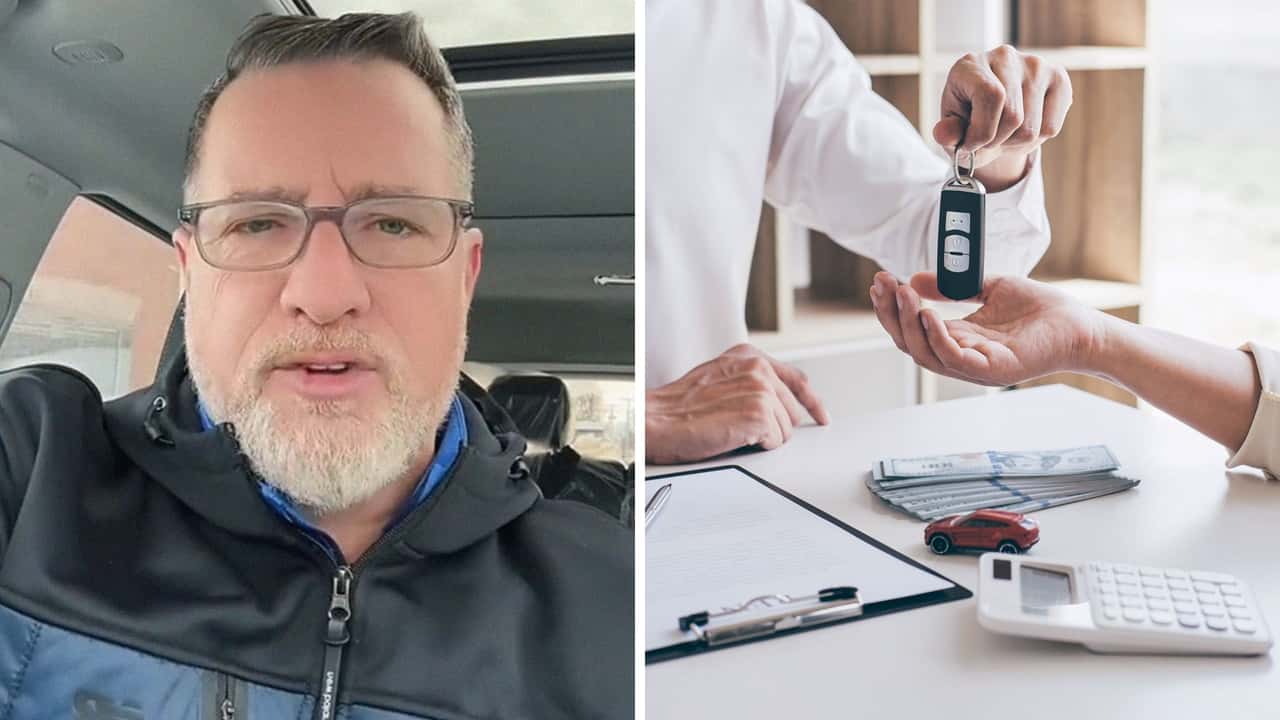

The way the finance guys in a recent TikTok clip talk about it, a potential car buyer’s Credit Karma score might as well be a bluff at a poker table. She says she’s sitting at 732 on Credit Karma. One salesman immediately starts negotiating downward. The other offers to bet on coffee on who’s closer to the actual credit rating.
When the number comes in, we get an up-close look at one of the murkier realities of car financing.
The clip from financing expert and former dealership owner Shawn Payne (@goatforreal26), which has been viewed more than 282,000 times, appears to have been filmed at a Mitsubishi dealership where Payne, founder of My Car Counsel, is advising staffers. The customer who’s the subject of their coffee wager wound up having a credit score nearly 140 points lower than Credit Karma indicated.
“All right, so coffee this afternoon. Credit Karma is full of—” Payne trails off with a laugh before putting in his order for a chai tea latte with an extra shot of espresso.
Credit Confusion Among Car Buyers
The clip ends almost immediately afterward, but it’s already done plenty to reveal a common point of confusion that clearly resonated with hundreds of viewers: Lots of people think they know their credit score until a lender actually checks it.
The comments section quickly turned into a virtual barroom brawl over whether consumers can truly see the same numbers lenders use when approving auto loans.
“In 2026 I should be able to open an app on my phone and see a real credit score any day of the week,” one viewer complained.
That triggered pushback from commenters insisting the tools already exist.
“You can. It’s called Experian. FICO (multiple FICO), TransUnion, and Equifax scores,” another viewer replied.
Others argued the situation isn’t nearly that straightforward.
“Most car dealerships use FICO Auto 8 or 9 for car loans,” one commenter explained. “That is different than you will see on a standard FICO score.”
Another viewer who said they’d taken home-buying classes described a similar frustration with trying to track the “real” score lenders actually use.
“They all give almost same number,” the commenter wrote of the various credit apps and bureau tools available online. “Not the actual numbers they use for different loans.”
In a follow-up video, Payne goes into some detail as to the different scoring methods used by Credit Karma and major credit bureaus. In short, he said Credit Karma uses a scoring system that has mostly been disregarded by major lenders, which is a big reason why some borrowers may experience a surprise when they apply for a home or auto loan.
That disconnect largely comes down to the fact that consumers are often looking at the outputs of a very different scoring formula than the one lenders actually use when deciding whether to approve a loan and at what interest rate. Credit Karma primarily shows VantageScore models created jointly by the three major credit bureaus, while many banks, mortgage companies, and auto lenders still rely heavily on various versions of FICO scores.
Complicating matters further, there isn’t just one FICO score. Different industries use specialized versions tailored to the type of borrowing involved.
Too Many Credit Scores To Count
Auto lenders frequently pull FICO Auto Scores, which place heavier emphasis on previous car loan repayment history. Mortgage lenders often use older FICO models required by federal underwriting standards, while credit card companies may rely on entirely different versions.
Complicating things even further, lenders may pull data from different bureaus altogether. That means a borrower’s Experian, Equifax, and TransUnion files can all produce slightly different results depending on what information has recently been reported, all of which can make their loan eligibility as unpredictable as which way the wind blows from one day to the next.
The result is a system where consumers can check several “accurate” scores online and still walk into a dealership only to discover the lender sees something else entirely.
Payne told Motor1 that the mismatch between Credit Karma scores and dealership lender pulls creates friction inside finance offices almost daily.
“People will come in and say, ‘Well, I’m a 740,’ but they’re looking at Credit Karma,” he said. “So when they come back at a 660 and they get a tier-three rate instead of a tier-one rate, they’re mad at us.”
Payne said the problem is that Credit Karma is measuring borrowers through a scoring system many auto lenders simply don’t prioritize when making lending decisions.
“It’s just not an accurate gauge,” he said. “Literally none of the automotive lenders look at it when they’re making a lending decision.”
Payne said the original video was partly intended to show borrowers that dealership finance managers often expect the lender pull to differ significantly from what customers see online. In some cases, he said, the difference can even work in the customer’s favor.
A look through other videos in Payne’s TikTok library shows that there’s plenty of gallows humor and off-the-cuff analysis of potential buyers who are probably sweating out the details the sales vets chew through without a second thought. Or they’re unexpectedly about to stare down a monthly payment that’s about $100 more per month than they were expecting.
We see that chasm in the original clip where the salesman was off by dozens of points, Credit Karma was off by more than 100, and the customer likely walked into the dealership believing she had solid low-700s credit.
By the end of the clip, the entire conversation around a customer’s financial future had been reduced to a stunned reaction and a coffee bet.
“Dude,” Payne says while staring at the screen. “It’s 140 points.”
Via email, a Credit Karma spokesperson said, "Credit Karma was founded with a mission to educate consumers and provide the right financial products they expect and deserve, always underscored by transparency. Credit Karma does not create credit scores or credit reports. Credit reports and scores are determined by the credit bureaus and credit scoring companies. Credit Karma relays the information created by those companies.
"Also, there is not just one credit score, there are dozens if not hundreds of scoring models. For instance, there are multiple versions or models of the FICO score, so you never really know which model a lender uses.
"With so many scores available for lenders to use – it’s best to monitor how your scores change overall as you use credit responsibly, rather than focusing on specific numbers. If you consistently pay your bills on time, reduce your debt and apply only for credit you need, over time you can establish a solid credit history."
RECOMMENDED FOR YOU

Man Spots Used Toyota Camry For $7,000. Then He Sees How Much It Costs At CarMax: ‘Crazy’
Want A One-Off Cayenne Or Panamera? Porsche Will Make It Happen
Woman's Land Rover Headlight Goes Out. Then She Finds Out How Much It Costs To Fix: ‘AutoZone Put Them In For Free’
911 GT3 Buyers Helped Convince Porsche To Give The Carrera S A Manual
Car Saleswoman Reveals 'You're Not Safe' If You Bring Car In For Service: 'The Dealership WILL Use Your Car For Parts'
You Can Make a Fiat Topolino Street Legal. Here’s How
Woman Buys A Hummer. The Next Day, Her Mechanic Pulls 216 Codes: ‘Was Anything Working?’