SVolt cancels planned battery factories in Europe
The plants in Brandenburg and Saarland will not be realised
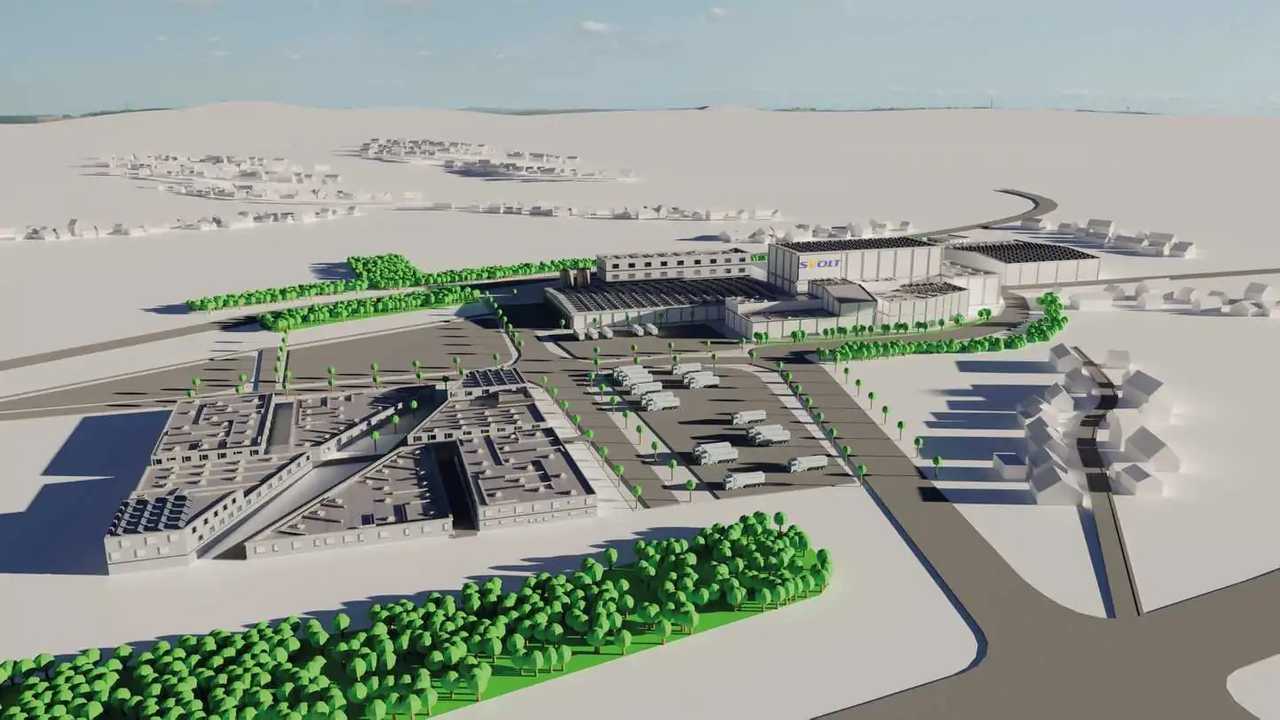

Svolt, the battery division of Great Wall Motors that was spun off in 2018, is cancelling its plans for European battery factories. After the cell factory in Brandenburg was cancelled at the end of May, the Chinese company has now also pulled out of the site in Saarland. This means that all of Svolt's plans for Europe have been cancelled.
Svolt confirmed this to the Chinese news agency Yicai on Wednesday, as reported by Automobilwoche. The weak demand for electric cars in Europe was cited as the reason for the decision.

Among other things, Svolt offers cobalt-free NMX battery cells
Svolt had already announced battery production in Saarland in 2020. It was to consist of a cell factory in Überherrn and a module and battery production facility in Heusweiler. Svolt wanted to invest around €2 billion in the project; the annual capacity was to be 24 GWh.
In 2021, Svolt signed a contract with Stellantis for the supply of lithium-ion batteries from 2025, but there were several delays at the plant in Saarland. In 2022, Svolt therefore announced the construction of a battery cell factory in Lauchhammer, Brandenburg on an existing industrial site. This was to have an annual capacity of 16 GWh. These plans were then cancelled in May 2024 and the plant in Überherrn was also on the back burner, while Svolt wanted to retain the Heusweiler site. Now none of the three factories will be built.
This is what the cell plant in Saarland should look like one day
The largest cell factory in Germany to date is the CATL plant near Erfurt with an annual capacity of 8 GWh. There is also a cell factory operated by the Swiss company Leclanché in Willstätt near Kehl, which produces cells with LTO and NMCA chemistry (lithium titanate and nickel-manganese cobalt aluminium). Production capacity is to be increased to 2.5 GWh. However, the cells are not intended for electric cars, but for commercial vehicles, trains, ferries and stationary energy storage systems.
VW's first cell plant with 40 GWh is scheduled to start operations in Salzgitter in 2025. A year later, Northvolt Three in Heide will follow with up to 60 GWh. Northvolt is currently experiencing economic difficulties, but is still holding on to the site in northern Germany. The joint venture ACC between Stellantis and Mercedes is also planning a plant in Kaiserslautern, which is currently on hold. The joint venture between Porsche and Customcells is also planning a 20 GWh plant near Tübingen. And Tesla wants to build a cell plant in Grünheide at some point.
EV industry deflates:
The bottom line
Many companies are currently putting a question mark behind all investments related to electric cars. The reason is weakening demand. However, this will probably not remain so weak for all time; if the EU's fleet limits for 2025 remain in place, the market could boom again. And then there will be calls everywhere for cells from Europe again.
Our cover picture shows a rendering of the module production facility in Heusweiler, which has now been cancelled.
Source: Automobilwoche (Paywall)
RECOMMENDED FOR YOU
911 GT3 Buyers Helped Convince Porsche To Give The Carrera S A Manual
Man Buys Ford Mustang. You Won't Believe The Trouble It Costs Him With His HOA: 'Threatened To Call The Police On Me'
Is Porsche Planning To Kill The Taycan By 2030?
Why Every New Car Seems To Have A Giant Screen Now
Mercedes Won't Stop Building V8s, But A New C63 May Not Happen
Your Car Has a Hidden Mechanical Key. Here's Why It's There
Porsche Heard You: The Manual 911 Carrera S Is Back