Is Citroën becoming an anti-Dacia brand?
Some recent examples suggest that the French brand is aiming to reposition itself

Apart from the rapid growth of Chinese car manufacturers and the success of Tesla as an electric vehicle manufacturer, there have been few great success stories in the automotive industry in the last 10-15 years. As everyone knows, this industry has faced several challenges that seem to have no end in sight. In this difficult context, it is remarkable to see exceptions. Dacia is perhaps one of them.
Since 1999, the Renault Group's low-cost brand has seen a major transformation that has led it to become a major player in the European car market and an essential part of the French carmaker's global expansion plans. In 25 years, the right positioning of the brand, combined with an efficient cost strategy, has enabled it to achieve a very solid position.
Last year, Dacia sold almost 660,000 units in the regions in which it operates. The volume rises to 943,200 units if Dacia models rebadged as Renault are included. This year, up to September, Dacia and the Dacia rebadged Renaults have sold 682,000 units.

Global sales of Dacia and Citroën * Excluding Dacia sold as Renault
A case study
Despite the clear evidence of Renault's success with Dacia as a competitive car, there have been no other car manufacturers that have replicated this formula. In fact, part of the continuous growth recorded by the Romanian brand is that it has almost only been in the entry parts of the lower segments. This may change soon.
Recent examples suggest that Citroën, one of Stellantis' three French car brands, is aiming to reposition itself and play the Dacia game on the cheap. It all started with the unveiling of the fourth generation C3.
Average and base public price in France in September 2024
This hatchback, whose internal name is CC21, was initially introduced in India and Brazil using Stellantis' Smart Car platform. It was conceived as a 'global' car that would appeal to both developing (India, Latin America) and developed (Europe) markets. With the CC21, the C3 was not conceived with Europe in mind, but the more frugal emerging markets. This means lower production costs and a lower final price.
This formula has also been applied to the second generation of the C3 Aircross, which is now bigger, is a 7-seat B-SUV and is relatively cheaper than the previous generation. These two models are part of the C-Cubed plan to make Citroën a more global (and affordable?) car brand.
Lemon Basalt
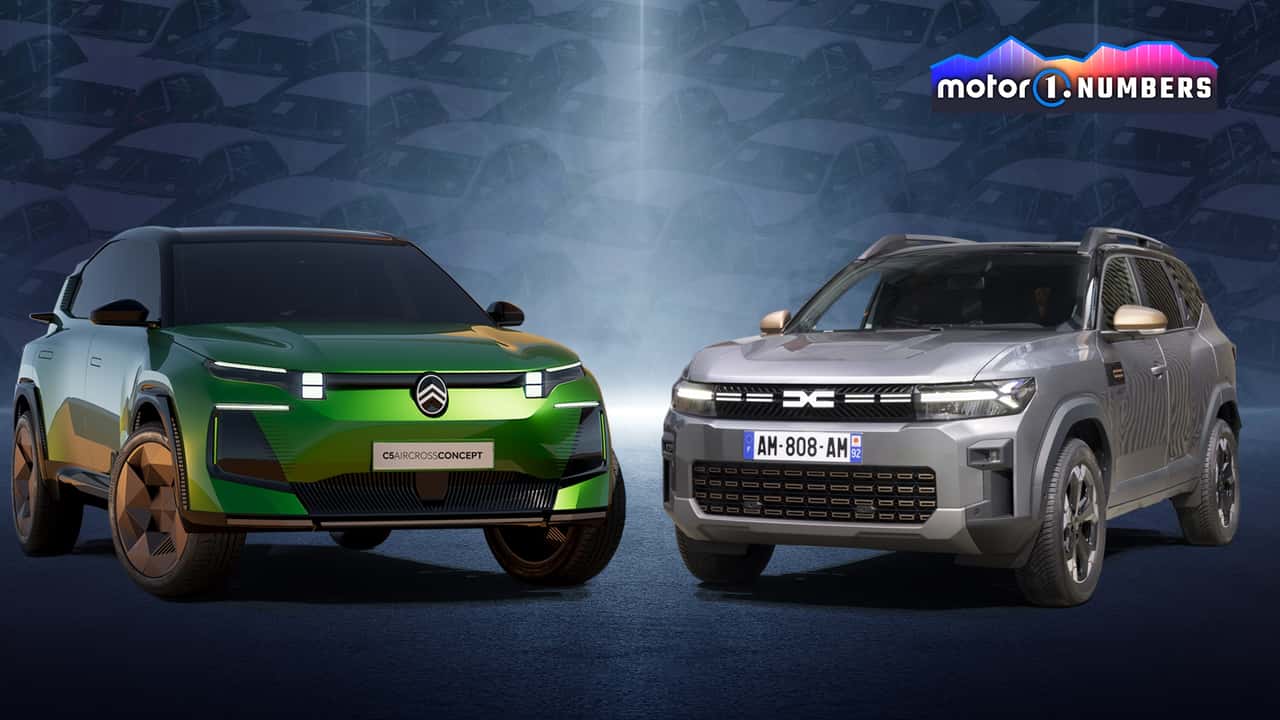
The third model was presented a few months ago in India and Brazil and is called the Basalt. It is the coupe SUV in the range, which is expected to target the growing sales of coupe SUVs in emerging markets. It is not expected in Europe. It was last seen at the Paris Motor Show a few weeks ago. The Citroën C5 Aircross Concept is supposed to be 95 per cent similar to the next production version and has the Dacia Bigster in its sights.
Citroen C5 Aircross Concept
Dacia Bigster
Is it working?
Sales of the new C3 have not taken off in India, with just 3,700 units sold in the January-September 2024 period, down 49% from the same period in 2023. Results in Brazil are better in terms of volume (16,000 units), but also negative compared to the previous year (-14%).
In the case of the C3 Aircross, the volume was just 1,073 units in India in the first nine months of this year. The brand sold more units between September and December 2023. The good news seems to be coming from the Basalt, with 920 units sold in India in just two months.
Average price of available models and versions
The big test will be France (and Europe more generally). Becoming an anti-Dacia may be a wise move but also a very risky one. Citroën has had a specific positioning until now. Changing it to sell more and earn more seems the right thing to do, unless the public understands and rejects it. And Carlos Tavares certainly does not want another problem on his desk.
More Motor1 Numbers:
The author of the article, Felipe Munoz, is Automotive Industry Specialist at JATO Dynamics.
RECOMMENDED FOR YOU
GM Still Leads The US In Sales. But EV Demand Is Slipping
‘Use A 100% Cotton Cloth’: Man Scratches Plastic Trim On Mazda3 While Wiping Off Dust. Then He Pulls Out The Meguiars
Porsche Shutters Chinese Dealers Over Slow Sales And Lost Profit
Dealership Saleswoman Reveals The Real Reason Most Customers Buy Toyotas. Then She Says It Isn’t Resale Value
Average New Car Prices Just Hit A Record High: Nearly $52,000
Man Takes His Car To Speedway And Puts In $22 Worth Of Gas. Then He Tries To Turn On The Engine: ‘Don’t use E-15’
Ford Brings Back Veteran Engineers After AI Falls Short: 'It's Only As Good As The People Using It' (Update)