Home
News
What lies behind Volkswagen's investment in Rivian
Germans fund start-up with 5 billion to get their hands on new technology: blame delay on electric cars


By: Riccardo Ciriaco
Published by: Brian Potter
Jun 30, 2024 at 6:09am ET
Add Motor1.com as a preferred source in Google
- (https://twitter.com/intent/tweet?url=https%3A%2F%2Fwww.motor1.com%2Fnews%2F725013%2Fwhy-volkswagen-invests-rivian-background%2F&text=What%20lies%20behind%20Volkswagen%27s%20investment%20in%20Rivian&via=motor1com)
- copy
Share
Comment
Up to $5 billion, or approximately £3.95 billion: it is a major cash injection that the European Volkswagen is making into the American Rivian, for a financial operation that has surprised everyone a little, among insiders and stock markets.
But now the question arises. What drove the German group to believe so strongly in a partnership with a rival company (at least overseas)? Let's start with the official communications, which speak of:
- creation of a 50-50 joint venture focused on software-defined electric car technologies
- VW's entry into the start-up's capital
- permission to use Rivian patents in Volkswagen Group vehicles
But behind the scenes there are other dynamics at work.
Cariad bankruptcy
Revealing the background is the British news agency Reuters, which points out that the agreement between the two companies is only the latest in a series that began in September 2022, when the then CEO Herbert Diess was forced out of office to make way for the group's current number 1, Oliver Blume.

The display of the Volkswagen ID.3
A change at the top was the result of the manufacturer's difficulties in making the transition from the combustion engine to the electric motor, a sector where knowledge of technologies such as batteries, charging and software is required that Volkswagen does not have.
It was to be the Cariad unit, founded in 2020, that would develop ad hoc solutions for the vehicles of tomorrow and compete on an equal footing with Tesla. However, the mission has partially failed, with delays and losses slowing down the projects in the pipeline, also due to internal decision-making cumbersomeness, and that is why alliances with Rivian and others came into play.
What do you think?
View
Comments
What happens now
The new CEO is in fact trying to speed up the process by drawing on manufacturers born with the aim of developing exclusively electric vehicles such as the US company led by RJ Scaringe, or the Chinese company Xpeng, with which Volkswagen entered into a partnership last summer to build platforms to be fitted in cars in the shadow of the Great Wall.
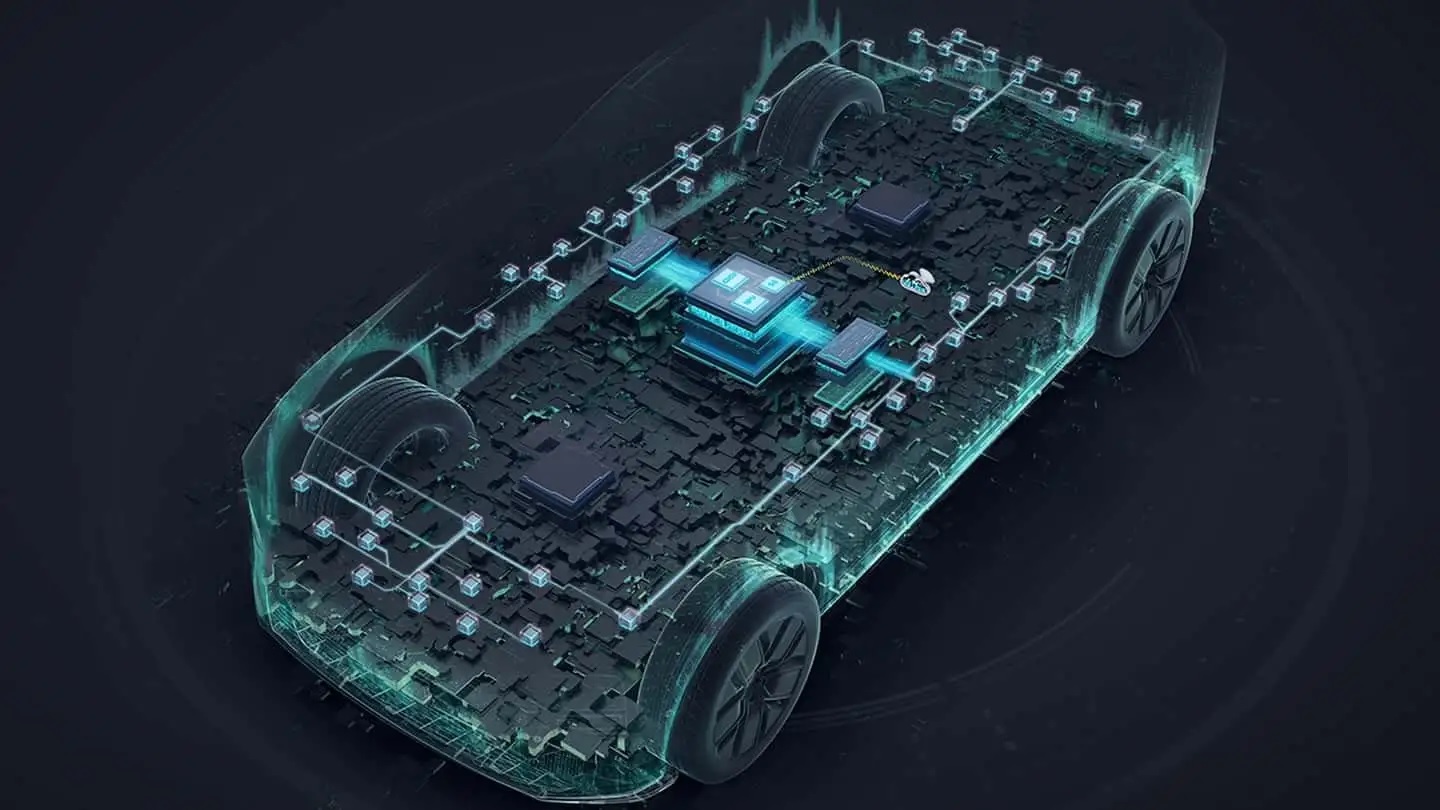
The future Volkswagen-Xpeng platform
The German group will now hold up to 25 per cent of the shares in Rivian, ousting the current majority shareholder, Amazon, which holds 16 per cent. The fate of Cariad, however, is difficult to predict. On the one hand, there is the head Peter Bosch, who is sure of maintaining the helm of a ship that will not sink, but on the other hand there are both the experts, who are not exactly convinced of the division's future, and VW's shareholders, who have coolly welcomed the investment, considered too onerous. The fall in the stock market confirms this.
More about Rivian:
Rivian R3: What the electric crossover for Europe will look like
Talk of the Apple Car is back: it would be born thanks to Rivian
Volkswagen hires Rivian, Tesla veteran to help sort out its software woes
Rivian CEO talks about European expansion, underpromising, and overdelivering
Source: Reuters
We want your opinion!
What would you like to see on Motor1.com?
Take our 3 minute survey.
- The Motor1.com Team
Share this Story
- (https://twitter.com/intent/tweet?url=https%3A%2F%2Fwww.motor1.com%2Fnews%2F725013%2Fwhy-volkswagen-invests-rivian-background%2F&text=What%20lies%20behind%20Volkswagen%27s%20investment%20in%20Rivian&via=motor1com)
- copy
GO TO COMMENTS
(
)
Got a tip for us? Email: tips@motor1.com
View all comments ( )
Popular
Forget The Sedan: This Alfa Romeo Giulia Quadrifoglio Is A Two-Seat Convertible
BMW Kept This Hatchback A Secret For Decades
Bugatti Restores One-Off Veyron With A Mirror-Like Aluminum Body
EU Moves Closer To Keeping Gas Cars Alive After 2035. Here's What's Changed
latest articles
- Forget The Sedan: This Alfa Romeo Giulia Quadrifoglio Is A Two-Seat Convertible Oct 21 - Aftermarket / Tuning -
- Lexus TX 550h+ Is Dead For 2027 Oct 21 - Pricing -
- EU Moves Closer To Keeping Gas Cars Alive After 2035. Here's What's Changed Oct 21 - Industry -
- Mercedes T Bones Two CLA Models In A Brutal Safety Test Oct 21 - Safety -
- Driver Goes Through Car Wash With Full Truck Bed—Then He Learns The Hard Way Why You Shouldn't Do That Oct 20 - Trending -
- Every Rolls-Royce Has A Hidden Feature Most People Don't Know About Oct 20 - Motor101 -
- Subaru Built A 510-HP Electric Wagon Without Toyota's Help Oct 20 - Official -
RECOMMENDED FOR YOU
The Strange Reason The Golf GTI Had A Golf Ball Shifter
Forget The Sedan: This Alfa Romeo Giulia Quadrifoglio Is A Two-Seat Convertible
12 Cars With Names That Make Absolutely No Sense
Lexus TX 550h+ Is Dead For 2027
This German City Exists Because Of Volkswagen
EU Moves Closer To Keeping Gas Cars Alive After 2035. Here's What's Changed
10 SUVs That Get 30 MPG Without Hybrid Power