French town goes electric with new Renault Zoe for all residents
Residents of the remote town of Appy will run a Zoe for three years.


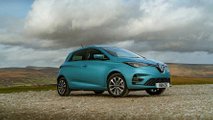
Renault has given every household in the town of Appy, France a brand-new Zoe for three years, creating the first 100 percent electric town, car-wise, in the world.
The pioneering scheme, in the Ariege region, has been done to demonstrate that even in one of the most isolated towns in the country, electric mobility is feasible for the masses. The Zoe has an impressive 245-mile range as well as broad charging capabilities making it the perfect car for the experiment.
More on the Renault Zoe

Over the next three years, Appy residents will run Zoes and relay their impressions and experiences back to Renault,that will help the French manufacturer get a better grasp on ownership experience and electric motorists' habits. All households will be provided with a home charger, and there will be a public charger too. The new Zoe's 52kWh battery can be charged to 90 miles of range in just 30 minutes.
The Renault Zoe is available both online and in Renault showrooms, and is available until the the end of September with £1,000 off as part of Renault's 'Switch' incentive. With the incentive the Zoe i Play R110 Z.E.50 is available for £279 per month, with a £2,250 customer deposit on a two-year 0 percent APR PCP plan.
It comes with a free home wallbox for faster home charging and a five-year, 100,000-mile warranty, with three years’ roadside assistance and an eight-year, 100,000-mile warranty on the battery.
Gallery: French town goes electric with new Renault Zoe for all residents
RECOMMENDED FOR YOU
How Renault Outsmarted Cheap Chinese EVs, And Profited
Man’s Mercedes Notifies Him It’s Time For An Oil Change. You Won’t Believe What Mercedes Charges Him: ‘Bro…’
BMW’s Car2Car Project Proves 51% Of Scrap Can Feed New Cars
What Really Happens When You Put Your Car In Sport Mode
Ford's Affordable Electric Pickup Has a Name—And A Price
Woman Takes Her Car To The Dealership. Then A Tech Asks Her To Replace Every Lug Nut: ‘That Expensive?’
Mercedes-AMG's Electric GT 53 4-Door Coupe Has ‘Authentic’ Inline-Six Sound