CVTs Have Been Around Way Longer Than Economy Cars
Leonardo da Vinci imagined the CVT centuries ago, but it took several inventors and Dutch automaker DAF to bring it to the road.
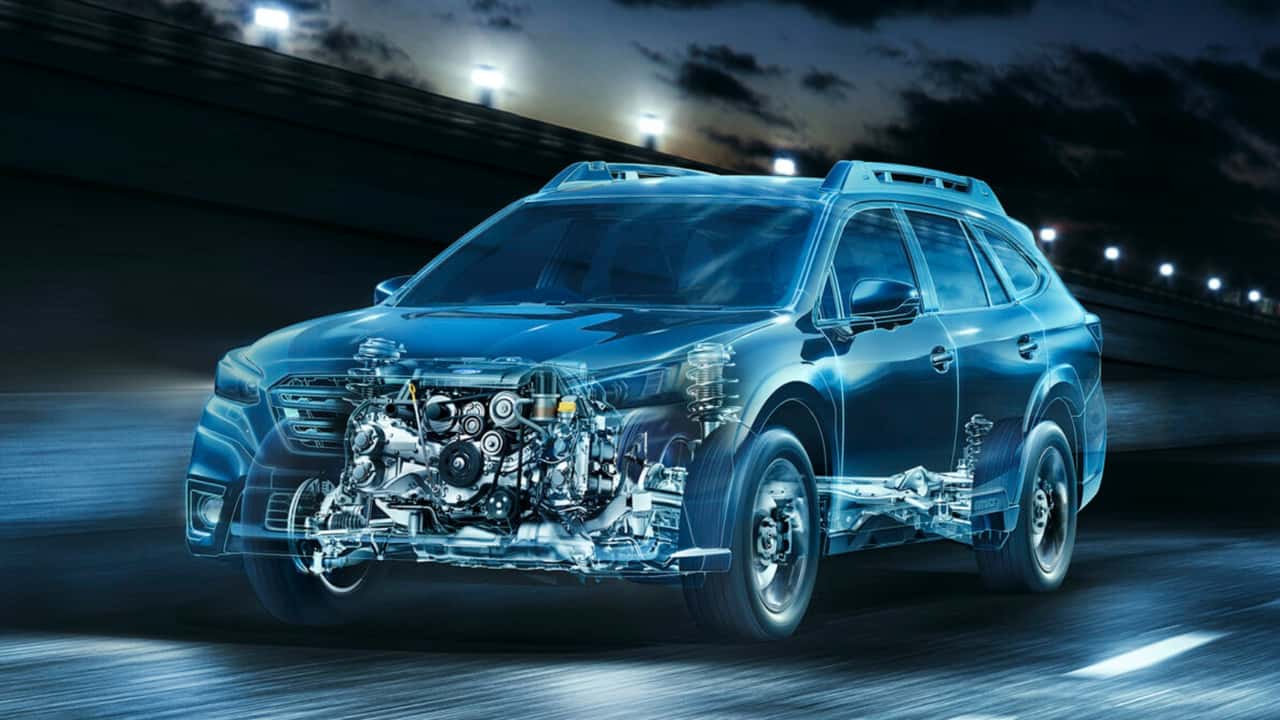

The continuously variable transmission (CVT) might seem like a relatively modern invention, but its origins stretch back more than 500 years. Leonardo da Vinci sketched an early version of the technology around 1490, centuries before the first automobiles hit the road.
It took several hundred more years, along with contributions from American inventors and a Dutch automaker, for the CVT to become a practical automotive transmission. Today, companies like Toyota, Honda, Nissan, and Subaru use the technology in millions of vehicles.
Its journey from Renaissance-era sketches to modern passenger cars is considerably stranger than most drivers realize.
Leonardo Da Vinci Sketched A CVT In 1490
The earliest known concept of a continuously variable transmission is credited by several sources to Leonardo da Vinci, who sketched a stepless transmission mechanism around 1490.
His design demonstrated the fundamental principle behind CVTs: changing the transmission ratio continuously rather than relying on a fixed selection of gears. Although da Vinci never built a working automotive transmission, his drawings showed an understanding of how mechanical systems could deliver variable speeds without conventional gear changes.
Of course, automobiles wouldn't arrive until centuries later. His concept was more of an engineering curiosity than a practical solution for powering a vehicle, but it laid the groundwork for future inventors to explore the idea.
An American Inventor Brought The CVT Closer To Reality
Fast-forward to the late 19th century, when American inventor Milton Reeves became an important figure in the development of variable-speed transmissions.
In 1879, Reeves developed a variable-speed transmission for industrial machinery, particularly equipment used in sawmills. The system allowed machinery to operate at different speeds without relying on conventional fixed gear ratios.
Reeves eventually adapted his transmission technology for automobiles. By 1896, he was using it in his own vehicles, helping demonstrate that continuously variable gearing had applications beyond industrial machinery.
While Reeves wasn't responsible for the original CVT concept, his work represented an important step toward making the technology practical. Several other inventors and manufacturers would continue experimenting with similar systems during the early days of motoring.
The First CVT Cars Arrived Before World War II
CVT technology began finding its way into automobiles well before most people associate it with modern economy cars.
British automaker Clyno introduced a small car equipped with a primitive CVT in 1923. Its transmission used specially designed inclined pulleys to change the gear ratio, allowing the vehicle to operate without traditional stepped gearing.
However, early systems had considerable limitations. They struggled with durability, power delivery, and the demands of everyday driving. Consequently, CVTs remained a relatively unusual solution rather than becoming an immediate alternative to conventional transmissions.
It would take another few decades before a manufacturer figured out how to make the technology commercially viable for ordinary passenger cars.


A Dutch Automaker Made The CVT A Commercial Success
In 1958, Dutch automaker DAF introduced the DAF 600, a small passenger car featuring the company's innovative Variomatic transmission.
Developed by Hub van Doorne, one of DAF's founders, the Variomatic used variable-diameter pulleys connected by rubber V-belts. As driving conditions changed, the pulleys adjusted their effective diameters, continuously changing the transmission ratio.
Unlike a conventional automatic transmission, the system didn't have a fixed set of gears to shift between. Drivers could accelerate smoothly without feeling traditional gear changes. Because the transmission operated the same way in either direction, the belt ratios were fully reversible.
This allowed DAF cars equipped with the Variomatic transmission to reach their top speed (up to roughly 57–80 mph, depending on the model) backward just as well as forward, leading to a bizarre trend of "backward driving" races in the Netherlands (see the video above).
The DAF 600 is widely recognized as the first mass-produced passenger car equipped with a CVT, making it a landmark in automotive transmission history. The Variomatic also became a defining feature of subsequent DAF models and eventually found its way into vehicles sold under the Volvo brand following Volvo's acquisition of DAF's passenger car business.
Why Automakers Still Use CVTs Today
Today's continuously variable transmissions are considerably more sophisticated than the systems developed during the early days of motoring. Most belt-driven CVTs use a specially designed metal belt or chain connecting two variable-diameter pulleys, with electronic controls constantly adjusting the ratio.
There are several reasons automakers continue to use the technology:
- Fuel efficiency: CVTs can keep an engine operating closer to its most efficient speed, potentially reducing fuel consumption.
- Smooth acceleration: Without traditional gear changes, acceleration is generally seamless.
- Mechanical simplicity: Many CVT designs use fewer moving components than conventional automatic transmissions.
- Packaging advantages: Their relatively compact construction makes them attractive for smaller vehicles.
However, CVTs aren't perfect. Some drivers dislike the way engine speed can remain relatively constant during acceleration, creating a disconnect between engine noise and vehicle speed. Durability and repair costs can also be concerns, depending on the particular transmission.
Nevertheless, manufacturers continue refining the technology, including developing hybrid-specific CVTs and more sophisticated belt-and-chain designs. More than five centuries after Leonardo da Vinci produced the earliest known sketches, the continuously variable transmission remains an important part of the automotive industry.
Why Drivers Still Can't Agree On CVTs
Reddit discussions show that automotive enthusiasts remain fascinated by the original DAF Variomatic. In a discussion about the 1967 DAF 55's CVT, users were particularly intrigued by its unusual pulley-and-belt arrangement, with some pointing out that the car could travel at considerable speed in reverse.
Modern CVTs generate a much more divided reaction. In discussions on why CVTs are unpopular and whether they are reliable, users frequently mention engine noise, driving feel, repair costs, and durability. Others appreciate their smooth acceleration and everyday efficiency.
The debate also extends to CVT maintenance and failure rates, with users highlighting the importance of proper servicing and transmission-fluid changes. The discussions suggest that while CVTs have come a long way since DAF introduced the Variomatic, their reputation among enthusiasts remains decidedly mixed.
More than 500 years after Leonardo da Vinci sketched the basic concept, the continuously variable transmission remains a familiar part of the automotive landscape. The technology has changed considerably, but its fundamental principle remains remarkably similar: continuously adjust the transmission ratio rather than rely on a fixed set of gears.
More From Motor101
RECOMMENDED FOR YOU

The Simple Technology That Keeps Off-Road Trucks From Getting Stuck
The Mazdaspeed3 Isn't Coming Back. Mazda Says 'It's Rumors'
Why Replacing A Modern Headlight Can Cost Thousands Of Dollars
2027 Chevrolet Silverado ZR2 Is An Off-Road Truck For Grownups: Driven
Honda And Toyota Found A Clever Way To Make Hybrid Engines More Efficient
2027 Chevrolet Silverado Is A Better Truck By Feeling Less Like One: Driven
Subaru STI: What Those Three Letters Actually Stand For