Home
Toyota
4Runner
Features
How Did The Toyota 4Runner Get Its Name?
The 4Runner name is not just a catchy badge—it has roots in four-wheel drive, desert racing, and Toyota's original off-road vision.
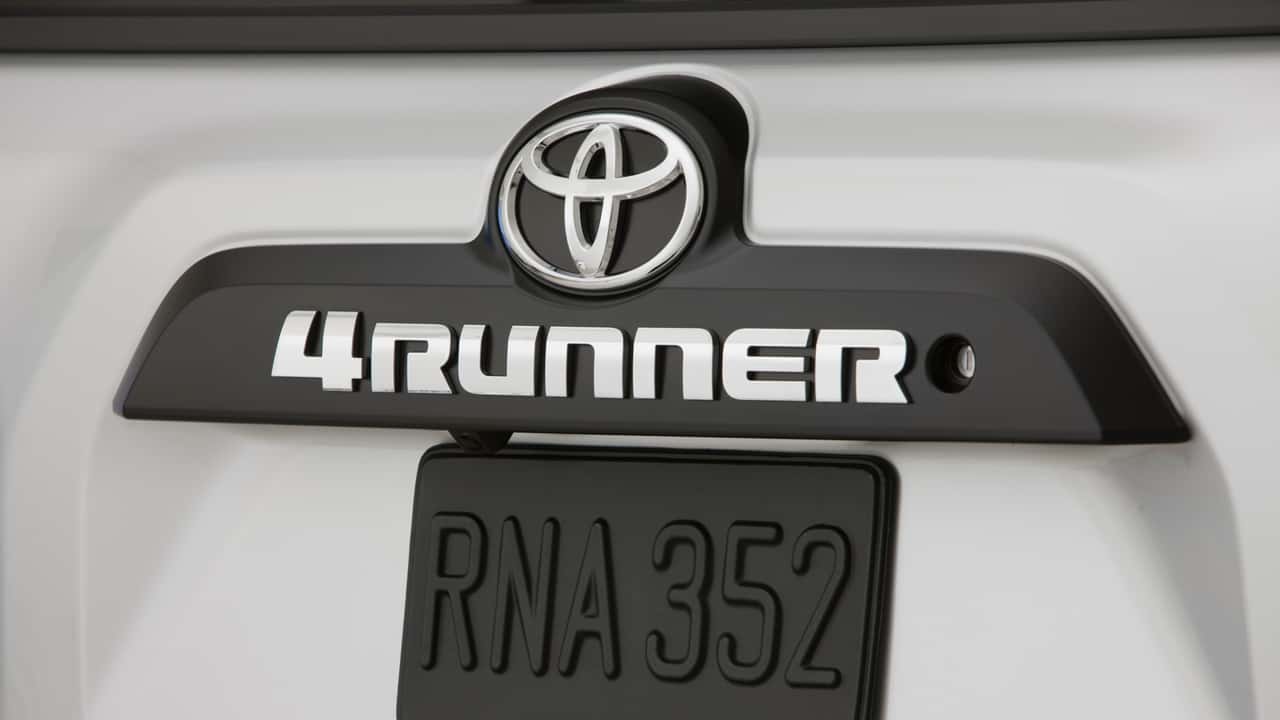
Photo by: Toyota
Dan Mihalascu 
By: Dan Mihalascu
Aug 20, at 7:00pm ET
Add Motor1.com as a preferred source in Google
- (https://twitter.com/intent/tweet?url=https%3A%2F%2Fwww.motor1.com%2Ffeatures%2F805627%2Fwhy-is-toyota-4runner-called-4runner%2F&text=How%20Did%20The%20Toyota%204Runner%20Get%20Its%20Name%3F&via=motor1com)
- copy
Share
Comment
The Toyota 4Runner has one of the most recognizable names in the SUV world. But unlike names such as Highlander or Sequoia, 4Runner sounds more like a description than a model name.
So, what exactly is a "4Runner"—and why did Toyota choose that name?
The answer goes back to the early days of the SUV boom, when Toyota was trying to create something that combined the toughness of a pickup with the practicality of a passenger vehicle. And there's a surprisingly strong connection to off-road racing.
It Started With A Pickup Truck
The 4Runner debuted for the 1984 model year, but its roots go back several years earlier. Toyota had already seen an opportunity in the market for a more versatile recreational vehicle based on its pickup truck that would combine the practicality of a pickup with the passenger-carrying ability of an SUV.
At the time, buyers were increasingly interested in vehicles that could handle dirt roads, camping trips, and other recreational activities without giving up everyday usability.
In 1981, Winnebago Industries partnered with Toyota to create the Trekker, which essentially added a camper-style rear section to a Toyota Hilux pickup. The Trekker added a fiberglass rear section behind the cab, creating additional seating and cargo space while retaining the truck's rugged chassis and four-wheel-drive capability
The Trekker helped demonstrate that there was a market for a vehicle that could handle off-road adventures while offering more practicality than a traditional pickup. Toyota eventually took the concept in-house and developed its own factory-built version.
That vehicle became the first-generation 4Runner in 1984. It was still closely related to the Toyota Hilux, but the enclosed rear body and additional passenger space gave it a distinct identity.
So, What Does '4Runner' Actually Mean?
Toyota's explanation is that the name reflected the vehicle's role as a new type of machine—one combining four-wheel-drive capability with passenger-car comfort. The "4" was meant to evoke the vehicle's four-wheel-drive nature, while "Runner" suggested a vehicle built to venture out and explore.
But there's another interesting connection to the world of off-road racing. Toyota has said that the name was inspired in part by the term "pre-runner," which was used in desert racing. A pre-runner is a vehicle used by racers to scout an off-road course before the actual race and identify potential obstacles and hazards.
These trucks needed to be capable, reliable, and considerably more comfortable than the dedicated race vehicles since they were required to handle rough terrain while carrying people and equipment. The idea fit the new Toyota quite well; the original 4Runner wasn't a dedicated desert racer, but it was designed for people who wanted to drive beyond the pavement to places where an ordinary family vehicle couldn't go.
That makes the 4Runner name particularly appropriate for an SUV designed around outdoor adventure.
The Original 4Runner Wasn't Really An SUV
Today's 4Runner is unmistakably an SUV, but the first-generation model looked much more like a pickup with a removable rear section. The original 4Runner had:
- Two front seats, with no conventional rear seating.
- A removable fiberglass top over the cargo area.
- A rear window that rolled down.
- A steel roll bar for added ruggedness.
- A four-wheel-drive pickup-based chassis.
Toyota itself notes that the first 4Runner was initially viewed as little more than a boxed-in pickup. It wasn't until later generations that Toyota transformed the model into the family-friendly SUV that most people recognize today.
The Name Became A Perfect Fit
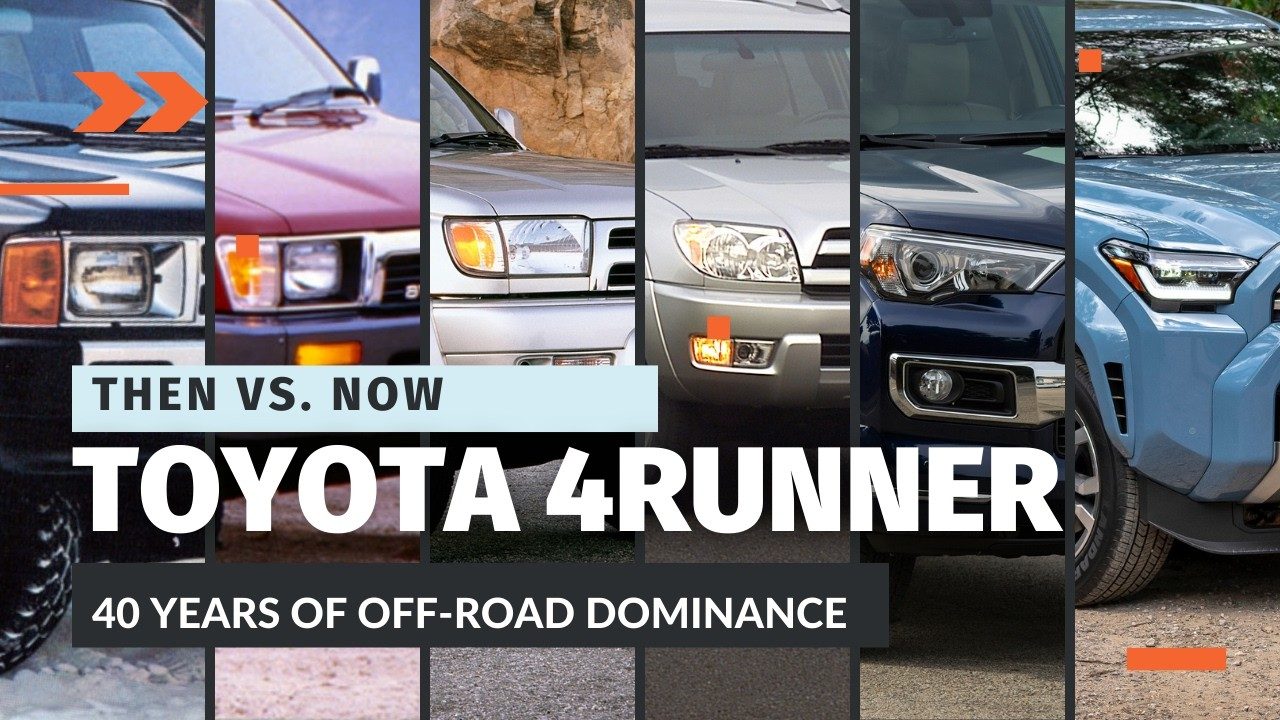
As the 4Runner evolved, the name started to make even more sense. The second generation arrived for 1990 and moved further away from its pickup origins.
The removable fiberglass roof disappeared in favor of a more conventional body, while rear doors and additional seating made the vehicle much more practical for everyday use.
Yet Toyota retained the rugged character that made the original appealing. That basic formula has survived for more than four decades.
The modern 4Runner is vastly more sophisticated than the 1984 model, but Toyota continues to emphasize its combination of everyday usability and off-road capability.
What Fans Think About The 4Runner Name
Reddit's 4Runner community is clearly attached to the name, with owners often treating the badge as part of the vehicle's rugged identity. Discussions about the model regularly drift into its pickup-truck roots and the distinction between a 4Runner and the Toyota pickup it evolved from.
One recent r/whatisthiscar thread about an unusual Toyota pickup even turned into a playful debate over whether a modified six-wheel Toyota should technically be called a “6 Runner.” The joke works because the 4Runner name is so recognizable that enthusiasts immediately associate it with Toyota's four-wheel-drive SUV.
Meanwhile, discussions in r/4Runner show how strongly owners identify with the nameplate itself. A 2026 thread from a new owner attracted hundreds of votes and dozens of comments, with owners discussing everything from the model's reputation to the differences between generations.
The Reddit takeaway is less about the literal meaning of the name and more about what “4Runner” has come to represent: a Toyota built around durability, off-road capability, and adventure. That's a reputation the name has managed to retain even as the vehicle has evolved dramatically from its pickup-based beginnings.
It Wasn't Just A Random Number
That's perhaps the most interesting thing about the name. The "4" isn't simply a generation number, nor does the "40" mean anything like the name of a particular engine or platform.
Instead, Toyota connected the name to the vehicle's four-wheel-drive capability and its role as a new kind of adventure vehicle, while also evoking the "pre-runner" terminology of desert racing.
What do you think?
View
Comments
More than 40 years later, the name has become one of Toyota's most recognizable SUV badges. The sixth-generation 4Runner arrived for the 2025 model year, continuing the nameplate's off-road-focused identity while adding modern technology and a hybrid powertrain option.
The 4Runner name is so iconic because it's essentially a name built around the vehicle's original mission: combining four-wheel-drive versatility with the freedom to venture beyond the pavement while at the same time taking some inspiration from the vehicles that run ahead of the pack in desert racing.
More From Motor101
 What Are Those Little Rubber Hairs On New Tires?
What Really Happens When You Put Your Car In Sport Mode
You're Probably Not Checking Your Tire Pressure Enough
We want your opinion!
What would you like to see on Motor1.com?
Take our 3 minute survey.
- The Motor1.com Team
Share this Story
- (https://twitter.com/intent/tweet?url=https%3A%2F%2Fwww.motor1.com%2Ffeatures%2F805627%2Fwhy-is-toyota-4runner-called-4runner%2F&text=How%20Did%20The%20Toyota%204Runner%20Get%20Its%20Name%3F&via=motor1com)
- copy
GO TO COMMENTS
(
)
Got a tip for us? Email: tips@motor1.com
View all comments ( )
Popular
12 Underrated Performance Cars That Nobody Bought
This $41,000 Chevy Corvette C1 Lookalike Is Really A Supersized Miata
2027 Honda Accord Gets Split Headlights With Squinty Eyes, But Only In China
Acura Is Building An 'Adventure-Ready' SUV. Here's Everything We Know
Mazda Exec Claims The Company's Identity No Longer Depends On The Miata
Latest Stories
- Meet Ford's New Le Mans Fighter: The GT41 Nov 26 - First Look -
- Android Auto Keeps Disconnecting? Here's What Might Be Wrong Nov 26 - Motor101 -
- 2027 Toyota 4Runner Finally Adds Heated Seats, Then Crosses $45,000 Nov 26 - Pricing -
- Porsche Unveils One-Off 911 GT3 Tribute To Its Iconic GT1 Race Car Nov 26 - Special Editions -
- Audi Is Putting A Gas Engine In Its Chinese AUDI Electric SUV Nov 26 - Green -
- Toyota's First Range-Extended EV Is Coming, And It Looks Like A Highlander Nov 26 - Teasers -
- 2027 Honda Accord Gets Split Headlights With Squinty Eyes, But Only In China Nov 26 - Facelift -
RECOMMENDED FOR YOU
2027 Toyota 4Runner Finally Adds Heated Seats, Then Crosses $45,000
Meet Ford's New Le Mans Fighter: The GT41
12 Cars That Should Easily Make It To 250,000 Miles
Android Auto Keeps Disconnecting? Here's What Might Be Wrong
Is Body-On-Frame Really Better For Off-Roading?
Porsche Unveils One-Off 911 GT3 Tribute To Its Iconic GT1 Race Car
Toyota Put Snow Tracks On Five Of Its Trucks and SUVs. Because Why Not?