Here's How Often You Should Actually Change Your Oil
You probably don't need an oil change every 3,000 miles—but that doesn't mean you can ignore the calendar.
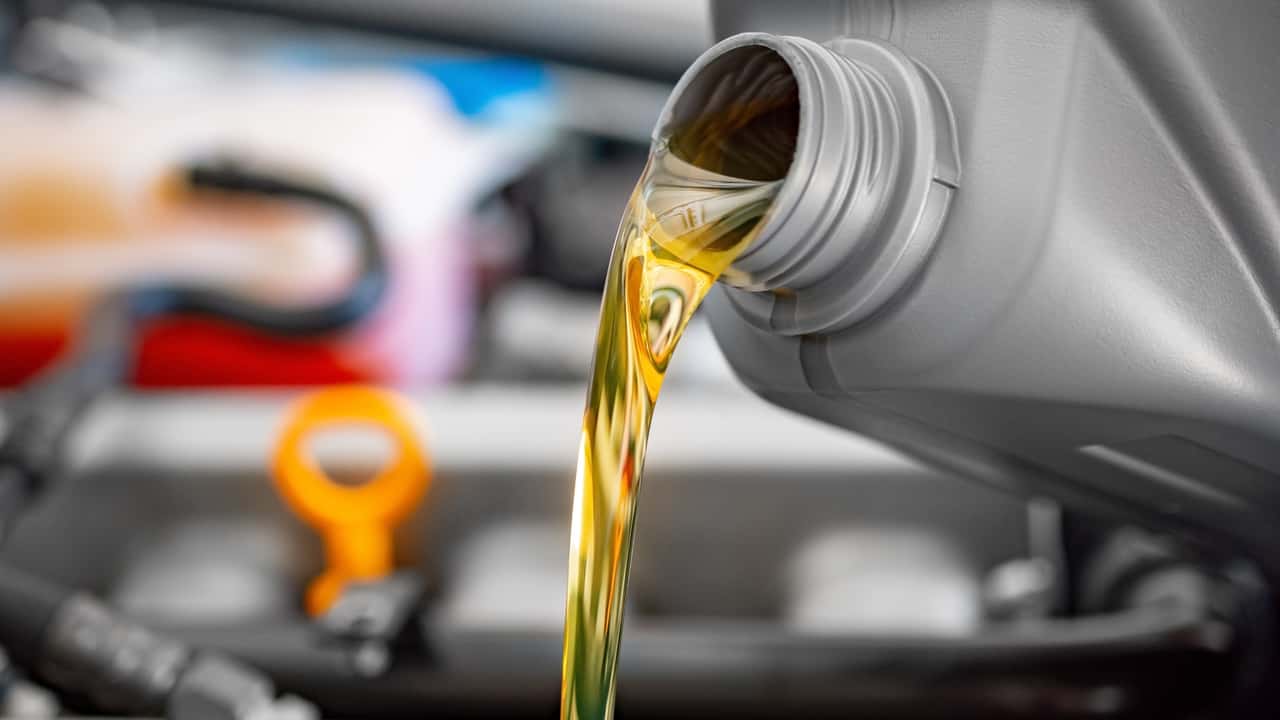

For years, "every 3,000 miles" was practically treated as automotive law. But if you’re still marking 3,000-mile intervals on your calendar, you may be changing your oil far more often than your car’s engine actually needs.
Modern engines, lubricants, and oil-life monitoring systems have pushed recommended intervals considerably farther. So, how often should you really change your oil?
Motor101
Welcome to Motor101, our series dedicated to answering the internet's biggest automotive questions. From the origins of iconic designs to the engineering breakthroughs that shaped the world's greatest cars, we uncover the stories behind the vehicles you love.
Your Owner's Manual Has the Final Say
There isn't one mileage number that works for every car. The best answer is the maintenance schedule specified by the vehicle's manufacturer. Depending on the vehicle, lubricant specification, manufacturer, and driving conditions, today's oil-change intervals can range from roughly 5,000 miles to 10,000 miles or more.
Many modern cars use an oil-life monitoring system that calculates when an oil change is needed based on factors such as driving conditions and engine operation. Other vehicles still provide a specific mileage and time interval.
That's why the old 3,000-mile rule isn't a particularly useful universal guideline anymore. Many modern maintenance schedules call for oil changes between 5,000 and 10,000 miles, with some vehicles going beyond that.
The important thing is to check the maintenance schedule for your specific vehicle rather than relying on a rule that may have been appropriate for an older generation of cars.
Mileage Isn't the Only Clock
Here's where things get slightly more complicated: oil can age even when your car isn't moving.
If your vehicle has a mileage-based recommendation, the manufacturer may also specify a maximum amount of time between oil changes—often six months or one year. Oil can become contaminated with moisture and other byproducts over time, particularly when a vehicle is driven mostly on short trips.
That means someone who drives 2,000 miles a year shouldn't necessarily assume they can wait several years for an oil change simply because they haven't accumulated enough miles. For low-mileage drivers, time can matter just as much as distance.
Short Trips Can Change The Equation
Your odometer doesn't tell the entire story. Frequent short trips, heavy stop-and-go traffic, extreme temperatures, dusty environments, and towing can all put additional demands on your engine oil.
Short journeys can be particularly hard on oil because the engine may not spend enough time at operating temperature to evaporate moisture and other contaminants.
If your driving regularly involves any of the following, it's worth checking your owner's manual to see whether your vehicle qualifies for a more frequent severe-service maintenance schedule:
- Mostly short trips: Repeated journeys where the engine doesn't have enough time to fully warm up can allow moisture and contaminants to accumulate.
- Heavy stop-and-go driving: Constant acceleration, braking, and idling can be harder on an engine than steady highway cruising.
- Extreme temperatures: Very hot or very cold weather can place additional demands on the engine and its lubricants.
- Towing or heavy loads: Pulling a trailer or regularly carrying heavy loads can increase engine workload and operating temperatures.
- Dusty or dirty conditions: Driving in particularly dusty environments can increase the amount of contamination an engine has to deal with.
The important takeaway is that 5,000 miles of gentle highway driving isn't necessarily equivalent to 5,000 miles of short, stop-and-go trips. That's one reason automakers sometimes provide separate maintenance schedules for normal and severe driving conditions.
What About Synthetic Oil?
Synthetic oil has helped make longer service intervals possible, but that doesn't mean every synthetic-oil vehicle automatically gets the same interval.
Synthetic oils generally resist breakdown better than conventional (mineral) oils, while modern engines are also designed around specific oil formulations and manufacturer specifications. Some vehicles can have intervals approaching 10,000 miles or more.
The important distinction is that the oil bottle doesn't determine your service interval—the automaker does. If your owner's manual calls for a particular viscosity and specification, use it. Don't simply assume that upgrading to a premium synthetic lets you double the manufacturer's recommended interval.
Changing the Oil Too Often Vs. Too Rarely
The 3,000-mile oil change rule made sense in an era of different engine designs and lubricants.
Today's oils and engines have significantly extended service intervals, and many vehicles now use computer-controlled oil-life monitoring. Changing oil more frequently than necessary generally won't hurt the engine, but it can waste money and oil.
The opposite approach—waiting well beyond the manufacturer's recommendation—is a much bigger gamble. Oil eventually becomes contaminated and loses some of its ability to protect the engine, increasing wear and potentially leading to expensive damage over time.
That doesn't mean being a few hundred miles late will suddenly destroy an engine. But consistently ignoring the recommended interval can increase wear and eventually contribute to serious mechanical problems.

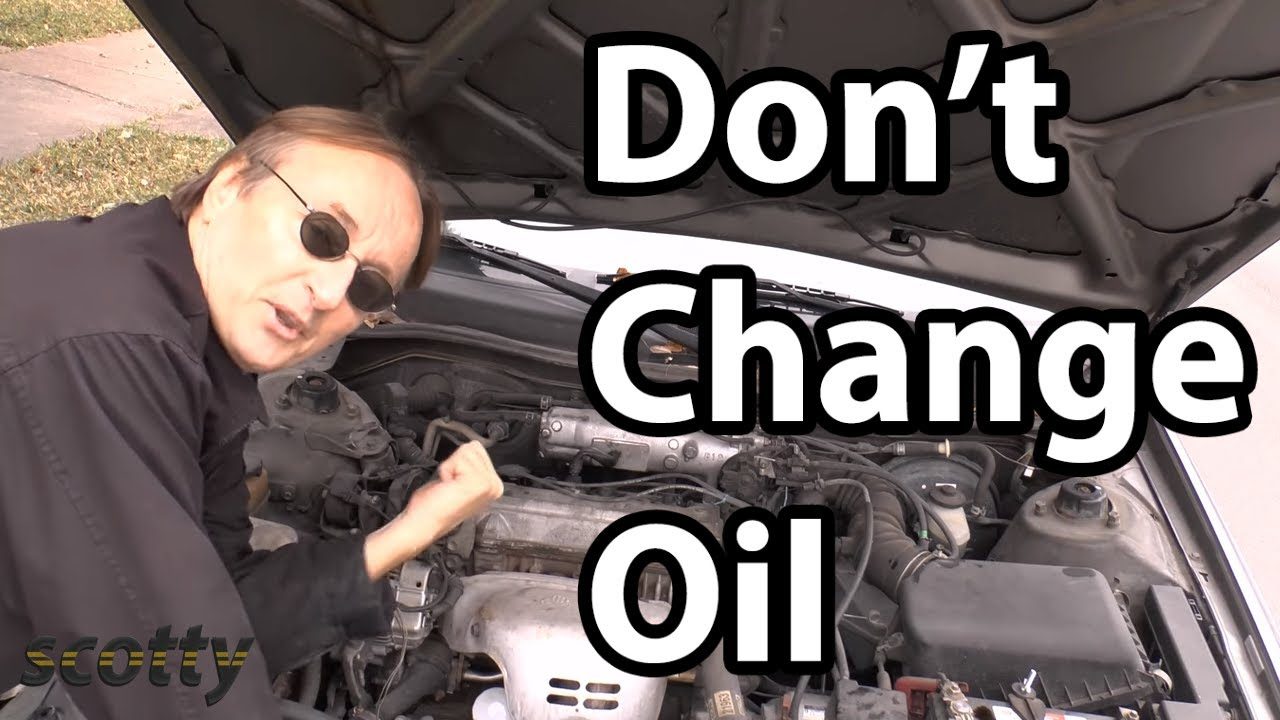
Owners Can't Agree On When An Oil Change Is Due
The mileage-versus-time question has sparked plenty of debate among car enthusiasts, particularly from drivers who put relatively few miles on their vehicles.
In one r/askcarguys discussion, a retired driver said the car had accumulated only about 2,500 miles since its previous service but was already past its recommended date.
The discussion largely leaned toward following the time limit rather than waiting for the mileage, with commenters suggesting that low-mileage vehicles still shouldn't ignore the manufacturer's time recommendation.
Another discussion from a driver doing fewer than 3,000 miles per year reached a similar conclusion. Commenters repeatedly pointed to the “whichever comes first” approach, arguing that oil can age even when the car isn't accumulating many miles.
But Reddit being Reddit, there's another side to the argument. Another r/cars discussion challenged some conventional wisdom around oil aging, with commenters debating how quickly unused oil actually deteriorates and whether manufacturers' time limits are conservative.
The takeaway isn't that Reddit has discovered a secret oil-change interval. It's that mileage alone doesn't tell the whole story. Driving habits, the vehicle's maintenance schedule, oil specification, and time since the last service all matter.
For a low-mileage driver, the safest approach is still to follow the automaker's specified time interval rather than assuming that barely driving means the oil can remain in the engine indefinitely. As mentioned earlier, the consequences of going too long between oil changes can be much more dramatic than simply having dirty oil.
The Bottom Line
If you're wondering whether to change your oil based on miles or time, the answer is: both can matter.
Start with your owner's manual or the vehicle's oil-life monitor. If there's a mileage-and-time recommendation, follow whichever limit arrives first. If your driving is particularly demanding, check whether the manufacturer specifies a more frequent severe-service interval.
And if you've been religiously changing your oil every 3,000 miles simply because that's what you've always been told, it might be worth checking your owner's manual. Your car may have been asking for much less frequent maintenance all along.
More From Motor101
RECOMMENDED FOR YOU

Why Do Lamborghini Doors Open Up? Here's How It Started
The Dodge Charger Sixpack Has Muscle. But It's Missing Something: Driven
What Is The Most Reliable Car Brand? Here's What The Data Says
Dodge's CEO Says The Best Is Yet To Come: 'We're Going To Go Faster'
Here's Why Your Car Battery Keeps Dying
Want A Truly Bespoke Escalade IQ? Cadillac Has A New Customization Program
What That Little Arrow Next To The Fuel Gauge Actually Means