Photos - Ferrari Luce
Ferrari Luce, the first electric Ferrari: design, interior, motors, and pricing
The Ferrari Luce is the first electric Ferrari in history, unveiled in 2025 with an all-new platform, four electric motors, and a maximum output of 1,050 hp. A radical project that marks an epochal turning point for the Maranello brand and redefines the boundaries of the luxury electric supercar.
Exterior design: aerodynamics first
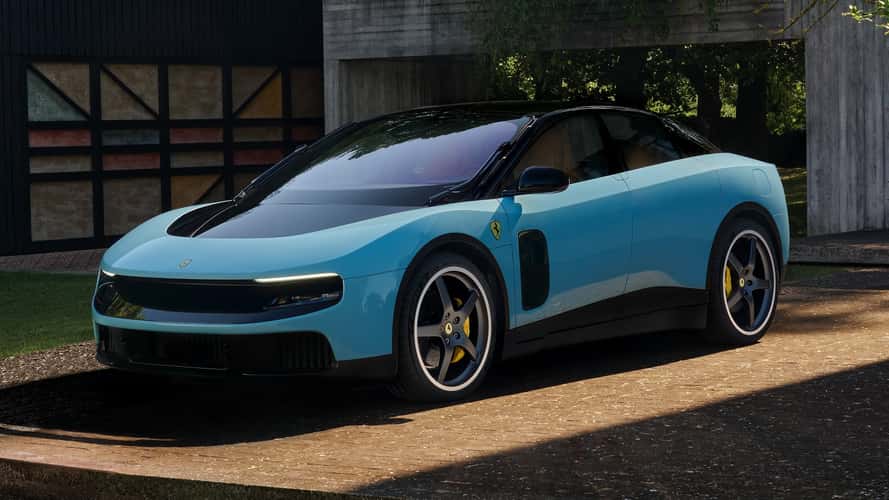
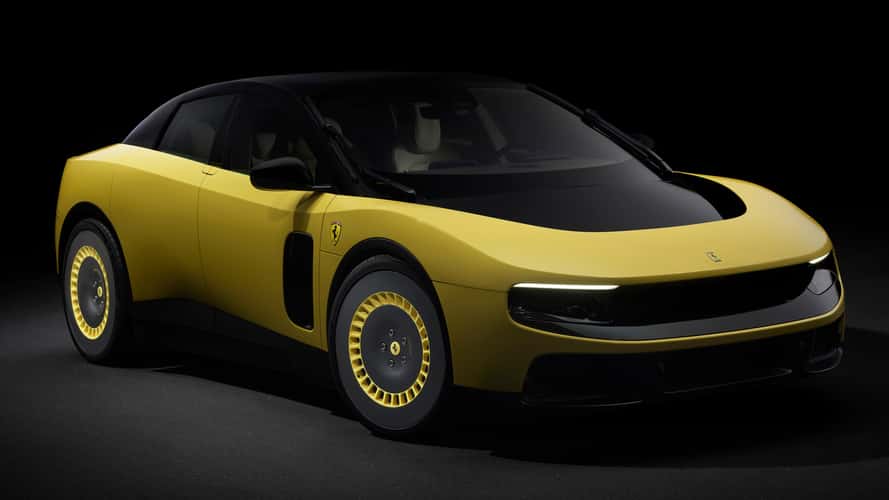
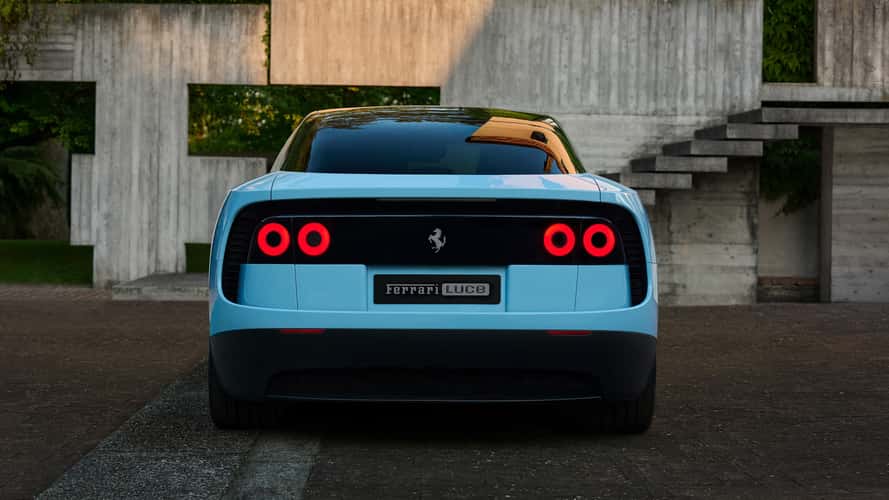
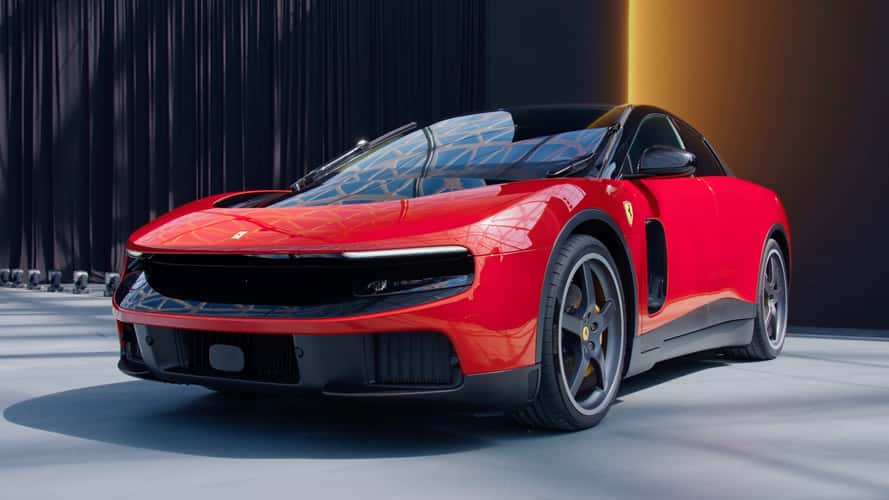
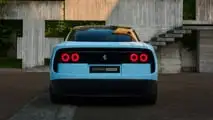
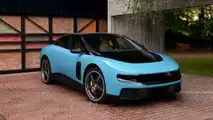
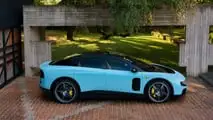
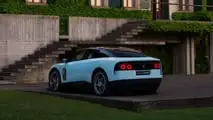
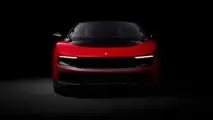
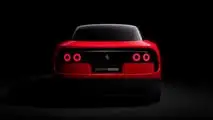
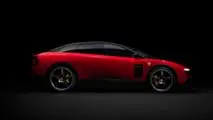
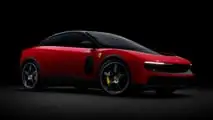
The design of the Ferrari Luce comes from a collaboration between the Ferrari Centro Stile and LoveFrom, the company founded by Jony Ive, the designer of the iPhone. The shapes are not the result of a styling exercise: Maranello’s engineers defined the surfaces based on aerodynamics, leaving LoveFrom to translate them into a coherent design language. The result is a car 5.02 meters long, 2 meters wide, and 1.54 meters tall — five centimeters less than a Ferrari Purosangue.
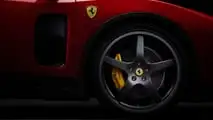
The drag coefficient is 0.254, achieved without active aerodynamics. The aluminum body separates from the black, teardrop-shaped passenger cell according to precise functional requirements: up front a large wing takes shape, while between the hood and windshield the transition is continuous. The windshield wipers have been specially patented to generate micro-vortices on the pillars without disturbing airflow. The wheels are the largest ever fitted as standard on a Ferrari: 23 inches up front, 24 at the rear. The headlights are round — an unexpected return, after years of a horizontal lighting signature on the Rosse di Maranello.
Interior: the most meticulously crafted in automotive history
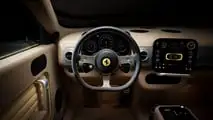
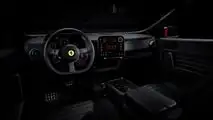
The cabin of the Ferrari Luce is among the most discussed and appreciated elements of the entire car. Jony Ive’s contribution is recognizable in the details: the treatment of the aluminum, glass surfaces, graphics, and animations of the OLED displays developed exclusively by Samsung Display. Four panels — 12.9, 12, 10.1, and 6.3 inches — manage the binnacle, center panel, and rear area.
Contrary to expectations, the screens do not dominate the cabin. Physical controls — knobs, selectors, mechanical buttons — coexist with digital interfaces in a balance rarely seen among today’s contemporary luxury cars. The binnacle consists of three dials with aluminum bezels and glass lenses: on the left, available power and regenerative braking; in the center, speed and battery level on a needle-digital hybrid; on the right, seven selectable driving parameters controlled by a physical toggle.
The steering wheel is machined from 100% recycled aluminum and integrates the Torque Shift Engagement paddles with a magnetic mechanism and precise tactile feedback. The key is Corning Gorilla glass with an E Ink display — an absolute first in the automotive world — and triggers a start-up ceremony in which Ferrari yellow spreads through the interface.
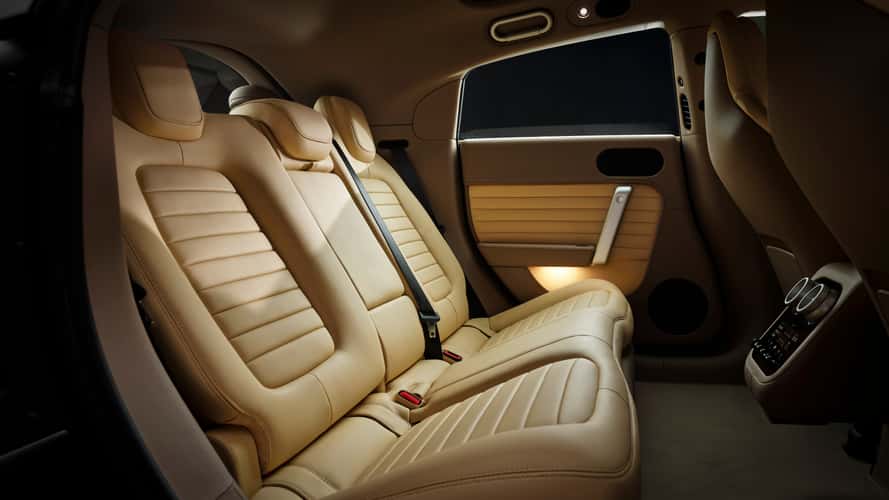
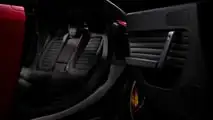
The Ferrari Luce is also the first five-seat Ferrari without a center tunnel, thanks to the absence of a driveshaft. The 597-liter trunk is the largest ever seen on a Ferrari. The quality of materials — leather, anodized aluminum, Alcantara, glass — reaches a level that is hard to find elsewhere in the automotive sector.
Motors and battery: Formula 1 technology
Each wheel of the Ferrari Luce has a dedicated electric motor installed, developed and built in Maranello. The front motors reach 30,000 rpm, the rear ones 25,500. These are radial-flux permanent-magnet synchronous motors, derived from those of the Ferrari F80 and developed with the know-how accumulated in Formula 1 and in WEC. The rear ones deliver 310 kW, the front ones 105 kW.
Power is not always available in full: the e-Manettino modulates it based on the selected map. The Range map limits output to 320 kW with rear-wheel drive and a top speed of 260 km/h. The Tour map rises to 460 kW with all-wheel drive. Performance reaches 725 kW — 986 hp — with permanent all-wheel drive and targets 310 km/h. Launch Control unlocks the total 1,050 hp: 0-100 km/h in 2.5 seconds, 0-200 km/h in 6.8 seconds.
The Torque Shift Engagement is the most original solution on the entire car: the steering-wheel paddles do not simulate gear changes but set five levels of torque delivery with the right paddle and five levels of engine braking with the left, allowing the driver to modulate negative torque on corner entry and power on exit based on grip and radius.
The battery pack, designed and assembled in Maranello in collaboration with South Korea’s SK On, operates at 800V and is a structural element of the platform. Its positioning lowers the center of gravity by 95 millimeters compared with the Purosangue, with a dynamic effect Ferrari compares to a 400 kg weight reduction. Estimated range is 530 km. DC fast charging reaches 350 kW. The warranty covers the powertrain and components for 8 years with unlimited mileage, with a structure already set up to accept next-generation modules.
The Luce’s sound is not synthetic: an accelerometer captures vibrations from the powertrain and subframe, an algorithm selects the most noble frequencies and plays them back inside and outside the vehicle. It can be activated or deactivated depending on the driving map.
Price: 550,000 euros
The Ferrari Luce has a list price starting at 550,000 euros. It is not a special series or a limited edition: it is a regular production model, joining the other Ferraris with orders open at the time of the official unveiling. Available customizations — colors, finishes, interior options — will be numerous, as is Maranello tradition.
Articles