Home
Mazda
Features
The Rotary Engine Should Be Everywhere. Why Isn't It?
Rotary engines are compact, smooth, and powerful, so why don't more automakers use them? Well, it's complicated.
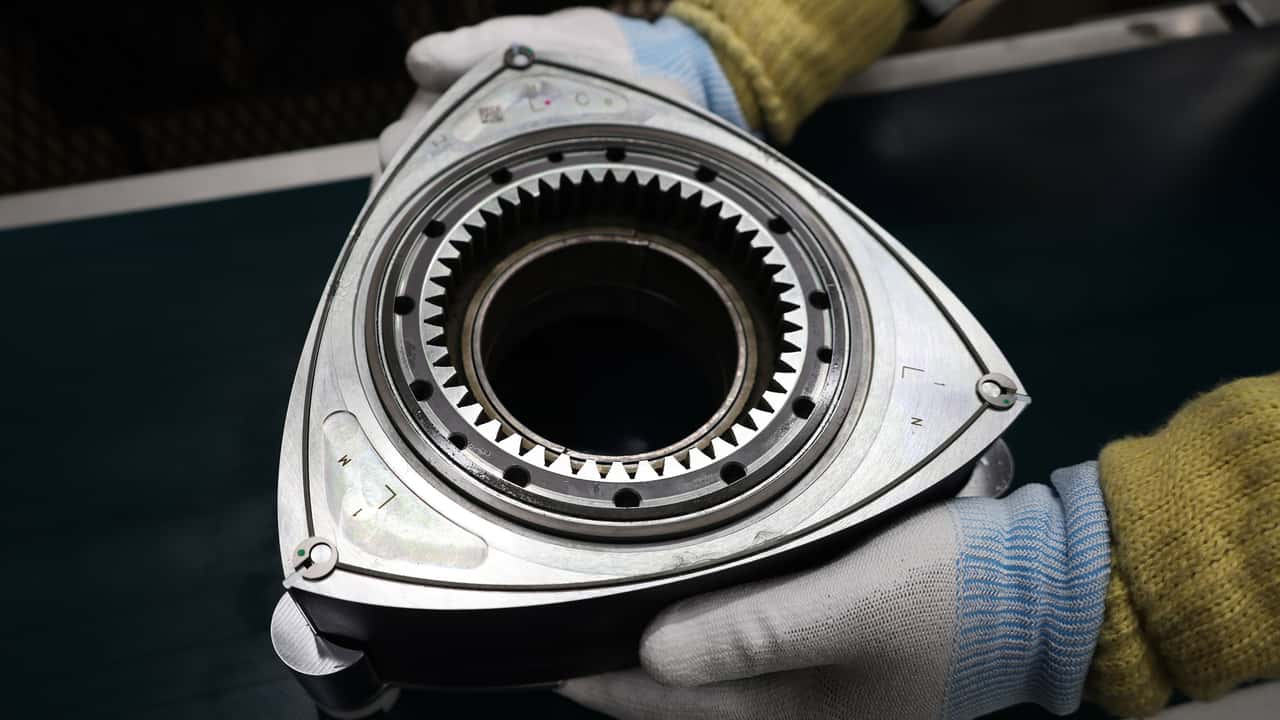
Photo by: Mazda
Dan Mihalascu 
By: Dan Mihalascu
Oct 21, at 9:00pm ET
Add Motor1.com as a preferred source in Google
- (https://twitter.com/intent/tweet?url=https%3A%2F%2Fwww.motor1.com%2Ffeatures%2F812734%2Fwhy-dont-more-cars-use-rotary-engines%2F&text=The%20Rotary%20Engine%20Should%20Be%20Everywhere.%20Why%20Isn%27t%20It%3F&via=motor1com)
- copy
Share
Comment
Rotary engines have a lot going for them. They're compact, lightweight, mechanically simple compared with conventional piston engines, and capable of delivering power with remarkably smooth operation. They also produce a distinctive exhaust note and have earned a loyal following among enthusiasts, particularly fans of Mazda's legendary RX-7 sports car.
On paper, it's easy to understand why engineers once believed the rotary could become a serious alternative to the traditional internal combustion engine. Yet rotary-powered cars remain a rarity. Mazda, which discontinued its rotary-powered sports cars in 2012, brought the engine back in a very different role as a generator for the MX-30 e-Skyactiv R-EV.
So, if rotary engines offer so many advantages, why haven't more automakers adopted them? The answer comes down to a handful of engineering challenges that have proved difficult to overcome.
What Makes A Rotary Engine Different?
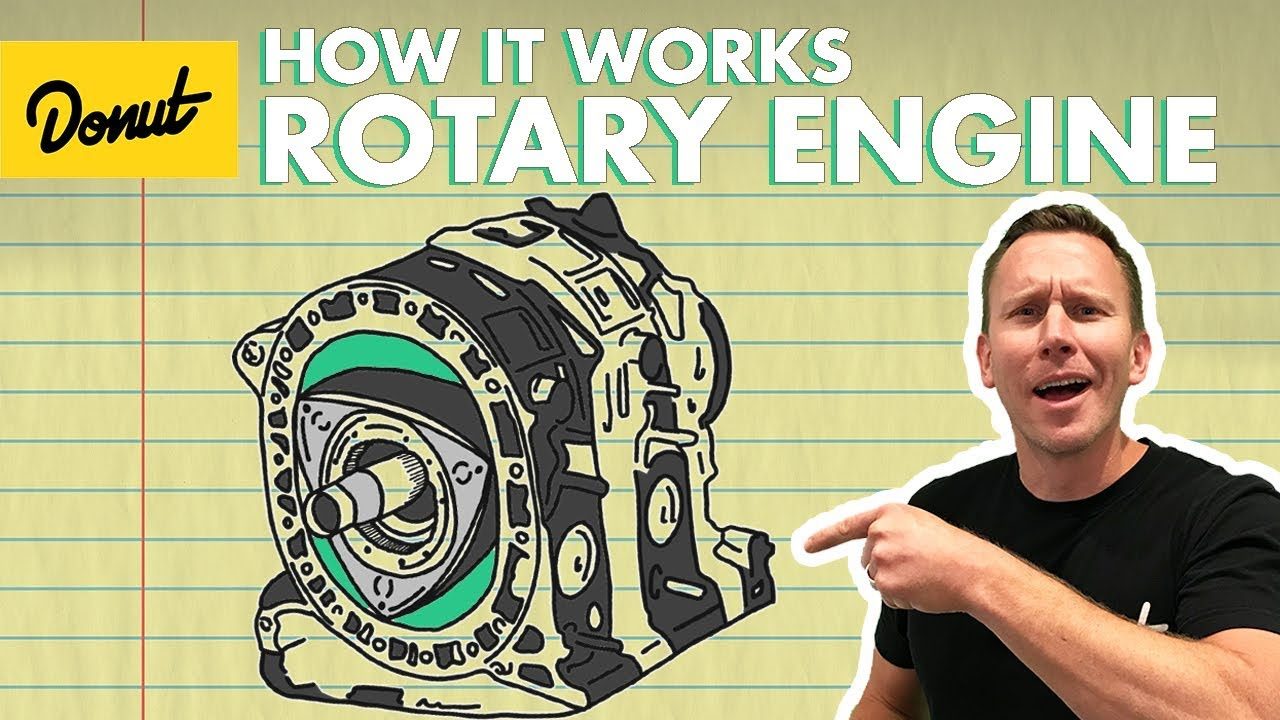
Unlike a conventional piston engine, which relies on pistons moving up and down inside cylinders, a rotary engine uses a roughly triangular rotor that rotates within a specially shaped housing. As the rotor moves, it creates changing chambers that perform the same fundamental jobs as a piston engine: intake, compression, combustion, and exhaust.
The design, commonly associated with German engineer Felix Wankel, eliminates many of the moving components found in a conventional engine. There are no reciprocating pistons, connecting rods, or conventional valve train operating in the same way as a typical four-stroke engine.
That simplicity brings several advantages. Rotary engines can be remarkably compact for their output, allowing engineers to package them in tight engine bays. Their smooth rotation also reduces the vibration associated with the repeated changes in direction of conventional pistons.
Mazda demonstrated the technology's potential with cars such as the Cosmo Sport, RX-7, and RX-8. The RX-7, in particular, became a performance icon, proving that a small rotary engine could deliver exciting power in a lightweight sports car.
The Biggest Problem Is Fuel Economy
The rotary engine's biggest weakness is efficiency. Although it can deliver impressive power relative to its physical size, it generally struggles to convert fuel into useful work as efficiently as a modern piston engine.
One reason is the shape of its combustion chamber. The long, narrow chamber makes it harder to achieve ideal combustion throughout the entire mixture. Its relatively large surface area also allows more heat to escape into the surrounding housing, wasting energy that could otherwise help drive the vehicle.
As a result, rotary-powered cars can burn considerably more fuel than their modest engine displacement might suggest. That makes them less attractive to buyers concerned about running costs and carmakers trying to meet ever more demanding efficiency targets. The problem becomes particularly challenging during everyday driving, when engines spend much of their time operating at partial throttle rather than at their most favorable load.
While modern piston engines have benefited from decades of improvements in combustion, variable valve timing, turbocharging, and thermal management, rotary engines have struggled to match the efficiency of today's conventional powertrains. That's a serious disadvantage in a market where fuel economy can influence both purchasing decisions and regulatory compliance.
Apex Seals, Oil Consumption, And Emissions
Another challenge lies in one of the rotary engine's most important components: the apex seals. These seals sit at the tips of the rotor and maintain contact with the housing, separating the chambers so they can compress the air-fuel mixture and contain combustion pressure. Their job is crucial, but the conditions in which they operate make sealing and durability particularly demanding.
Wear, inadequate lubrication, overheating, or poor maintenance can compromise sealing performance. When that happens, compression can fall, performance can suffer, and repairs can become expensive. Rotary engines are not automatically unreliable, but their condition and maintenance history matter greatly, especially in older or modified examples.
Lubrication presents another complication. Many production rotary engines deliberately introduce small amounts of oil into the combustion chamber to lubricate the rotor seals. That means some oil consumption is part of normal operation, rather than necessarily indicating a fault.
Emissions are equally important. The combustion chamber's geometry and sealing challenges can contribute to higher unburned hydrocarbon emissions, making it harder to satisfy modern exhaust regulations without sophisticated controls.
These issues translate into additional engineering, testing, and development costs for manufacturers. A rotary engine must do more than run smoothly and make good power; it must also deliver consistent durability, acceptable emissions, and reasonable ownership costs over many years.
Why Automakers Prefer Conventional Engines
Rotary engines aren't inherently inferior in every situation. Rather, their strengths and weaknesses don't align as neatly with the demands of mass-market vehicles as those of modern piston engines. Here are the main reasons automakers have largely favored conventional designs:
- Better fuel efficiency: Modern piston engines generally deliver more miles per gallon, helping reduce running costs and emissions.
- Simpler emissions compliance: Conventional engines have benefited from decades of development aimed at reducing pollutants under increasingly strict regulations.
- Established durability: Manufacturers have extensive experience building and maintaining piston engines across a wide range of vehicles and driving conditions.
- Lower development risk: Existing engine families can be adapted for new models without the expense of developing a specialized rotary powertrain from scratch.
- Broader customer appeal: Most buyers prioritize reliability, economy, and affordable servicing over the compact packaging and unique character of a rotary engine.
There is also a commercial consideration. Automakers invest enormous sums in powertrain development, and they need technology that can be used across multiple models and markets. A rotary engine that requires additional work to achieve comparable efficiency and emissions performance can be difficult to justify when established alternatives already meet those requirements.
That doesn't mean rotary engines have no future. It means manufacturers need to find applications where their advantages outweigh their shortcomings.
What Enthusiasts Think About The Rotary Engine's Future
Rotary engines remain a divisive subject among car enthusiasts, as shown in a discussion on r/LeMans. Commenters highlighted fuel consumption, emissions, and reliability as major obstacles to wider adoption. Others pointed to Mazda's MX-30 R-EV as an example of how rotary technology could survive. Using the engine as a generator rather than directly powering the wheels may offer a practical compromise.
Reliability is another recurring theme in rotary-engine discussions. In a thread on r/RX7, enthusiasts explored why rotary engines can struggle in road cars despite their motorsport achievements. Maintenance, operating conditions, and apex-seal wear all featured in the broader debate. The conversation highlights why rotary reliability is more complicated than its reputation might suggest.
In a discussion on r/cars, users debated whether Mazda could develop another rotary-powered sports car. Some questioned whether the technology could meet modern efficiency and emissions requirements at a reasonable cost. Others argued that electrification could preserve the rotary's distinctive character. The future may lie in specialized applications rather than conventional sports cars.
Mazda Found A New Role For The Rotary Engine
Mind you, Mazda has never entirely abandoned the rotary concept. After ending production of the RX-8 in 2012, the company continued researching ways to adapt the technology to changing emissions requirements and the shift toward electrification.
The result was the MX-30 e-Skyactiv R-EV, a plug-in hybrid introduced in Europe in 2023. Rather than using its rotary engine to drive the wheels directly, the vehicle uses a compact single-rotor engine to generate electricity while an electric motor handles propulsion.
What do you think?
View
Comments
This arrangement plays to the rotary engine's strengths. Its compact dimensions make it easier to package alongside the electric drive system, while operating as a generator allows engineers to manage its running conditions more strategically than they could in a conventional sports car.
Mazda has also continued investing in rotary-engine research. In 2024, it reinstated a dedicated rotary development group to explore the technology's future, including its use in electrified powertrains. That doesn't guarantee a new rotary-powered sports car will arrive, but it shows why the technology hasn't disappeared completely. Its most promising role may be one that complements electric propulsion rather than competing directly with conventional gas engines.
More From Motor101
 The Strange Reason The Golf GTI Had A Golf Ball Shifter
Who Were The Pep Boys, Anyway?
Every Rolls-Royce Has A Hidden Feature Most People Don't Know About
Remember When Saab Put The Ignition Key Between The Front Seats?
We want your opinion!
What would you like to see on Motor1.com?
Take our 3 minute survey.
- The Motor1.com Team
Share this Story
- (https://twitter.com/intent/tweet?url=https%3A%2F%2Fwww.motor1.com%2Ffeatures%2F812734%2Fwhy-dont-more-cars-use-rotary-engines%2F&text=The%20Rotary%20Engine%20Should%20Be%20Everywhere.%20Why%20Isn%27t%20It%3F&via=motor1com)
- copy
GO TO COMMENTS
(
)
Got a tip for us? Email: tips@motor1.com
View all comments ( )
Popular
Honda Wants To Take On The Tahoe With An Even Bigger SUV. Here's What We Know
BMW's First Electric 3 Series Wagon Spied Looking Nearly Ready For Production
The 2027 Honda Passport TrailSport Proves An Extra Inch Goes A Long Way: Driven
Forget The Sedan: This Alfa Romeo Giulia Quadrifoglio Is A Two-Seat Convertible
latest articles
- The Rotary Engine Should Be Everywhere. Why Isn't It? Oct 21 - Motor101 -
- Acura Wants More Models Than Ever Before Oct 21 - Rumors -
- GM Is Turning OnStar Into An AI Assistant For Your Car Oct 21 - Technology -
- This Custom Gunther Werks Porsche Is An 860-HP Tribute To A Racing Legend Oct 21 - Aftermarket / Tuning -
- Ford Recalls 102,000 F-Series Trucks Over A Strange Gauge Issue Oct 21 - Recalls -
- Honda Wants To Take On The Tahoe With An Even Bigger SUV. Here's What We Know Oct 21 - Everything We Know -
- The Michelin Man Has A Strange History. And His Original Design Was Terrifying Oct 21 - Motor101 -
RECOMMENDED FOR YOU
Mazda's Electric SUV Lets You Shout Profanities Through Its Front Speaker
Acura Wants More Models Than Ever Before
Mazda Still Builds A Truck, And It Will Even Make A New One
GM Is Turning OnStar Into An AI Assistant For Your Car
Mazda Knows People Don't Really Want An Electric Miata
This Custom Gunther Werks Porsche Is An 860-HP Tribute To A Racing Legend
Woman Buys Brand-New Mazda CX-5. Then She Tries Taking It To The Dealership For Service