Home
Features
Motor101
Why Do Some Semi Truck Tires Look Like They're Not Touching The Ground?
Ever seen a semi truck with tires hovering above the road? The reason why that happens involves lift axles, tire wear, and efficiency.
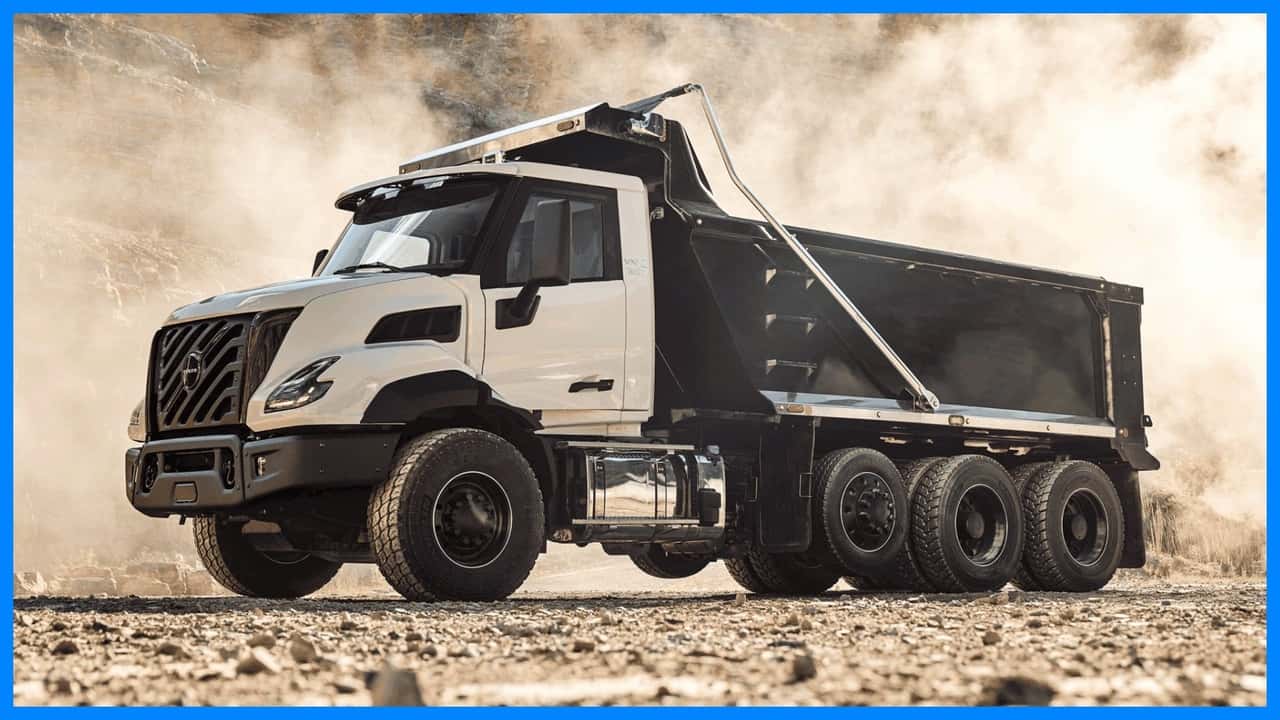
Photo by: Volvo Trucks
Dan Mihalascu 
By: Dan Mihalascu
Oct 22, at 11:00pm ET
Add Motor1.com as a preferred source in Google
- (https://twitter.com/intent/tweet?url=https%3A%2F%2Fwww.motor1.com%2Ffeatures%2F812450%2Fwhy-some-semi-truck-tires-dont-touch-ground%2F&text=Why%20Do%20Some%20Semi%20Truck%20Tires%20Look%20Like%20They%27re%20Not%20Touching%20The%20Ground%3F&via=motor1com)
- copy
Share
Comment
If you've ever driven alongside a semi truck on the highway, you might have noticed something unusual: some of the tires appear to be floating just above the pavement, even while the truck is moving at highway speeds. It's a curious sight, especially when the rest of the wheels are firmly planted on the road.
The explanation usually has little to do with a mechanical problem. Instead, many commercial trucks use specialized axles that can raise their wheels when they're not needed. It's a practical design feature that helps trucking companies manage loads, reduce tire wear, and improve efficiency. Here's why some semi truck tires appear to defy gravity.
Lift Axles Are The Most Likely Explanation
The most common explanation is a lift axle, an auxiliary axle designed to raise or lower its wheels depending on the truck's operating conditions.
Semi trucks and other heavy commercial vehicles sometimes need additional axles to distribute the weight of a heavy load. Spreading that weight across more tires helps the vehicle stay within applicable axle-weight limits and supports its intended carrying capacity.
However, an extra axle is not always necessary. When a truck is traveling empty or carrying a relatively light load, its auxiliary axle may be raised, leaving the tires visibly suspended above the road. There are two common configurations: A pusher axle sits ahead of the main drive axle, while a tag axle is positioned behind it. Both can serve as auxiliary axles, depending on the vehicle's design.
The result is the unusual sight of a truck rolling down the highway with some of its tires seemingly doing nothing at all.
Raising The Tires Can Save Money
Although lifting an axle might seem counterintuitive, it can offer practical benefits for trucking companies. Tires that roll along the pavement create resistance, forcing the engine to use energy to keep the vehicle moving. Raising an unnecessary axle can reduce that resistance, although the actual fuel savings depend on the truck, its load, and driving conditions.
There are several potential advantages to lifting an auxiliary axle when conditions allow:
- Reduced tire wear: Tires that aren't rolling against the pavement avoid the wear associated with normal road contact.
- Lower rolling resistance: Removing an unnecessary axle from the road can reduce the energy required to move the truck.
- Less tire scrub: Raising certain auxiliary axles can reduce the sideways dragging of tires during tight turns.
- Reduced exposure to road hazards: Lifted tires have less contact with debris and other objects on the pavement.
These benefits can add up across a commercial fleet covering hundreds of thousands of miles annually. However, lift axles are not a guarantee of substantial fuel savings, and their use must remain consistent with the vehicle's design and legal weight limits.
Air Suspension Makes It Possible
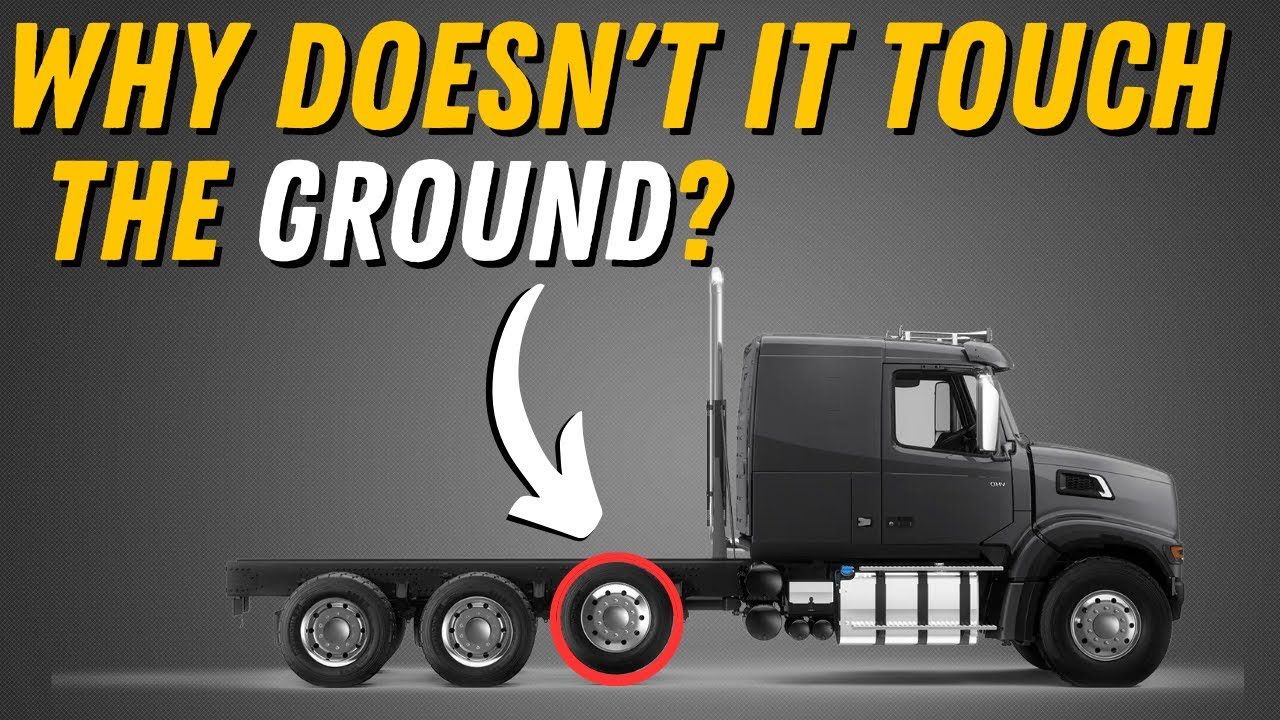
So how does a truck raise several heavy wheels without a complicated mechanical operation? It's because many lift-axle systems use air suspension.
These systems rely on compressed air to support the vehicle and adjust suspension height. Depending on the design, air pressure can be changed to lower an auxiliary axle onto the pavement or lift it clear of the road. Some systems are controlled by the driver, while others use automatic controls that respond to factors such as load and suspension pressure.
When additional load capacity is required, the axle is lowered so its tires contact the road and carry part of the truck's weight. When the extra support is not necessary, the system can raise the axle.
The process is designed to happen without the driver having to manually manipulate each wheel. Still, the exact operation varies by truck, and drivers must follow the manufacturer's instructions and applicable regulations.
Not Every Floating Tire Is Actually Off The Ground
Lift axles explain many of these sightings, but not every tire that appears to hover is necessarily raised.
Sometimes, the effect comes down to perspective. Shadows beneath a tire can blend into dark asphalt, making the contact patch difficult to distinguish. Uneven road surfaces, suspension movement, and the viewing angle from another vehicle can also make a tire look as if it's not touching the pavement.
A tire that is genuinely lifted, on the other hand, will have a visible gap between the rubber and the road. If that gap remains as the truck moves, an auxiliary lift axle is a likely explanation.
It's also important to distinguish between an axle designed to lift and a wheel that's off the ground because of a mechanical fault. A damaged suspension component or other problem can sometimes cause abnormal wheel positioning. If a truck appears unstable or has a visibly damaged wheel assembly, that's a different situation from a properly functioning lift axle.
Truckers Explain Why Some Tires Seem To Float
The unusual sight has sparked plenty of questions on Reddit, where truck drivers have explained why some semi-truck tires appear to hover above the pavement. In a discussion on r/Truckers, drivers explained why some trucks have wheels that don't touch the ground, pointing to lift axles that can be raised when they're not needed to support a heavy load.
Other discussions, including this thread about raised truck wheels, highlight practical benefits such as reducing tire wear and improving maneuverability. When a truck is carrying a heavier load, the auxiliary axle can be lowered to distribute the weight across additional tires. When the extra support is not necessary, raising it can help reduce unnecessary contact with the road.
A similar conversation on why some semi-truck wheels are lifted off the ground touches on weight distribution and the practical considerations behind the setup.
What Happens When The Truck Carries A Heavy Load?
Lift axles are particularly useful because semi trucks don't always carry the same amount of weight. A tractor-trailer traveling empty has different axle-loading needs from one hauling a heavy shipment.
When the load increases, lowering an auxiliary axle can distribute the weight across additional tires and help the truck comply with applicable axle-weight restrictions. When the load decreases, raising the axle may be appropriate if the vehicle's configuration and operating rules allow it.
What do you think?
View
Comments
That doesn't mean a driver can simply lift an axle to get around weight limits. The truck must still comply with applicable gross-weight and axle-weight requirements, and the correct setup depends on the vehicle, its load, and local regulations.
Not all semi trucks have lift axles, either. Many conventional tractor-trailers keep all their wheels on the pavement during normal operation. The feature is more common in applications where adjustable axle capacity offers a practical advantage.
More From Motor101
 What Makes Chinese Car So Popular?
Your Car's Tire Repair Kit Isn't The Easy Fix You Might Expect
Your Car Can Smell Fresh Without Constantly Buying Air Fresheners
The Sun Is Slowly Ruining Your Car’s Paint. Here’s How To Stop It
We want your opinion!
What would you like to see on Motor1.com?
Take our 3 minute survey.
- The Motor1.com Team
Share this Story
- (https://twitter.com/intent/tweet?url=https%3A%2F%2Fwww.motor1.com%2Ffeatures%2F812450%2Fwhy-some-semi-truck-tires-dont-touch-ground%2F&text=Why%20Do%20Some%20Semi%20Truck%20Tires%20Look%20Like%20They%27re%20Not%20Touching%20The%20Ground%3F&via=motor1com)
- copy
GO TO COMMENTS
(
)
Got a tip for us? Email: tips@motor1.com
View all comments ( )
Popular
The Rotary Engine Should Be Everywhere. Why Isn't It?
The 2027 BMW X5 Is Hugely Improved Where It Matters Most: Driven
Honda's Mitsubishi-Based Truck Is Official, Coming In 2028
The BMW iX5 Makes A Strong Case Against The Gas X5: Driven
Volkswagen Wanted An Electric Bugatti Tourbillon, But Mate Rimac Pushed For A V16 Engine
latest articles
- Why Do Some Semi Truck Tires Look Like They're Not Touching The Ground? Oct 22 - Motor101 -
- ‘This Should Be On The Dealership’: Woman Buys VW at Hyundai Dealership. Then Her Mechanic Finds A Shocking Problem No One Caught Oct 22 - Trending -
- The New Lexus LFA Inches Closer To Production With Fresh Spy Photos Oct 22 - Spy Shots -
- Remember Aston Martin's Weird Little City Car? There's A Reason It Existed Oct 22 - Motor101 -
- The BMW iX5 Makes A Strong Case Against The Gas X5: Driven Oct 22 - First Drives -
- The 2027 BMW X5 Is Hugely Improved Where It Matters Most: Driven Oct 22 - First Drives -
- Ford Explains Why Naming Cars Is So Hard: 'Everyone Has An Opinion' Oct 22 - Official -
RECOMMENDED FOR YOU
Remember Aston Martin's Weird Little City Car? There's A Reason It Existed
‘This Should Be On The Dealership’: Woman Buys VW at Hyundai Dealership. Then Her Mechanic Finds A Shocking Problem No One Caught
Turning Off Your Car's A/C Can Save Gas, But There's A Catch
The New Lexus LFA Inches Closer To Production With Fresh Spy Photos
The Rotary Engine Should Be Everywhere. Why Isn't It?
The BMW iX5 Makes A Strong Case Against The Gas X5: Driven
The Michelin Man Has A Strange History. And His Original Design Was Terrifying