Android Auto Is Adding Two Major Streaming Services
Drivers will get access to Netflix and YouTube at up to 60 frames per second—but only while parked.

the breakdown
- Android Auto is getting support for video apps like YouTube, but playback will only work while the vehicle is parked.
- Videos can run at up to 60 FPS on compatible infotainment systems from brands like BMW, Ford, Hyundai, Kia, Volvo, and Mercedes.
- Once the car starts moving, video playback stops or switches to audio-only mode to help reduce driver distraction.
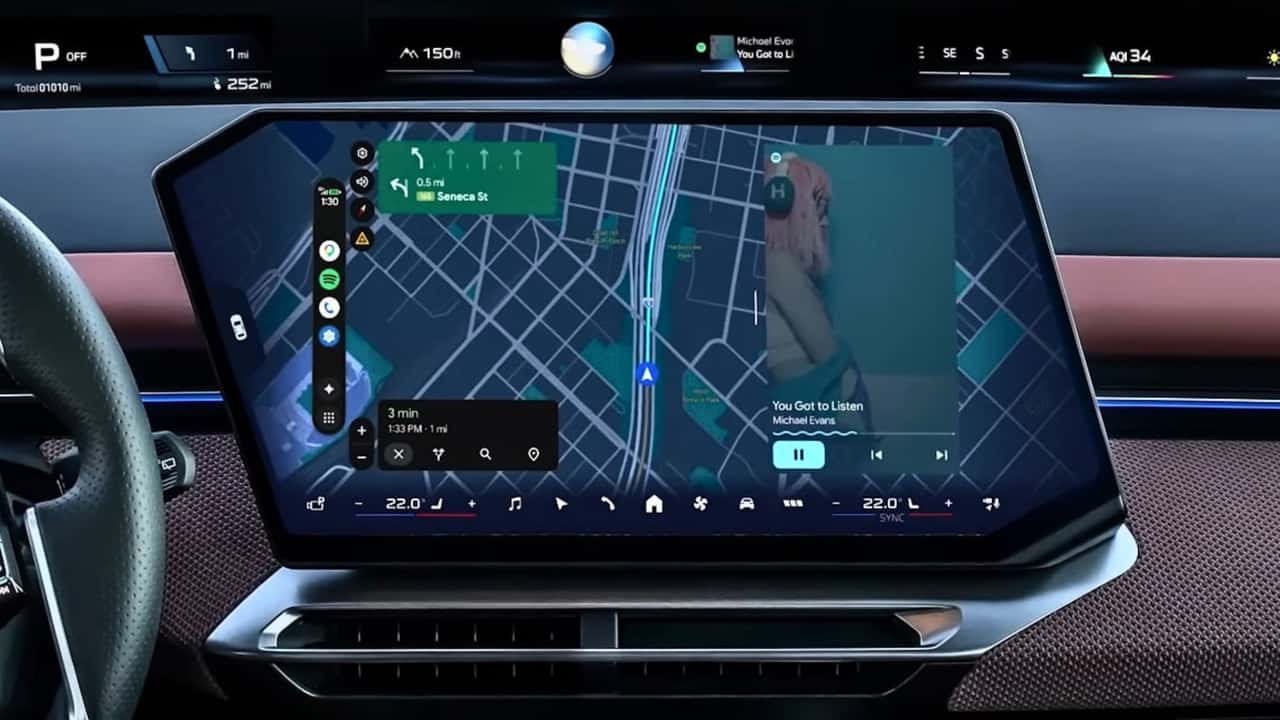
Google is getting ready to roll out one of its biggest Android Auto updates yet. One of the headline features is support for video apps—starting with YouTube—that can run directly on a car’s infotainment screen.
It’s a pretty major change, but there are strict limitations. Video playback will only work while the car is parked, whether you’re taking a break, charging an EV, or waiting in a parking lot. Apps like YouTube— and likely Netflix later on—are meant for downtime, not for use while driving.
One of the more interesting details is video quality. YouTube on Android Auto will support playback at up to 60 frames per second, but only on vehicles with compatible infotainment hardware. That basically means the system needs a high-resolution display and enough processing power to handle smooth video playback.
Google has already mentioned several automakers expected to support the feature, including BMW, Ford, Hyundai, Kia, Renault, Skoda, Volvo, and Mercedes-Benz. Those brands will likely be among the first to offer the new generation of built-in video apps.
There’s also an important safety restriction built into the system: the moment the vehicle starts moving, video playback automatically stops. It works similarly to other safety features in modern infotainment systems, like disabling address entry while driving to reduce distractions.
Safety First
Google is also adding a dedicated safety mode for video apps. Instead of shutting down completely once the car starts moving, supported apps can switch to audio-only playback. The video feed is replaced with a static image while the audio continues in the background.
That feature depends on whether the app supports background audio playback. In YouTube’s case, for example, background listening requires a Premium subscription. On the free version, playback may stop entirely once the vehicle begins moving.
Google still hasn’t confirmed an exact release date for video apps on Android Auto, but the feature is expected to roll out sometime this year. YouTube will likely arrive first, and Netflix is expected to follow later.
Motor1's Take: The idea is simple: give drivers and passengers a way to enjoy entertainment during stops without compromising safety on the road. We expect this technology to become standard across the industry.
RECOMMENDED FOR YOU

1,070-HP Lucid Gravity GT-S Turns Family SUV Into Rocket
Tire Pressure Matters
The Chevy Express Finally Gets Something From This Century: A Color Touchscreen
McLaren's Manual Supercar Isn't A Preview Of The Future
Automakers Are Quietly Halting Weekly OTA Updates
Jeep Just Debuted The New Cherokee. But Another One Is Already On The Way
SRT Solved The Hurricane Engine's Turbo Lag Issue With A New Technology