Kia EV3: All the secrets of the "small" E-GMP platform
The basis of the Kia EV3 electric compact is the same as that of the EV6 and EV9, but it has been 'simplified' to 400 volts and fitted with a new powertrain.
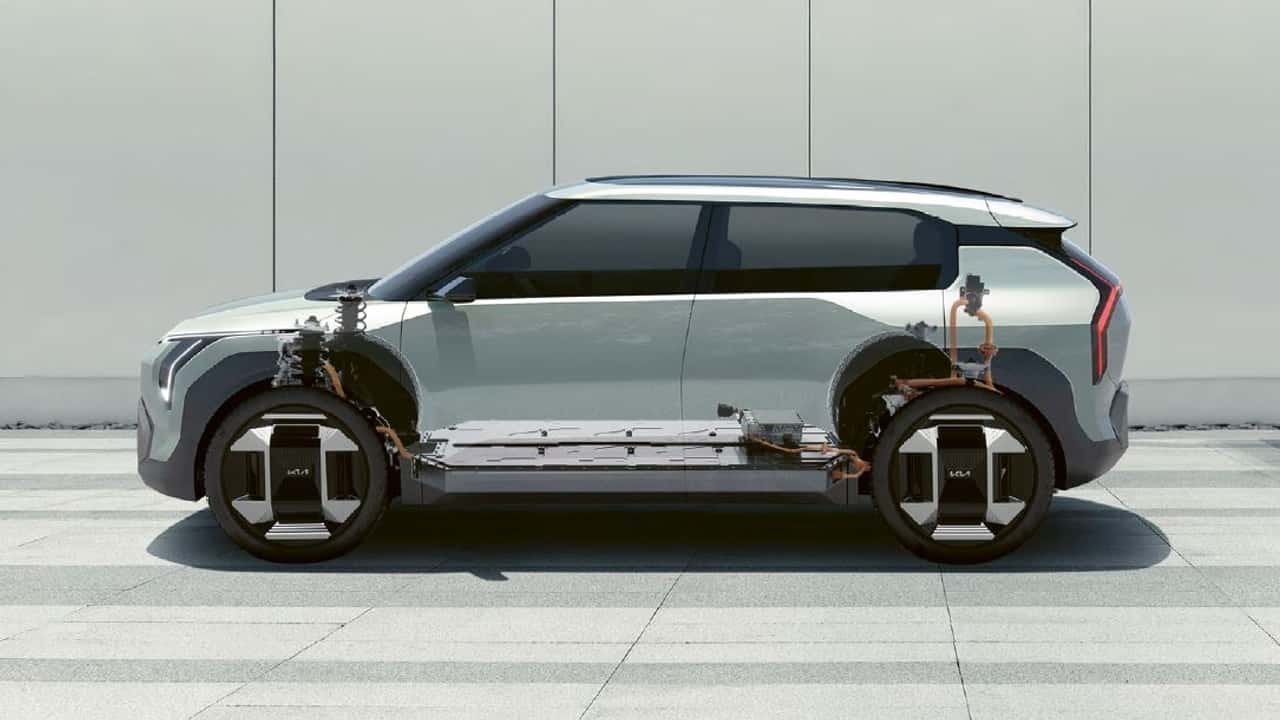

The Kia EV3 is the model designed to take Kia to the heart of what should be the mass market for electric vehicles, the compact segment. The company is therefore committed to transferring all the relevant technological requirements to this model, while seeking to improve efficiency and cost in the quest for maximum competitiveness.
So, although this model is built on the same base as the others, the universal E-GMP (Global Modular Platform), designed to accommodate electric and hybrid models of all sizes, it has specific characteristics. Let's see what they are.
From 800 to 400 V
The first difference concerns the electrical architecture. The E-GMP platform was created by Kia in 800 volts to support high-performance charging and energy management, but for the EV3 and the other compact and 'small' models that will be arriving in the coming months, a 400-volt version has been derived, to better balance costs against the larger models. However, it still supports high-power fast charging of up to 350 kW, enabling the battery to go from 10% to 80% in just half an hour.
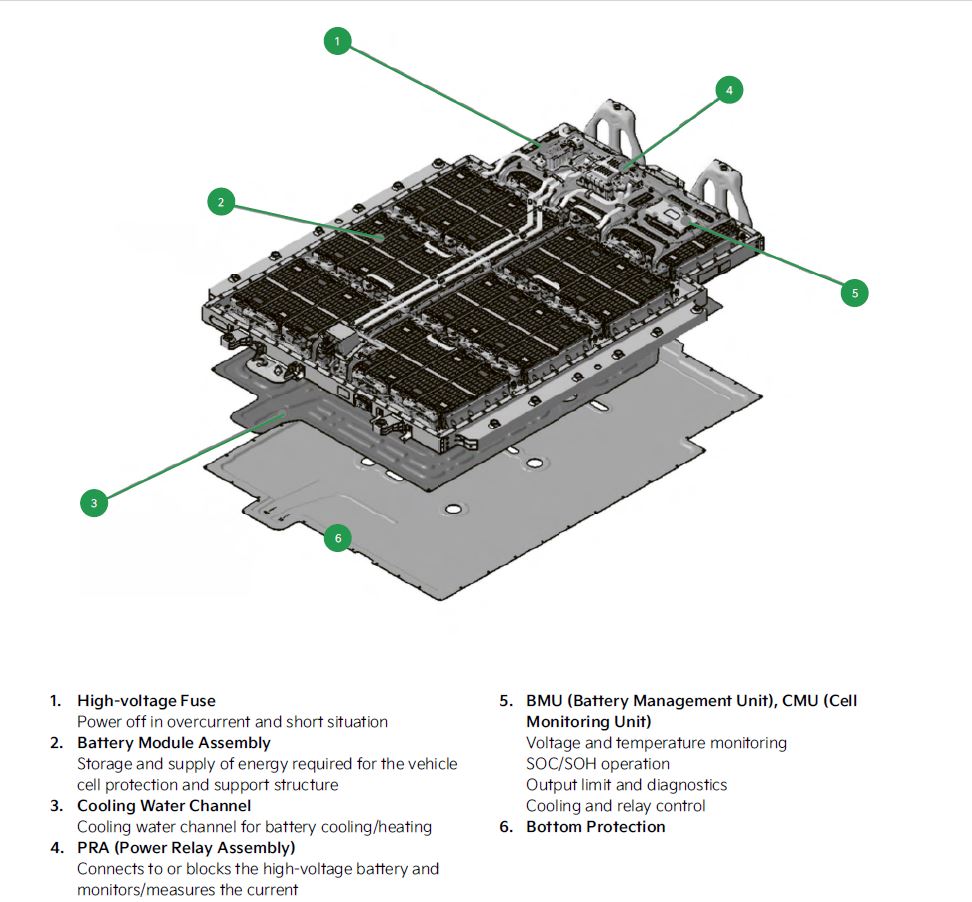
The battery packs are still Nickel-Manganese-Cobalt (NMC), with nominal capacities of 58.3 and 81.4 kWh, which on the Kia EV3 means a declared range (WLTP) of 271/363 miles in the mixed/urban cycle for the former and 376/480 miles for the latter. These are fourth-generation batteries, whose energy density has been improved, but whose extremely compact design integrates the cooling system and battery management in a reduced space.

Bi-directional charging
The E-GMP platform is prepared for bi-directional charging, supporting different types of technology. This is a capability that the EV3 brings with it and makes available on the top-of-the-range version, for us the GT Line Plus, on which the V2L (Vehicle to Load) and V2G (Vehicle to Grid) functions are available. The former enables power to be supplied to external devices with a maximum capacity of 3.68 kW, while the latter injects energy into the grid and contributes to energy stabilisation.
The system is also ready for V2H (Vehicle to Home) solutions, in which the car can interact with the home network and act as a storage battery for autonomous systems, powering the home system at night, for example.
The new powertrain
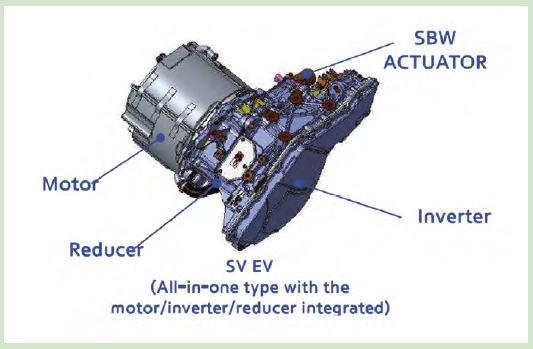
The Kia EV3 introduces a number of components designed specifically for models in this range. Firstly, the three-in-one powertrain, which integrates the traction motor, gearbox and inverter. Manufactured by Schaeffler, it has been lightened and simplified in terms of the number of components, but incorporates solutions such as a gearbox with close-tooth gears to improve efficiency and silence, and a silicon-carbon inverter that saves an extra 2% energy.
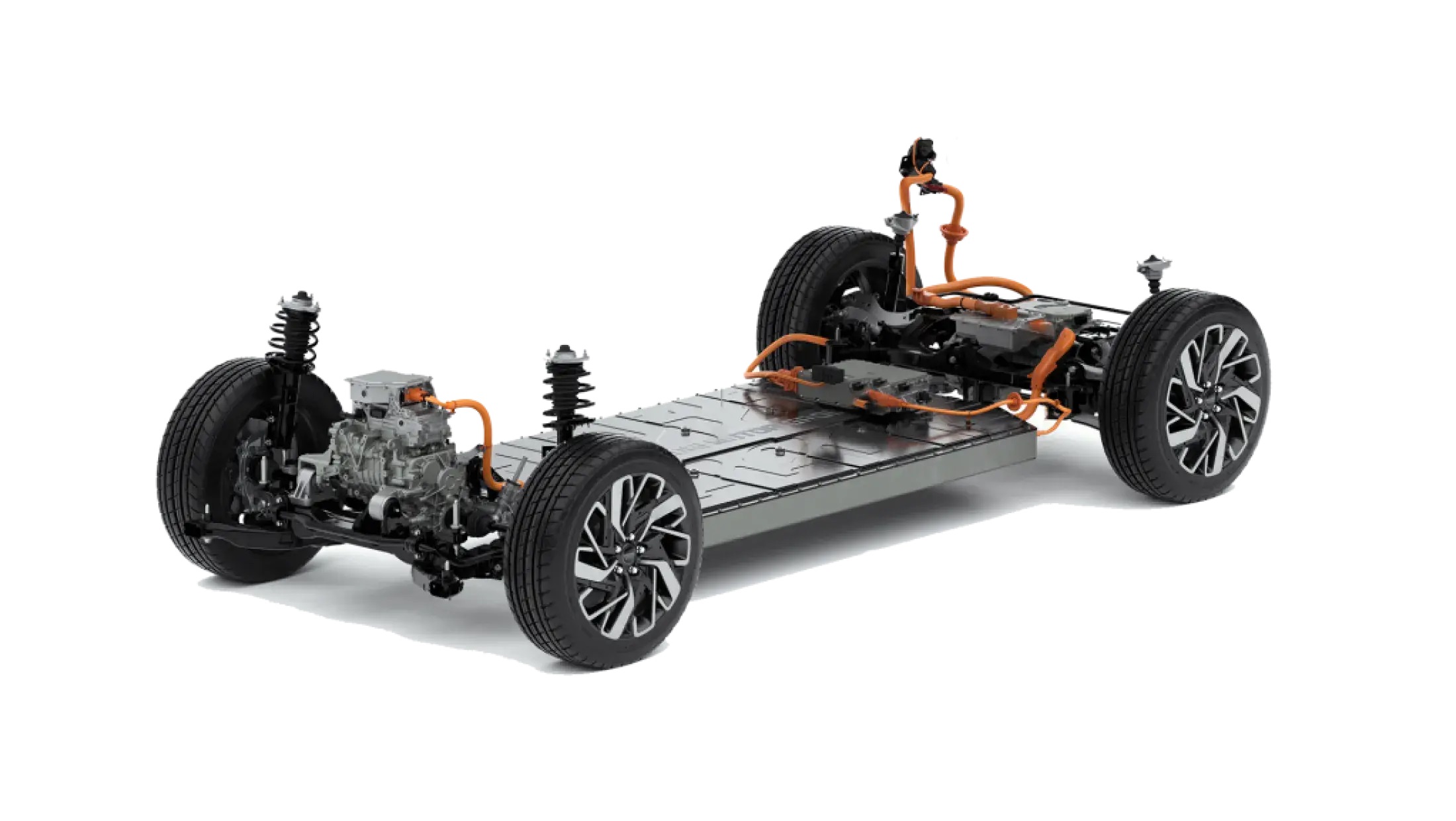
Another newly designed component is the air conditioning system, which has been made more compact and simplified in its construction, reducing the footprint by a third. In addition, all versions of the Kia EV3, with the exception of the base Air version, incorporate heat pump technology to heat the cabin efficiently with minimal energy expenditure.
Latest news from Kia:
Gallery: Kia EV3 2024


RECOMMENDED FOR YOU
2 Women Go To Kia Dealership To Buy 2 Cars. Then They Ask For $10K Off. Are There Group Rates?
Polestar Won't Fight US Ban, Effectively Ending Its American Future
Kia Recalls 463,000 SUVs A Second Time For Seat Motor Fires
The New Maybach GLS Shows Its Face For The First Time
Winners And Losers From June Auto Sales
What Every Nissan Brake Caliper Color Means
New Kia Sportage Spied Hiding Redesign, But The Biggest Change Is Inside