Jaguar XJ (X300, 1994-1997): Old-school luxury
The large, elegant saloon turns 30 and is reminiscent of glorious times.
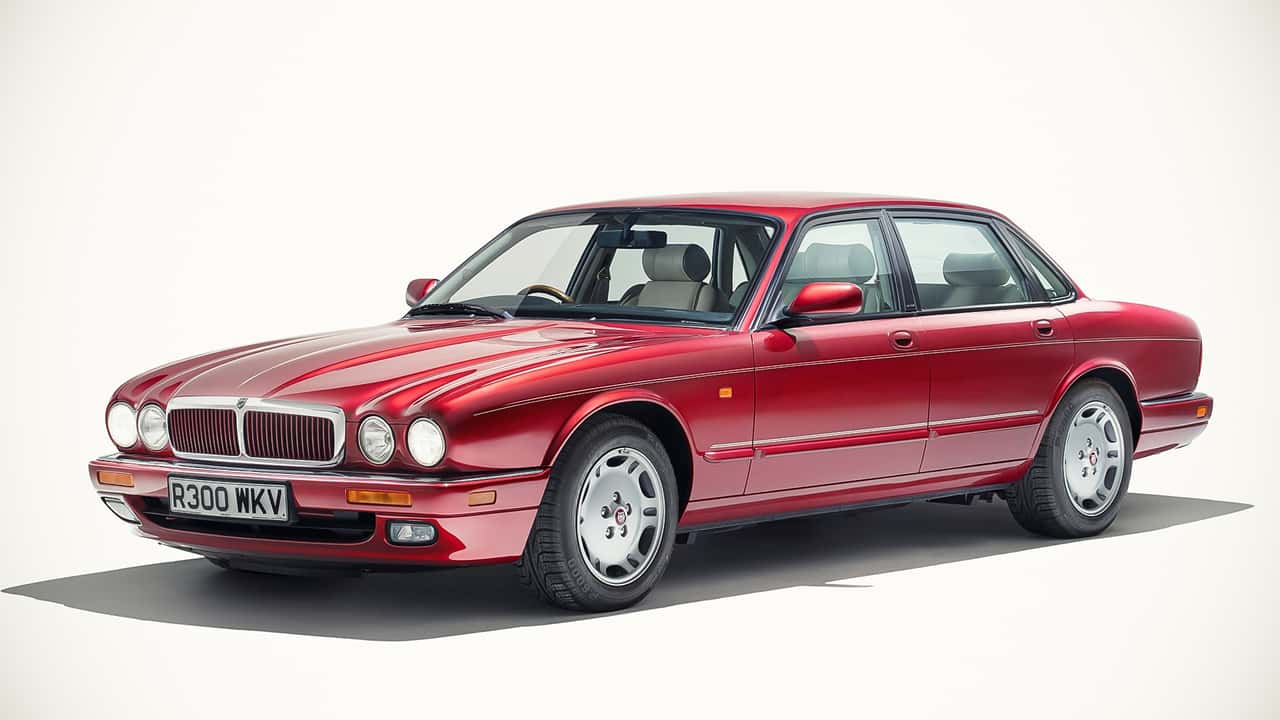

It has caused quite a stir: Jaguar wants to reinvent itself completely. The previous model programme is being scrapped, replaced by a highly controversial new direction, also visually. This is not entirely new for the British company. In 1986, the new XJ40 caused a stir, its angular headlights shocking the purists.
Over the years, attempts were made to soften the design. But it wasn't until 30 years ago in the autumn of 1994 at the Paris Motor Show that they really succeeded. There, Jaguar presented a new XJ, internally codenamed X300. A saloon full of elegance, reminiscent of the classic XJs of the 1960s and 1970s. And successful: since the model was launched, Jaguar sales have risen by 30 per cent worldwide, in Germany by as much as 80 per cent.
Jaguar's future:
A Jaguar with Ford's help
It is the first Jaguar XJ to be produced entirely under the umbrella of the Ford Motor Company and can be seen as a further development of the previous XJ40 generation. Like all previous XJ generations, it has an independent rear suspension. The design of the X300 emphasises improved build quality, greater reliability and a return to traditional Jaguar styling elements.
Gallery: Jaguar XJ (X300, 1994-1997)

When the car was launched at the Paris Motor Show in October 1994, Jaguar's marketing material used the phrase New Series XJ to describe the X300 models. The X300 series is the result of a £200 million programme to revamp the production facilities, which now use state-of-the-art automated body welding robots from Nissan. The X300 is becoming one of Jaguar's most successful models.
The design refresh led by Geoff Lawson started in 1991, shortly after Jaguar joined the Ford Group. The usually flat bonnet of the XJ40 is replaced by a fluted, curved design that accentuates the four separate, round headlights. The rear wings are reshaped to accommodate the new wraparound tail lights. In addition, the XJ40's separate black rubber bumper is followed by a fully integrated body-coloured bumper.
The leaping Jaguar on the bonnet is only installed on vehicles for non-European markets. The interior of the X300 is similar to that of the XJ40, with a few revisions. The seats are given a rounded profile, the wood panelling is given bevelled edges and the steering wheel is redesigned. Early X300s do not have a glove box in front of the front passenger, as space is at a premium due to the introduction of the front passenger airbag.
After the XJ40, the X300 was not actually planned at all, as Jaguar wanted to launch a completely new saloon with a new V8 engine. However, Ford stopped the development of the saloon known as the XJ90 and proposeed to combine the new engine and the front and rear sections with the XJ40's centre section for cost reasons. However, the V8 was not yet finalised and only made its debut in the successor to the X300, the visually very similar XJ X308.
Familiar engines
Both the familiar V12 engine and the AJ6 inline six-cylinder (AJ16) from Jaguar were therefore available in various X300 models, but significantly revised. The X300 was available with inline six-cylinder engines with a displacement of 3.2 litres (Classic, Sport and Executive versions) and 4.0 litres (Classic, Sport, Sovereign and Daimler Six versions). There was also the 4.0-litre XJR version with supercharging.
Finally, the 6.0-litre V12 (Jaguar XJ12 and Daimler Double Six versions) was also offered. Power was transmitted to the rear wheels via a four-speed automatic gearbox or, in the case of the six-cylinder models, optionally via a five-speed manual gearbox.
Shortly afterwards, the 5.15-metre-long wheelbase version (X330) was available in the Sovereign and Daimler variants. As the modifications were not extensive compared to the normal version (5.02 metres), the surcharges were far lower than those previously charged for the XJ40 Majestic.
Luxury called Daimler
As before, the highest equipment level of the X300 models bears the name Daimler and features all the chrome-plated elements of the Sovereign models as well as chrome-plated exterior mirrors, chrome-plated door handles, a ribbed radiator grille surround and boot trim. Most of the optional extras of the X300 series are standard on the Daimler, including heated front seats, heated windscreen, sunroof and cruise control.
Daimler-specific features include special leather door pockets, picnic tables for the rear passengers at the back of the front seats, and special marquetry veneer. The Daimler Six model is equipped with the AJ16 engine, the Daimler Double Six with the V12; both are available with a short or long wheelbase.
In some markets, such as North America, the name Jaguar Vanden Plas is used instead of Daimler. The Vanden Plas X300 vehicles in the United States after the 1995 model year are all built with the long wheelbase body, although they are only available with the six-cylinder engine and the V12 is only available in the XJ12 model for this market. The 1995 Vanden Plas cars all have a short wheelbase.
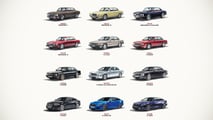
All generations of the Jaguar XJ at a glance
A total of 92,038 vehicles of the X300 type were built. The X300 is popular with many British prime ministers. In a test of a 320 bhp XJR at the time, the ADAC praised the "precise steering" and brakes, as well as the elegant interior. Criticism was levelled at the not entirely comfortable suspension and its noise on poor road surfaces.
Alongside the X-Type and S-Type, the X300 is the cheapest way to buy a Jaguar these days. Until the first major repairs are due. But even when stationary, this XJ looks simply marvellous.
RECOMMENDED FOR YOU
Jaguar’s New Type 01 Has A Very Different Idea Of What A Luxury Interior Should Be
2027 Genesis GV90 Debuts As A Flagship SUV With Coach Doors
JLR's New North American CEO Has A Lot Of Work To Do
Man’s Mercedes Notifies Him It’s Time For An Oil Change. You Won’t Believe What Mercedes Charges Him: ‘Bro…’
Rare Mazda 767B Engulfed In Flames At Laguna Seca
What Really Happens When You Put Your Car In Sport Mode
1958 Ferrari Reappears With A Shocking $5 Million Estimate