Home
Honda
News
Honda demonstrates solid-state battery production line
The Japanese manufacturer is studying the performance and construction methods of its solid state cells.
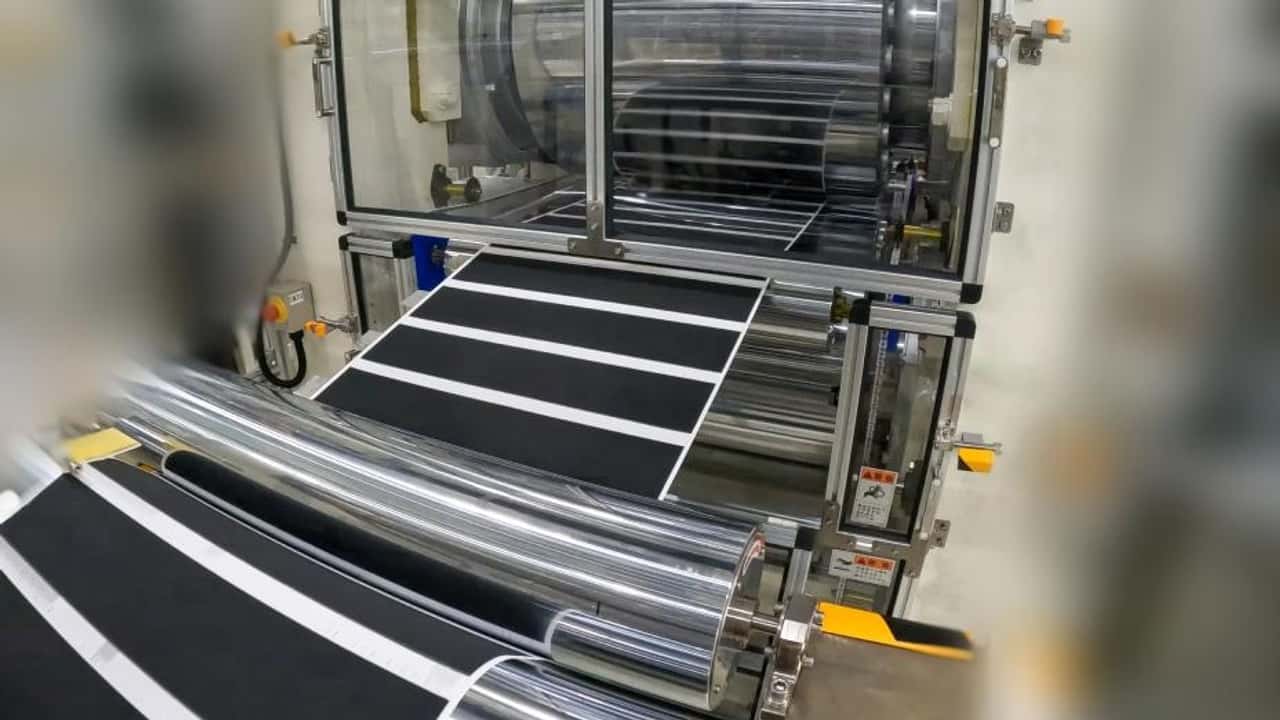
Photo by: Honda

By: Francesco Barontini
Published by: Angel Sergeev
Nov 22, 2024 at 6:22am ET
Add Motor1.com as a preferred source in Google
- (https://twitter.com/intent/tweet?url=https%3A%2F%2Fwww.motor1.com%2Fnews%2F741937%2Fhonda-solid-state-production-line%2F&text=Honda%20demonstrates%20solid-state%20battery%20production%20line&via=motor1com)
- copy
Share
Comment
Honda has just shown its production line for solid-state batteries for the first time. The Japanese manufacturer has been working on batteries with ceramic electrolytes for some time, but now it is revealing interesting details about the progress it has made.
Honda has decided to work independently on this technology and develop its own solid-state batteries in-house. They will be ready within a few years and will double the range of the next generation of electric cars, expected - according to official statements - in the second half of the decade.
Companies working on solid-state batteries:
 Stellantis installs solid-state batteries in the Dodge Charger
Mercedes announces its solid-state batteries
Work on technology and production processes
The company has made it known that the solid-state study is not only being carried out to assess the benefits of this type of battery, but is also aimed at mass production, which should be achieved by 2030.
That is why the first production line has been started, which is located at Honda's R&D centre in Sakura City, Japan. The purpose of the line is twofold: to validate the performance of the solid electrolyte cells and to refine the production processes so that they can then be replicated on a large scale.
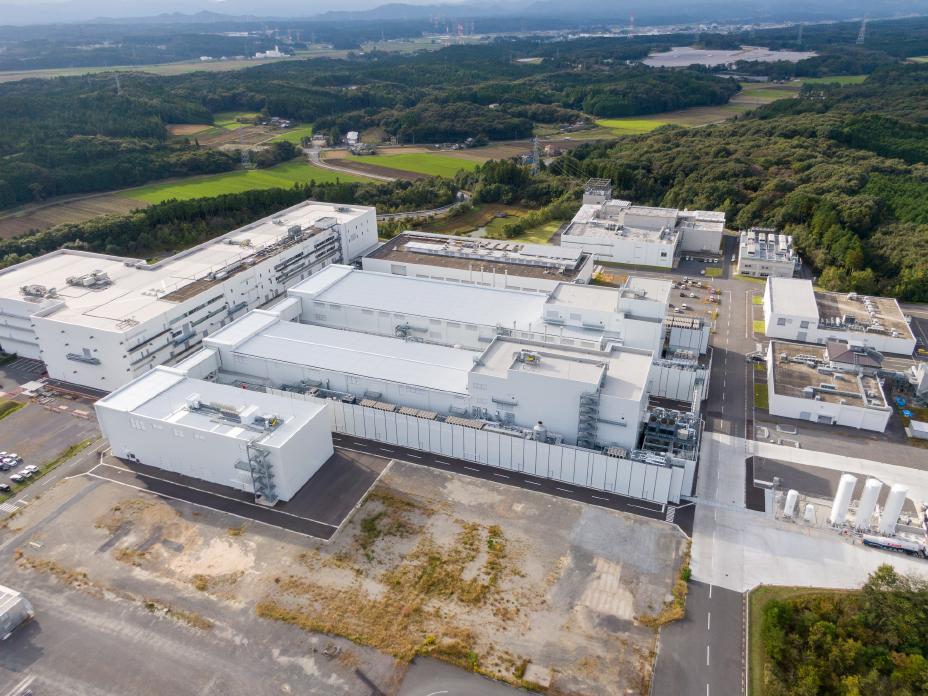
Honda Research and Development Centre located in Sakura City
A miniature Gigafactory
The pilot plant for the production of solid-state batteries presented by Honda consists of several departments covering an area of more than 27,000 square metres. The facility houses the actual line, as well as the area for weighing and mixing cathode and anode materials and the area for making the separator and coatings.
What do you think?
View
Comments
The existing line, which is already in operation, will be completed next spring. In early 2025, however, Honda will begin construction of a second line that can utilise more efficient production processes.
Honda says that this new plant within Japan's R&D centre will play a key role in achieving the company's 2050 carbon-neutrality targets and will accelerate the path to an all-electric range of vehicles (electric and fuel cell), which is expected to be completed in 2040.
We want your opinion!
What would you like to see on Motor1.com?
Take our 3 minute survey.
- The Motor1.com Team
Share this Story
- (https://twitter.com/intent/tweet?url=https%3A%2F%2Fwww.motor1.com%2Fnews%2F741937%2Fhonda-solid-state-production-line%2F&text=Honda%20demonstrates%20solid-state%20battery%20production%20line&via=motor1com)
- copy
GO TO COMMENTS
(
)
Got a tip for us? Email: tips@motor1.com
View all comments ( )
Popular
The Rotary Engine Should Be Everywhere. Why Isn't It?
The 2027 BMW X5 Is Hugely Improved Where It Matters Most: Driven
Toyota's Next Mid-Engined Coupe Is Going Racing This Weekend
Alfa Romeo Has Had It With Huge Screens Inside Cars, Says They'll Inevitably Become Obsolete
Subaru Teases A New Manual WRX, But Only For Japan
latest articles
- 2027 Subaru Outback Base Trim Returns, Lowering Price Oct 23 - Pricing -
- Alfa Romeo Has Had It With Huge Screens Inside Cars, Says They'll Inevitably Become Obsolete Oct 23 - Technology -
- Audi Q9 Debuts World-First Curved OLED Taillights Oct 23 - Technology -
- Man Lets The Dealership Think He Wants To Trade In His Car. Then He Plays Their Service Department To Score A Deal Oct 23 - Trending -
- Toyota's Next Mid-Engined Coupe Is Going Racing This Weekend Oct 23 - Spy Shots -
- Volvo, Mercedes And VW Turn To Nvidia For European Self-Driving Push Oct 23 - Autonomous Vehicles -
- Subaru Teases A New Manual WRX, But Only For Japan Oct 23 - Teasers -
RECOMMENDED FOR YOU
Honda Is Finally Bringing Race-Inspired Parts To Its Road Cars
Alfa Romeo Has Had It With Huge Screens Inside Cars, Says They'll Inevitably Become Obsolete
Honda's Mitsubishi-Based Truck Is Official, Coming In 2028
Audi Q9 Debuts World-First Curved OLED Taillights
Honda Wants To Take On The Tahoe With An Even Bigger SUV. Here's What We Know
Man Lets The Dealership Think He Wants To Trade In His Car. Then He Plays Their Service Department To Score A Deal
The 2027 Honda Passport TrailSport Proves An Extra Inch Goes A Long Way: Driven