Who sold the most cars in Europe in the first half of 2024?
The automotive sector is lagging far behind the economic environment. Electric vehicles are also very disappointing.
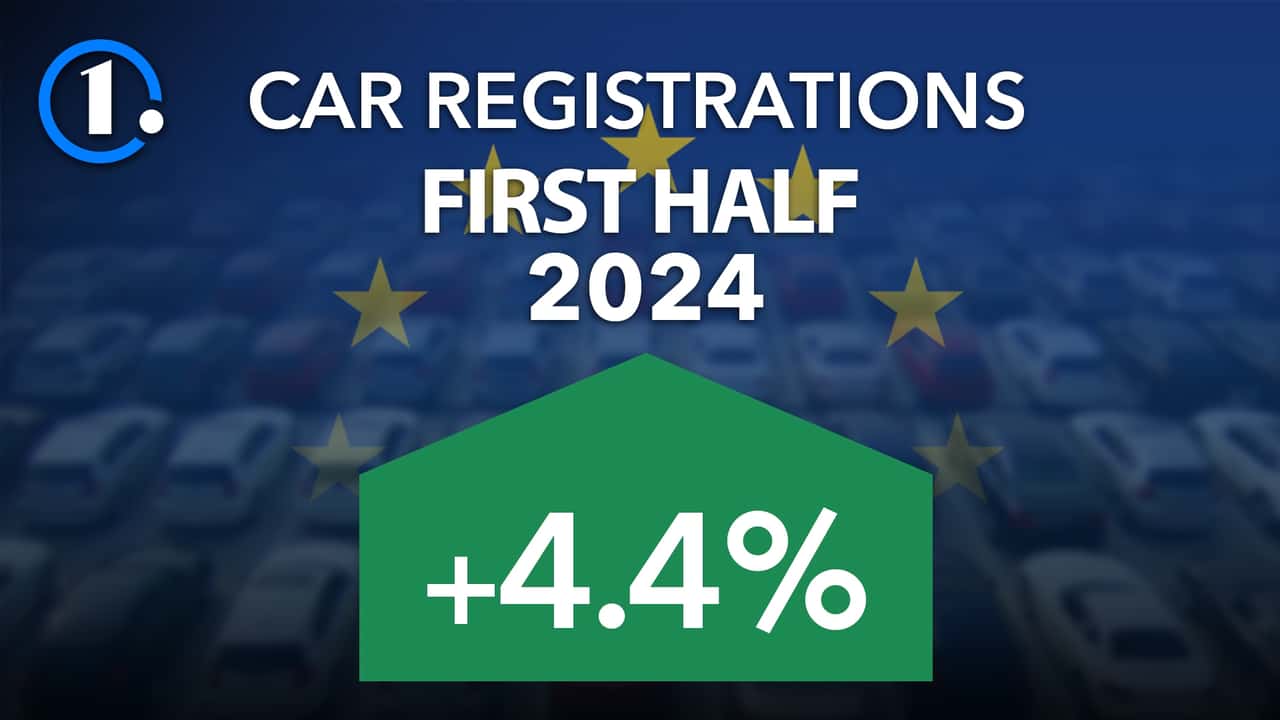

Europe's car industry is disappointing, but that's hardly surprising. The trend in vehicle registrations has been slowing for months, and in Europe (EU+EFTA+UK), the first half of 2024 ended with modest growth: +4.4% compared with the same period in 2023.
However, if we compare the figures with those for the pre-pandemic period, i.e. the first half of 2019, the fall is 18.4%. Considering that the region's gross domestic product has already returned to pre-crisis levels, the sector is showing that it is lagging behind the context of the economy.
In June alone, however, 1,310,989 cars were registered in the region, an increase of 3.6% year-on-year. The result for electric cars, which without incentives will not advance, also gives food for thought.
Market share by fuel
In the first half of this year, the share of battery-powered cars in Western Europe fell to 13.9%, compared with 14.2% in the same period last year. Even Germany saw a significant drop (from 15.8% in the first half of 2023 to 12.5%).
Looking solely at European figures, the market share of battery-powered cars has fallen over the past month, from 15.1% in 2023 to 14.4%, that of petrol and diesel cars has fallen from 49.6% to 47.1%, while that of hybrids has increased, from 24.4% to 29.5%.
During the first half of the year, electric car registrations rose by 1.3% in Europe and by 1.6% in Western Europe (EU+EFTA+United Kingdom). Those of plug-in hybrid cars fell by 2.5% (+1.4% in the EU+EFTA+United Kingdom), while hybrids recorded an increase of +22.3% (+21.2% in the EU+EFTA+United Kingdom), petrol cars remained fairly stable at -0.5% (-1.5% in the EU+EFTA+United Kingdom) and diesel cars fell by 7.4% (-7.9% in the EU+EFTA+United Kingdom).
Who went up and who went down
During the first half of the year, the balance between the main car groups in Western Europe remained relatively unchanged compared with the previous year. The main increases in terms of units registered were Mitsubishi, Honda and Volvo. China's SAIC Motors and Japan's Suzuki and Toyota also made gains.
| ++* in EU EFTA UK | Share % first half 2024 | Share % first half 2023 | Var % of units registered in H1 2024/2023 |
| Volkswagen Group | 25.6% | 25.9% | +3.4% |
| Stellantis | 16.6% | 17.4% | +0.1% |
| Renault Group | 9.8% | 9.8% | +3.8% |
| Hyundai Group | 8.2% | 8.7% | -2% |
| Toyota Group | 7.6% | 6.8% | +16.1% |
| BMW Group | 6.8% | 6.8% | +4.8% |
| Mercedes-Benz | 5.0% | 5.3% | -0.6% |
| Ford | 3.3% | 4.1% | -16.9% |
| Volvo Cars | 2.8% | 2.2% | +34.8% |
| Tesla | 2.4% | 2.8% | -12% |
| Nissan | 2.6% | 2.3% | +18.2% |
| SAIC Motor | 1.9% | 1.6% | +22.3% |
| Suzuki | 1.7% | 1.4% | +27.6% |
| Mazda | 1.4% | 1.4% | -0.4% |
| Jaguar Land Rover Group | 1.2% | 1.1% | +13% |
| Honda | 0.6% | 0.4% | +44.2% |
| Mitsubishi | 0.5% | 0.3% | +88.1% |
Read also:
RECOMMENDED FOR YOU

A Mercedes Executive Reportedly Said The Electric GT 'Shouldn’t Exist'
Polestar Won't Fight US Ban, Effectively Ending Its American Future
Electric BMW M3 Will Have More Power Than The Gas Car, Without Going Overboard
The New Maybach GLS Shows Its Face For The First Time
The Nissan Altima Isn't Dead Yet (Update)
What Every Nissan Brake Caliper Color Means
Ferrari Is Loving The Luce Haters