Skip to main content
Photos: BMW's Third-Generation Hydrogen Fuel Cell System | Motor1.com
-
News
- Trending
- Official
- Industry
- Supercars
- Manufacturing / Production
- Rumors
- All news
-
Reviews
- New Car Reviews
- Why Buy?
- First Drives
- Pros & Cons
- Retro Reviews
- Comparisons
- All reviews
-
Features
- Motor101
- Features
- Everything We Know
- Lists
- Opinion
- State of Motion
- All Features
- Videos
- Photos
- Auto Shows
- Newsletter
- Best Cars
Chime in with article commenting.
Register / Sign In
Browse this and many other websites without banner ads, personalized tracking and video ads.
Sign Up / log in Log out
-
News
- Trending
- Official
- Industry
- Supercars
- Manufacturing / Production
- Rumors
- All news
-
Reviews
- New Car Reviews
- Why Buy?
- First Drives
- Pros & Cons
- Retro Reviews
- Comparisons
- All reviews
-
Features
- Motor101
- Features
- Everything We Know
- Lists
- Opinion
- State of Motion
- All Features
- Videos
- Photos
- Auto Shows
- Newsletter
- Best Cars
page ad skin
Home
BMW
Photos
Photos - BMW's Third-Generation Hydrogen Fuel Cell System
BMW
URL: BMW

15
Source: BMW
- (https://twitter.com/intent/tweet?url=https%3A%2F%2Fwww.motor1.com%2Fphotos%2F911313%2Fbmws-third-generation-hydrogen-fuel-cell-system%2F&text=BMW%27s%20Third-Generation%20Hydrogen%20Fuel%20Cell%20System&via=motor1com)
- copy
Sep 2, 2025 at 10:47am ET
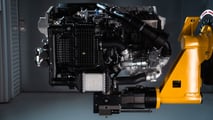
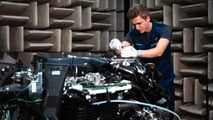
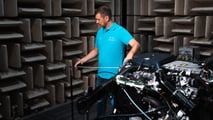
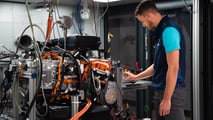
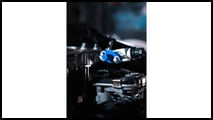
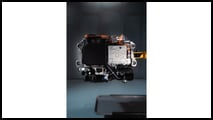
BMW is advancing its hydrogen fuel-cell technology with the development of its third-generation system, set for series production in 2028. This new system is 25 percent smaller due to enhanced power density and is designed for high integration with future vehicle architectures, potentially offering various drive system variants. Although BMW has not confirmed its integration with the Neue Klasse models, there is speculation that it might power a future version of the X5, expected in 2026, and could be compatible with the CLAR platform. Additionally, BMW is developing a hydrogen-specific BMW Energy Master, an interface between the battery and vehicle systems, which will be produced later this year for the first Neue Klasse cars.
The new hydrogen system is claimed to be significantly more efficient than its predecessor, with increased range, higher output, and lower energy consumption. This development is part of a collaboration between BMW and Toyota, which has been ongoing for over a decade. Initially, BMW sourced the entire hydrogen system from Toyota. Over time, BMW took more control, designing the system itself while Toyota continued to supply the fuel cells. The current second-generation system powers BMW’s iX5 prototypes, producing 396 horsepower and offering a range of up to 313 miles on the WLTP cycle.
Despite the limited availability of hydrogen fueling stations, many automakers, including BMW, continue to invest in hydrogen as a cleaner alternative to gasoline. The new system’s development reflects BMW’s commitment to expanding its hydrogen vehicle offerings, with the potential to integrate with both existing and future vehicle architectures. This ongoing collaboration with Toyota highlights the strategic importance of hydrogen technology in BMW’s long-term plans, as the company seeks to provide diverse drive system options to its customers.
View more
Show less
View more

Stay informed with our newsletter every weekday
back
Subscribe For more info, read our Privacy Policy & Terms of Use.
Follow Us
- (https://twitter.com/motor1com)
- Google News
- YouTube
- RSS
- Apple News
- About Us
- Advertising
- Contact
- 650 Madison Avenue
New York, NY 10022
USA
- Privacy policy
- Cookie policy
- Cookie Settings
- Terms of use
© 2026 Motorsport Network. All rights reserved.
Logotype
- News
-
- All news
- Trending
- Official
- Industry
- Supercars
- Manufacturing / Production
- Rumors
- Reviews
-
- All reviews
- New Car Reviews
- Why Buy?
- First Drives
- Pros & Cons
- Retro Reviews
- Comparisons
- Features
-
- All Features
- Motor101
- Features
- Everything We Know
- Lists
- Opinion
- State of Motion
- Makes
-
- All Makes
- Acura
- Alfa Romeo
- Aston Martin
- Audi
- Bentley
- BMW
- Bugatti
- Buick
- Cadillac
- Chevrolet
- Chrysler
- Dodge
- Ferrari
- Fiat
- Ford
- Geely
- Genesis
- GMC
- Honda
- Hyundai
- Infiniti
- Jaguar
- Jeep
- Kia
- Koenigsegg
- Lamborghini
- Land Rover
- Lexus
- Lincoln
- Lotus
- Lucid
- Maserati
- Mazda
- McLaren
- Mercedes-Benz
- Mini
- Mitsubishi
- Nissan
- Pagani
- Polestar
- Porsche
- Ram
- Rimac
- Rivian
- Rolls-Royce
- Scout Motors
- Skoda
- Subaru
- Tesla
- Toyota
- Volkswagen
- Volvo
- Models
-
- Popular models
- Honda Passport
- Ford Ranger
- BMW i3
- Alfa Romeo Giulia
- Lexus NX
- Volkswagen Golf
- BMW M3
- Chevrolet Corvette
- Nissan Pathfinder
- Ford Mustang
- Body styles
-
- All Body Styles
- SUV/Crossover
- Convertible
- Coupe
- Hatchback
- Sedan
- Truck
-
- Videos
- Photos
Edition
USA / Global Switch
Theme
Light
Dark
Auto
- Edition: USA / Global
- Edizione: Italia
- Edição: Brasil
- Ausgabe: Deutschland
- Edición: España
- Edisyon: Türkiye
- Édition: France
- النسخة: الشرق الأوسط
Cancel
Current Edition
USA / Global
- Edition: USA / Global
- Edizione: Italia
- Edição: Brasil
- Ausgabe: Deutschland
- Edición: España
- Edisyon: Türkiye
- Édition: France
- النسخة: الشرق الأوسط
Cancel
Chime in with article commenting.
Register / Sign In
Browse this and many other websites without banner ads, personalized tracking and video ads.
Sign Up / log in Log out