Man's Toyota Keeps Honking Randomly. Then The Mechanic Finds Where The Noise Is Coming From: ‘What In Tarnation?'
"Time to start checking wiring."
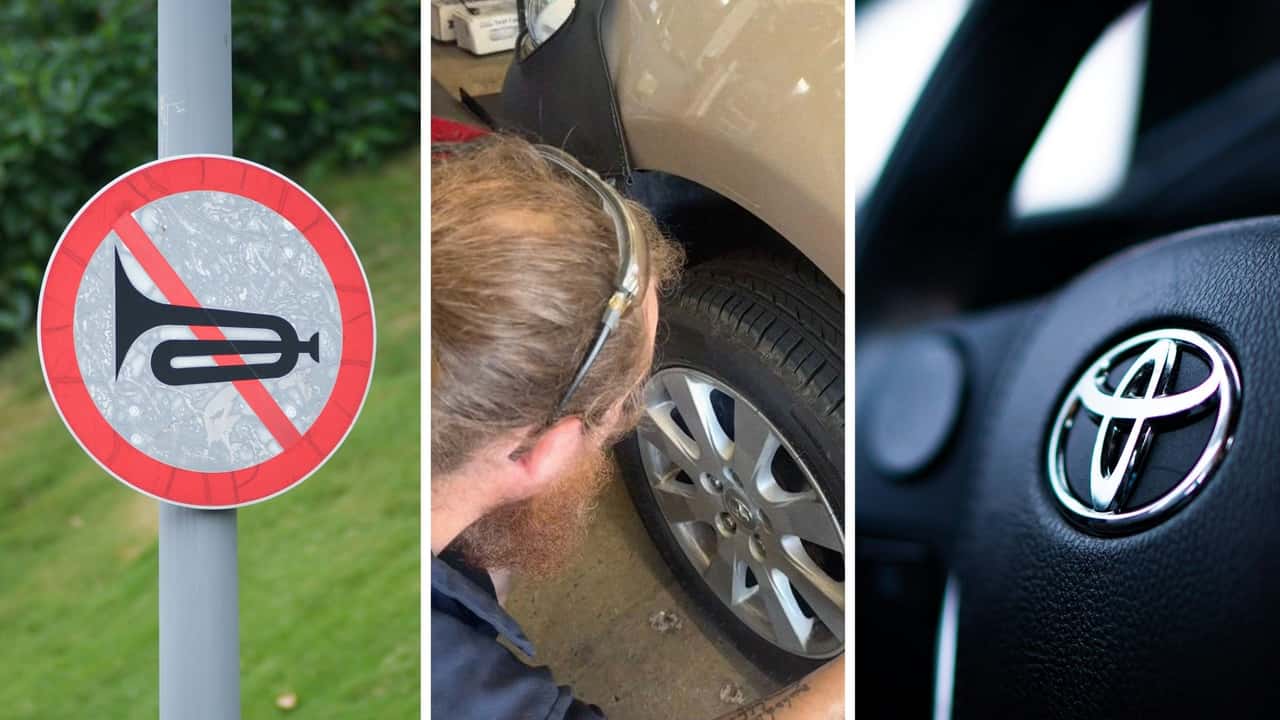

A mechanic documented a bizarre honking issue with a Toyota that rolled into his shop. The car honks every time they hit a bump.
The mechanic, who goes by Tea Leaves online, films service tech crouched near the driver’s side wheel well of a Toyota sedan.
“Customer states: I hear honking when I hit a bump,” a text overlay reads. Indeed, a honking sound comes from the vehicle when the mechanic grabs the tire and shakes it from side to side.
They do it again, and the car ekes out a series of short, semi-muted honks. A text overlay reveals that the auto worker is thoroughly bewildered. “What in tarnation?” they wrote.
Many brought jokes to the comment section. “Mechanic here. The car is very ticklish around the wheels and is laughing,” one quipped. Another wrote, “Is it out of gas?” Someone else said, “Probably the combobulator.” Another person jibed, “The car is letting you know that hurts.”
So What’s Actually Wrong With The Car?
Amid the flood of of jokes and sarcasm, some did try to get to the source of the mysterious honking.
One person offered the following explanation: “Horns typically ground to the steering column. My guess is the wire going from the horn to the button is stripped and when going over bumps it makes intermittent contact with the body. Completing the circuit and powering the horn.”
Other drivers have complained that road conditions make their vehicles honk
One Corvette driver complained in a forum that “whenever [they] … take off hard or make tight hard turns, the horn honks." They speculated the cause of the issue was rooted in an electrical short. “I try to remain stabilized by holding onto the wheel real tight, it seems to tilt somewhat and something shorts in there.”
Gallery: Toyota Camry GT-S Concept SEMA







Wiring Problems?
CarParts.com writes that there are numerous reasons why a horn would honk on its own accord. These include damaged relays, horn switches that are permanently stuck, and finicky aftermarket parts. Broken clock springs, malfunctioning electrical components, and messed-up ground cables could also be the culprit.
Many front-wheel drive cars, Toyotas included, generally engineer its primary wiring harnesses to be situated along its frame rails, subframe, and interior fender wells.
Which means that over time, any regular wear and tear/damage to the vehicle accrued over time takes a toll on these parts. It’s possible that a plastic wiring harness clip came undone. Consequently, the harness can rub against these components and potentially trigger the car horn whenever the tire, axle, or fender wells come into contact with it.
Another possibility is that the Airbag clockspring isn’t functioning as intended. AutoZone writes that the main reason a car horn isn’t working the way it should is likely due to a burnt horn fuse or a bad relay. But oftentimes, this usually results in the horn not working at all, which isn’t the case in Tea Leaves’ video.
Curious Honk Cases
Judging by tire shaking erupting in horn sounds, wiring harness rubbing seems a likely cause for the issue. But AutoZone says that “another less obvious but equally critical reason … [a] car horn’s may not working is an issue with the airbag clockspring.” Due to the way these clocksprings are constructed, “wear and tear from regular use can lead to … clockspring wearing out or breaking.” Since the clockspring “allows for continuous transfer of electric signals … even as you turn the wheel,” this could be the reason for the Toyota’s bump-honk relationship.
That’s because wheel shaking causes a kinetic energy chain, one that shoots up into the steering wheel. And if the clockspring, or a spring-loaded plate designed to sound off the horn when contact is initiated, is triggered, it could briefly sound the horn. This same problem could occur with membrane switches made out of rubber, too.
Another possibility is due to the horn’s placement on the vehicle. Many Toyota models mount these horns directly behind the front grill or radiator, which is also located in the same general area. If these bolts become loosened, any jostling could cause the horn to release, albeit briefly, a honking noise.
Motor1 has reached out to Toyota via email and Tea Leaves via TikTok direct message for further information.
RECOMMENDED FOR YOU
Man Sells Grandma's Toyota RAV4 In Pristine Condition. But He Makes A Key Sales Mistake: 'Never Let A Customer Know'
Why Do Jeeps Actually Have Seven Slots In The Grille?
How Did The Toyota 4Runner Get Its Name?
Is Ford Considering A Cheap Rally Car? Sure Sounds Like It
The Toyota Celica Is Coming Back. Here's Everything We Know
Feds Expand Investigation Into GM's Troublesome V8 Engines
Only 2,500 Made: Toyota’s 60th-Anniversary Corolla Is A Hybrid