'No Longer Fixing Cars That We Aren't Providing Diagnostics For': Mechanic Does Head Gasket Test On Car. Then It Comes Up Yellow
'At least you're being honest.'
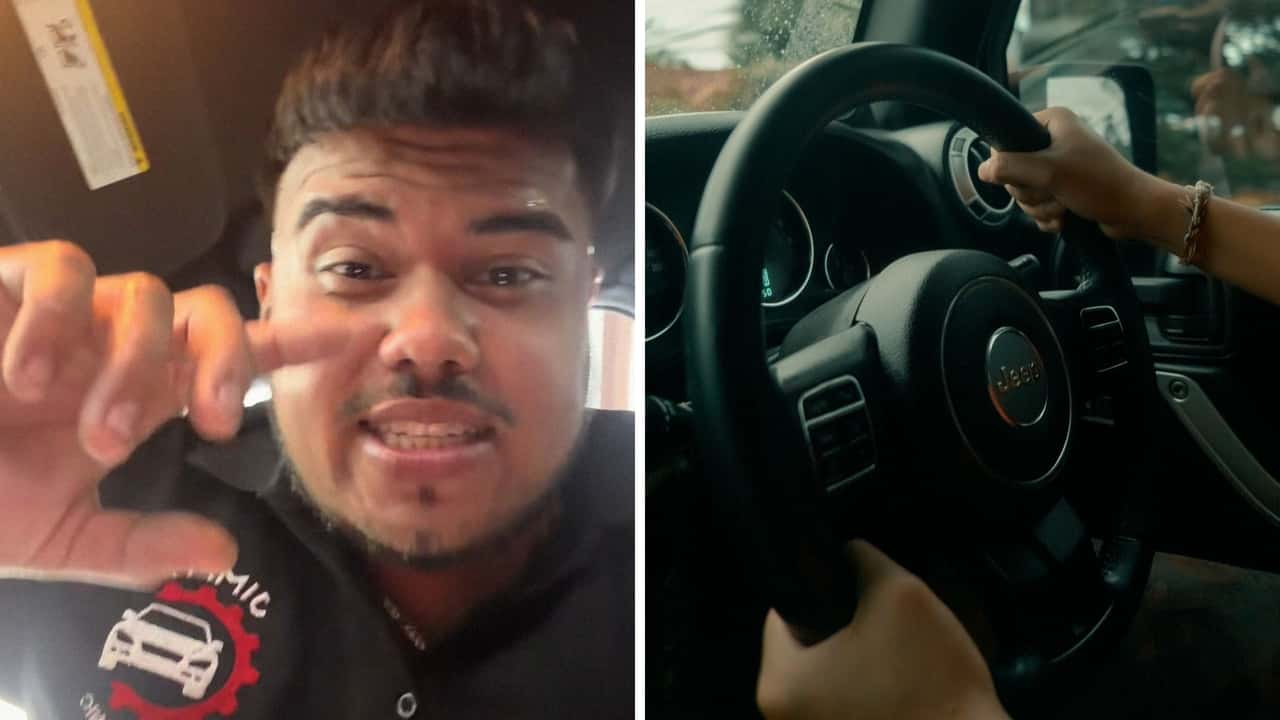

Most people aren't car experts, and shops know that. When a mechanic tells you that you need a new engine, the instinct is to believe them. You don't have the tools, the training, or the time to push back. So, you either pay up or you start calling around, hoping someone will give you a better answer.
This customer did the latter and showed why it's important to get a second opinion on a major car repair. It could save you thousands.
2015 Jeep Grand Cherokee: Don't Trust The Test
In a TikTok with around 10,000 views, mechanic Jimmy Avila (@boss_shittg) walks viewers through a diagnostic on a 2015 Jeep Grand Cherokee that a customer brought to his shop after another mechanic told her she needed a full engine replacement.
The original shop had run a head gasket test, said it failed, and quoted her an engine swap. Avila wasn't so sure.
"These scamming [expletive] mechanics are at it once again," Avila says at the top of the video (though he walks that back a bit later, adding that it could have been an honest mistake). "Let's give them the benefit of the doubt."
His first clue was the hoses. On a car with a blown head gasket, the bottom radiator hose stays cool while the upper runs hot, since coolant can't circulate properly. He also removed the thermostat temporarily to let the coolant run freely through the system. Then he ran the head gasket test.
"It would turn yellow because all the water will come up," he explains about yellow being the indication of a problem.
But with the thermostat out and coolant flowing freely, the water wasn't coming up. The engine wasn't leaking. "I think this car was misdiagnosed," Avila says.
His theory was that the Jeep overheated at some point, which caused the head gasket test to fail. But the underlying issue wasn't a blown gasket or a dead engine. It was the thermostat. Jeep, Chrysler, and Dodge vehicles with aluminum engine blocks are especially vulnerable to heat-related damage, he explains, and can fail a head gasket test even when the gasket itself is fine.
"I feel happy that we don't have to replace the engine for this customer," Avila says. "Most shops, if the customer already told them they need an engine, they're not gonna let it slide. They're gonna charge them for the engine."
Avila notes that this scenario isn't the case for everyone. He has another customer at the same shop, with the same truck, and the same situation—except that one has a hole in the block and the engine has to go.
"If your engine comes with a hole in the block, I can't save that," he says.
Avila says his shop has changed its policy after too many bad experiences inheriting other shops' diagnoses.
"We are no longer fixing cars that we aren't providing diagnostics for," he says.
Customers would come in with a diagnosis from somewhere else, he'd replace what they asked for, and when the car still wasn't fixed, he'd be the one taking the blame.
What Is A Head Gasket And What Does It Cost?
The head gasket sits between the cylinder head and the engine block, acting as a seal that keeps engine oil, coolant, and combustion gases from ever mixing. According to Bar's Leaks, it's one of the most critical components in the engine, and a blown gasket is one of the trickiest issues to diagnose accurately because many of its symptoms overlap with other problems entirely.
Overheating is a classic blown head gasket symptom, but it can also be caused by a restricted radiator. Coolant leaking into the oil is another one, except that it can sometimes trace back to a faulty intake gasket rather than the head gasket itself. Even a combustion leak test that turns yellow when it detects exhaust gases in the coolant can produce misleading results if the thermostat isn't functioning correctly or if the coolant isn't circulating properly through the system.
An accurate diagnosis often depends on the expertise of a skilled technician, but some problems can only be confirmed by removing the cylinder head entirely. That complexity is part of why replacement costs run so high.
According to AutoZone, a head gasket replacement ranges from $1,000 to $4,000 or more, with labor making up the bulk of the bill since it's a disassembly-heavy job that takes time.
Other gasket repairs are far cheaper: a valve cover gasket typically runs $100 to $500, and an exhaust manifold gasket can be handled for $150 to $500. A full engine replacement runs $2,000 to $5,500, depending on whether it's used or new.
When Should You Get A Second Opinion On A Car Repair?
You should get a second opinion almost any time a shop recommends something expensive that you weren't expecting. AAA Club Alliance advises that a second opinion is especially worth pursuing when a repair seems unexpected, when the estimate was based on a quick look rather than a thorough inspection, or when you're unfamiliar with the shop giving the quote.
Even honest, experienced mechanics can misdiagnose a problem. AAA notes that some vehicles have "pattern failures" that experienced techs can spot quickly, but for other issues, a mechanic might be guessing, and that guess can be expensive.
Commenters React
“How did you diagnose the issue? Thermal camera?” a top comment read.
“Good job at least you're being honest that's the most important thing a customer would want,” a person said.
“Some customers are always quick to blame any mechanic but never take accountability for not performing maintenance or preventative maintenance on their vehicles,” another wrote.
Motor1 reached out to Jimmy Avila for comment via Instagram and TikTok direct messages. We'll be sure to update this if they respond.
RECOMMENDED FOR YOU

Nissan Saleswoman Says She ‘Doesn’t Have Time’ To Show Car. Then She Learns Who She's Talking To
McLaren Teases Its First Manual Supercar In Decades
Man Fuels Up At BP. Then He Catches Them Overcharging For Gas: ‘How Did 15 Gallons Get Charged?’
Cadillac Celestiq Goes Dark With A Stealthy One-Off
Texas Woman Says This Is The Best Car She's Ever Had. So Why Is The Dealership Taking It Away From Her?
One Of Europe's Most Popular Camper Vans Gets A Major Redesign
RIP: These Cars Won't Make It To 2027