Golf from America: VW Rabbit (1975-1984)
In the USA, the first generation of the Golf was given a different name and its own factory
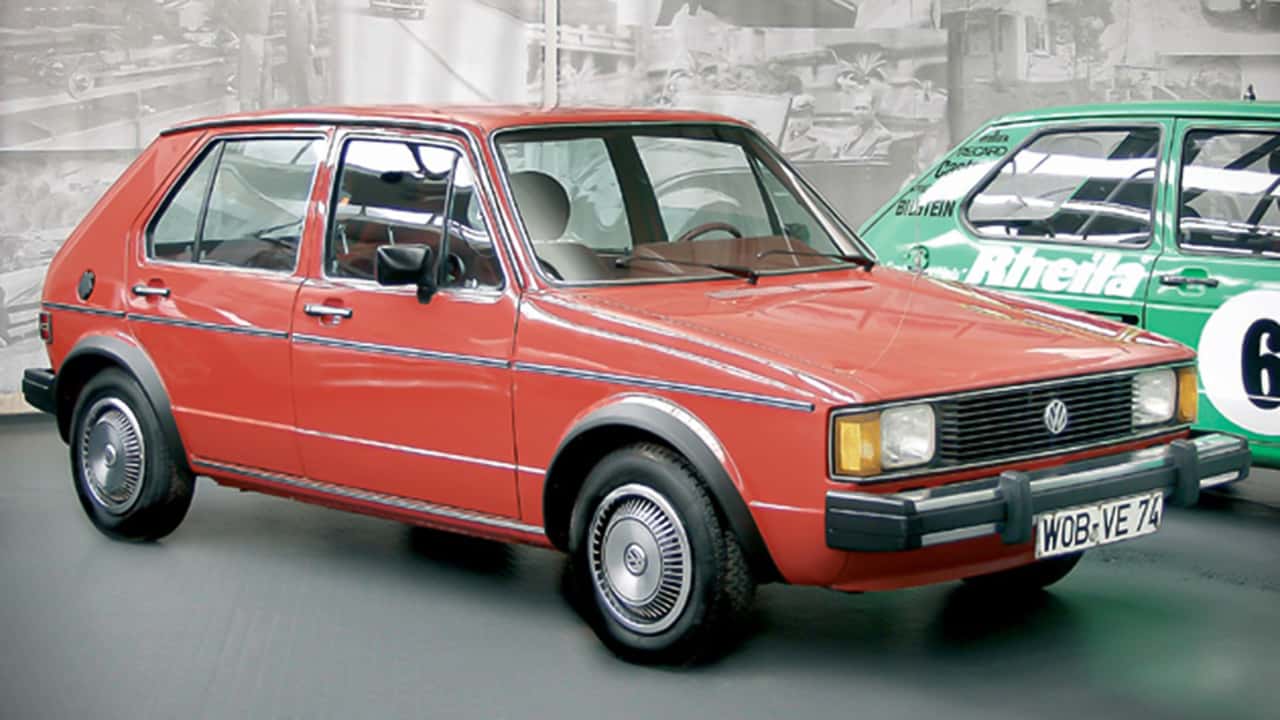

The Gulf of America is on everyone's lips these days: The new old US president, Donald Trump, has decreed that the sea region we know from geography class as the "Gulf of Mexico" should be renamed. Mexico animosity or not, the debate has brought us to the real Gulf of America: The VW Rabbit turns 50.
Only true VW fans know the name, but almost everyone knows the car behind it: from 1975, Volkswagen sold the Golf I as the "Rabbit" in the United States and Canada. It is a story of rise and fall...
Gallery: VW Rabbit (1975-1984)

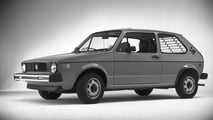
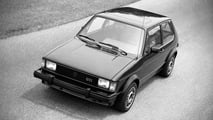
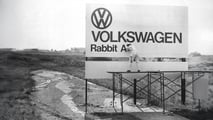
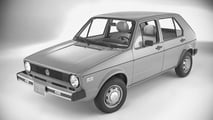
The 1973 oil crisis also shook up the US car market. Powerful road cruisers were out, and compact models became bestsellers. Japanese brands in particular were on the rise. At the same time, the ageing VW Beetle was selling less and less in the US. The Golf, launched in 1974, and it came at just the right time.
Exports to the USA began in 1975, including thick bumpers. Although VW itself says that the US Golf was not called "Rabbit" until 1978, advertisements prove otherwise. These early US Rabbits were built in Germany and exported to North America, recognisable by the round headlights.
An early VW Rabbit. Easy to recognise: The massive US bumpers and the rabbit on the C-pillar.
Incidentally, the Scirocco was allowed to keep its name in the USA. It is unclear why the Golf mutated into Rabbit. It is possible that they wanted to avoid confusion with the Gulf petrol company (known as the sponsor of the Porsche 917).
Between 1973 and 1976, Volkswagen of America's sales fell from 540,364 to 238,167 vehicles; its market share halved to 2.3 per cent. As early as 1973, the company's management had considered setting up a production plant in America in order to avoid the price-related competitive disadvantages resulting from the unfavourable exchange rate and high production costs in the Federal Republic of Germany.
A separate plant for the Rabbit
The main argument against this project was the commitment to one model and the resulting high product dependency in a highly competitive market, while the alternative of expanding production in Mexico and supplying the US from there raised concerns about the product's image. However, declining sales and financial losses in the export business eventually led to the realisation that only local production could maintain the company's most important export market.
The Golf's brilliant start also facilitated the decision in June 1976 to build the Rabbit in the USA. In 1977, the Rabbit accounted for 55 percent of all VWs exported to the USA. In 1978, Volkswagen began building the Rabbit at its Westmoreland plant.
Under pressure from the falling dollar, which was hurting Volkswagen's exports to the US, Volkswagen Manufacturing Corporation of America was set up to establish production in the US. The new subsidiary took over a press shop in South Charleston, West Virginia, and an assembly plant in Westmoreland, Pennsylvania, where production of the Golf for the North American market began in April 1978.
Engines and gearboxes came from Germany, rear axles and radiators from Volkswagen de Mexico, and the remaining components mainly from the US supplier industry. The new production company was merged with Volkswagen of America, Inc. on 31 July 1978 and its headquarters moved from Englewood Cliffs, New Jersey to Warren, Michigan. After the introduction of two-shift operation in 1979, the Westmoreland plant reached the planned production level of 1,000 vehicles per day with 9,102 employees.
Softer and sleeker workmanship
Former Chevrolet engineer James McLernon was put in charge of the plant, with the aim of reducing the cost of the Rabbit in North America through local production. McLernon tried to "Americanise" the Golf/Rabbit (Volkswagen board member Werner Schmidt called this move the "Malibuisation" of the car) by softening the suspension and using cheaper materials for the interior.
VW Rabbit GTI from Westmoreland
VW purists in America and management in Germany were annoyed. For the 1983 model year, the Pennsylvania plant reverted to stiffer shocks and suspension and used a higher quality interior. The most obvious change to the Westmoreland Golf aka Rabbit was the switch from round to square headlamps.
The Rabbit diesels were launched in mid-1977 and were originally manufactured in Germany. During 1980, production was transferred to the Pennsylvania plant. The 1.5-litre diesel engine offered for the US market produced 49 PS at 5,000 rpm. This model was short-lived; in 1981 the Rabbit models received a facelift with wrap-around turn signals and larger tail lights, while the diesel engine was upgraded to 52 PS from 1588 cc.
Following a 13 per cent increase in sales in 1979, the US subsidiary recorded a further increase in the following year, from around 337,000 to 368,000 Volkswagen and Audi models sold. It benefited from the drastic rise in petrol prices, which triggered a growing demand for fuel-efficient vehicles. For 1980, the annual report showed sales of around 186,000 Rabbits in the USA.
VW Rabbit GTI
In the autumn of 1982, the plant also began production of the GTI for the North American market for the 1983 model year, and the Rabbit was built in Pennsylvania until 1984. The Rabbit pick-up, which was based on the first Caddy, was also produced there.
Canada continued to import the German-built Rabbit until the 1981 model year, when Volkswagen Canada began importing the U.S.-built version. The Rabbit Cabriolet (sold simply as the Volkswagen Cabriolet after 1984, when the Rabbit was replaced by the Golf) was only ever built by Karmann in Germany; it retained the original reappearing headlight design after the US models received a facelift for 1981.
The original US Golf was used in a fleet of taxis. The Yellow Cab Company in Lexington, Kentucky, bought eleven Rabbits in the late 1970s to save on fuel, estimating that it was saving $135,000 a year in fuel costs.
More from the history of golf:
Two other companies considered using the Rabbit as the basis for a taxi. Checker Motors Corporation and Wayne Corporation both built prototype taxis using Rabbits with a much longer wheelbase than the factory models. Checker built one prototype and Wayne built three, but neither project went into production.
For 1981, the petrol Rabbit received a 1,715 cc fuel-injected engine, a version used only in North America, which produced 75 PS. The carburettor versions were discontinued, although a carburettor version reappeared in mid-1982 in the low-cost "Special Value Rabbit".
The Ami-GTI
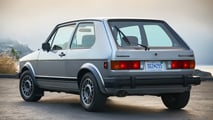
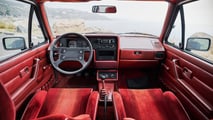
The Volkswagen Rabbit GTI, the North American version of the high-performance Golf GTI, was launched in Canada in 1979 and in the USA in 1983. It was assembled in Westmoreland from parts manufactured in Mexico, Canada, Germany and the USA. The Rabbit GTI was characterised most prominently by its angular front end and the "snowflake" alloy wheels. The interior was lined with red or blue felt and imitation leather.
VW Rabbit GTI
Under the bonnet was a JH four-cylinder petrol engine with a capacity of 1.8 litres that could run on unleaded fuel. Not only was it slightly larger than the standard engine, it also had lighter pistons, larger valves, a higher compression ratio and a free-flow exhaust, as well as other minor improvements. The standard JH 1.8-litre engine produced a maximum power of 91 PS, which was transmitted via a five-speed manual gearbox with close ratios. A total of 30,000 1.8-litre Rabbit GTIs were built in Pennsylvania.
Bitter end
However, sales at Volkswagen of America took a turn for the worse in 1981, and the following year sales plummeted by 40 per cent, partly due to the global economic crisis and partly due to Japanese competition. The second assembly plant in Sterling Heights, completed in 1982, was no longer in operation and was sold in 1983.
The Westmoreland plant also closed in July 1988. The Golf II had been produced there under its original name since 1984. A good 1.1 million Rabbits were built. By the way: Mexico also got its version of the Golf. There, the one-off was called the "Caribe". And from 2027, the VW Golf will be built entirely in Mexico.
RECOMMENDED FOR YOU
Man Installs New Doors For His Volkswagen Golf. Then He Realizes How Badly He Miscalculated: ‘This Is Why AutoZone Employees Ask’
Man Spots Tesla Cybertruck Towing A Boat. Then He Looks Closer And Sees Who's Really Doing The Heavy Lifting
VW Explored A Range-Extending Gas Engine For The ID. Buzz
Why Red Bull's First Hypercar Had To Have A V10: Interview
Volkswagen Secretly Built A Truck-Based SUV. It Might Do It Again
Woman Gets Safelite To Repair Windshield. Then She Tries To Use Her Windshield Wipers: 'I Emailed Customer Care A Month Ago'
Volkswagen Driver Says She Puts Diesel In At The Pump—And The Men Around Her Always Say The Same Thing: ‘Men Come Running'