Home
News
Motorhome winterisation: 7 steps for proper winter storage
Tips on cleaning, emptying and storage for a smooth start to the season
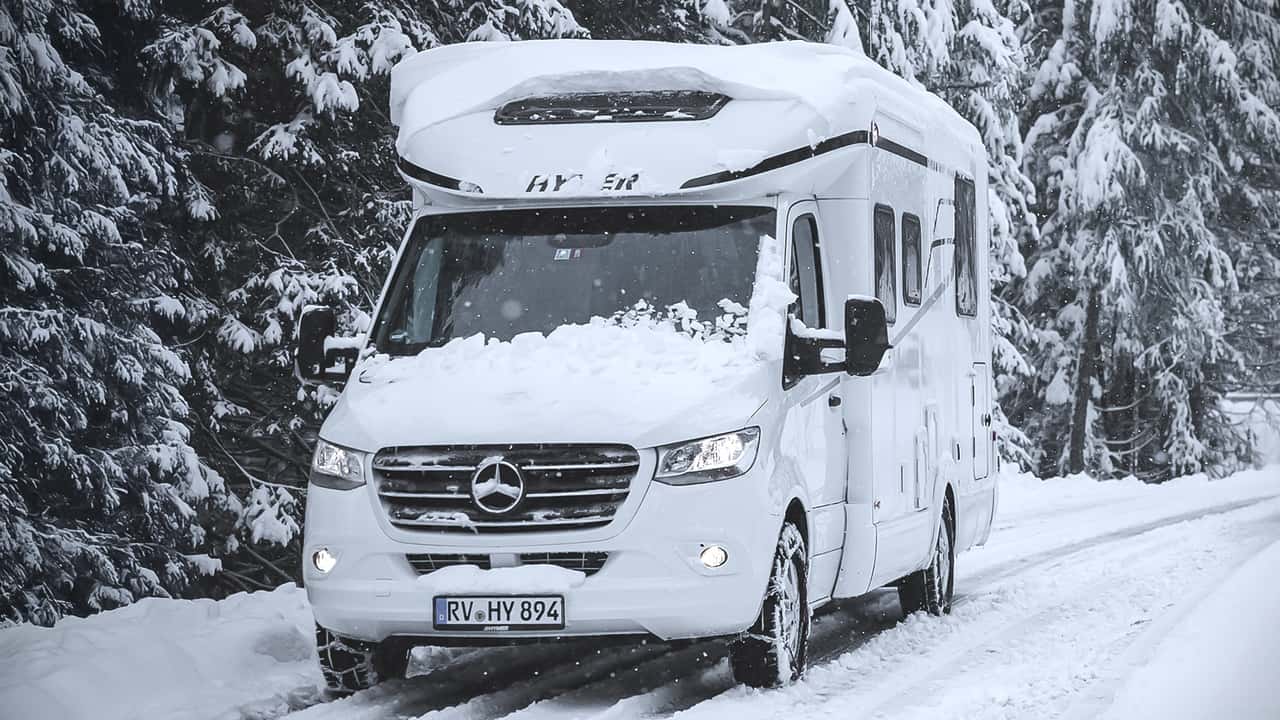
Photo by: Hymer Group

By: Fabian Grass
Published by: Brian Potter
Dec 15, 2024 at 4:35am ET
Add Motor1.com as a preferred source in Google
- (https://twitter.com/intent/tweet?url=https%3A%2F%2Fwww.motor1.com%2Fnews%2F744447%2Fmotorhome-winter-preparation-tips%2F&text=Motorhome%20winterisation%3A%207%20steps%20for%20proper%20winter%20storage&via=motor1com)
- copy
Share
Comment
Winter has arrived and for many motorhome and caravan owners this means winterising! There are a few important points to bear in mind to ensure that the vehicle is still in perfect condition in spring and that there are no nasty surprises waiting for you. We will show you how to properly prepare your vehicle for the winter so that you can start the new season in 2025 without any problems.
Step 1: Empty and clean the water tanks
Frost damage is the most common cause of damage to motorhomes in winter. The entire water system should therefore be drained and thoroughly cleaned. All taps should be left open to remove the last traces of water. For vehicles with mixer taps, make sure that the handle is in the centre position between cold and hot water.
A special antifreeze for water pipes can provide additional protection. This minimises the risk of algae and bacteria forming. For even better protection, many models can be fitted ex works with additional insulation to make the vehicle even more resistant to cold.

Leave the tap open for draining
Fresh and grey water tanks must be emptied
Step 2: Proper battery care
Before winterising the vehicle, the batteries should be fully charged and then disconnected from the vehicle. This prevents them from discharging themselves and becoming inoperable in the spring. It is advisable to check the charge level regularly. To be on the safe side, the batteries should be stored in a frost-free place during long periods of non-use.
Step 3: Prepare tyres
To ensure that the tyres are in perfect condition after the winter break, they should be checked thoroughly. Adjust the tyre pressure to the colder temperatures by increasing it by 0.2 to 0.5 bar. This not only improves driving performance in cold weather, but also minimises wear during longer periods of downtime. If possible, the vehicle can be placed on special jacks to take the pressure off the tyres. For additional protection, there are special tyre covers that protect against UV radiation and cold in winter.
Step 4: Clean up the interior &
The interior should be thoroughly cleaned and well ventilated. All cupboards and compartments should be opened to ensure optimum air circulation and prevent mould growth. For additional safety, special dehumidifier packs can be installed in the vehicle. These keep humidity levels low and protect upholstery and furniture from moisture damage. Breathable winter covers for seats and upholstery offer additional protection against cold and damp air in winter.
Empty and clean the fridge and freezer
Photos by: Motor1.com
Leave cupboards open for better air circulation
Step 5: Cleaning the exterior
After thorough cleaning, maintenance and any repairs are on the programme. For example, if you have noticed any damage to the paintwork when washing your motorhome or caravan, you should repair it immediately. Rust-prone areas on the underbody should also be treated before winterisation. In addition, all rubber and door seals should be cleaned and treated with talcum powder or another care product, and the joints of the brake linkage and the hinges of the crank supports should be greased.
Pay attention to paint damage when cleaning the exterior
Photos by: Motor1.com
Step 6: Secure the gas system
The gas system must also be taken care of before winter storage. Firstly, the gas cylinders are closed and disconnected from the gas supply to the motorhome or caravan. The protective cap is then placed on the gas cylinder so that no gas can escape. A dry, well-ventilated place outside the vehicle is recommended for storing the gas cylinders. Important: In contrast to the water taps, all gas taps must be firmly closed for winter storage.
Remove gas cylinders before winter storage and ...
... Store in a dry place outside the camper
What do you think?
View
Comments
Step 7: Park the vehicle safely
Finally, there is the question of a suitable parking space. A ground-level, dry and weather-protected place is ideal, e.g. a garage or carport. Jacked-up storage is recommended to protect the tyres. To avoid flat spots, the vehicle can also be moved a little every two to three weeks so that the tyres are not permanently loaded in the same place. Of course, the ideal solution is to jack up the caravan or motorhome so high that the wheels are completely unloaded.
With these simple but effective measures, you can ensure that your camper or caravan is ready for use again in spring and that you can start the new camping season without any worries.
More camping
Nissan Primastar Seaside by Dethleffs (2024) test: King of the Alps?
Sunlight Cliff 602 Adventure: 6-metre camper van for outdoor fans
New Laika Kreos L 5009: Camping in a Mercedes
Challenger ElectriX: Hybrid motorhomes with a range of 560 miles
We want your opinion!
What would you like to see on Motor1.com?
Take our 3 minute survey.
- The Motor1.com Team
Share this Story
- (https://twitter.com/intent/tweet?url=https%3A%2F%2Fwww.motor1.com%2Fnews%2F744447%2Fmotorhome-winter-preparation-tips%2F&text=Motorhome%20winterisation%3A%207%20steps%20for%20proper%20winter%20storage&via=motor1com)
- copy
GO TO COMMENTS
(
)
Got a tip for us? Email: tips@motor1.com
View all comments ( )
Popular
The Rotary Engine Should Be Everywhere. Why Isn't It?
The 2027 BMW X5 Is Hugely Improved Where It Matters Most: Driven
Toyota's Next Mid-Engined Coupe Is Going Racing This Weekend
Alfa Romeo Has Had It With Huge Screens
Subaru Teases A New Manual WRX, But Only For Japan
latest articles
- The Mercedes 300 SL's Gullwing Doors Weren't Just For Looks. They Solved A Problem Oct 23 - Motor101 -
- 2027 Toyota Crown Signia Adds Tech Without Changing Its Formula Oct 23 - Pricing -
- Woman Buys 4Runner. Then She Drives 2 Miles—And Realizes The Windows Don’t Work: ‘Is This Something…They Should Be Liable To Fix?’ Oct 23 - Trending -
- Barely Driven Ferrari 499P Modificata Heads To Auction For Over $8 Million Oct 23 - For Sale -
- How Does Automatic Emergency Braking Know When To Stop? Oct 23 - Motor101 -
- Porsche Builds A Rare 911 GT3 To Celebrate 75 Years In Britain Oct 23 - Special Editions -
- Mechanic Asks To Do Pre-Purchase Inspection On Ford. Then The Salesman Says Something Shocking Oct 23 - Trending -
RECOMMENDED FOR YOU
5 Vehicles That Are Surprisingly Great For Camping
2027 Toyota Crown Signia Adds Tech Without Changing Its Formula
Mechanic Asks To Do Pre-Purchase Inspection On Ford. Then The Salesman Says Something Shocking
Woman Buys 4Runner. Then She Drives 2 Miles—And Realizes The Windows Don’t Work: ‘Is This Something…They Should Be Liable To Fix?’
Ford Explains Why Naming Cars Is So Hard: 'Everyone Has An Opinion'
Barely Driven Ferrari 499P Modificata Heads To Auction For Over $8 Million
Ford's Electric Mustang Gets Cheaper And More Rugged For 2027