Alfa Romeo 145/146 (1994-2000): A case for fans?
The successor to the 33 is now 30 years old
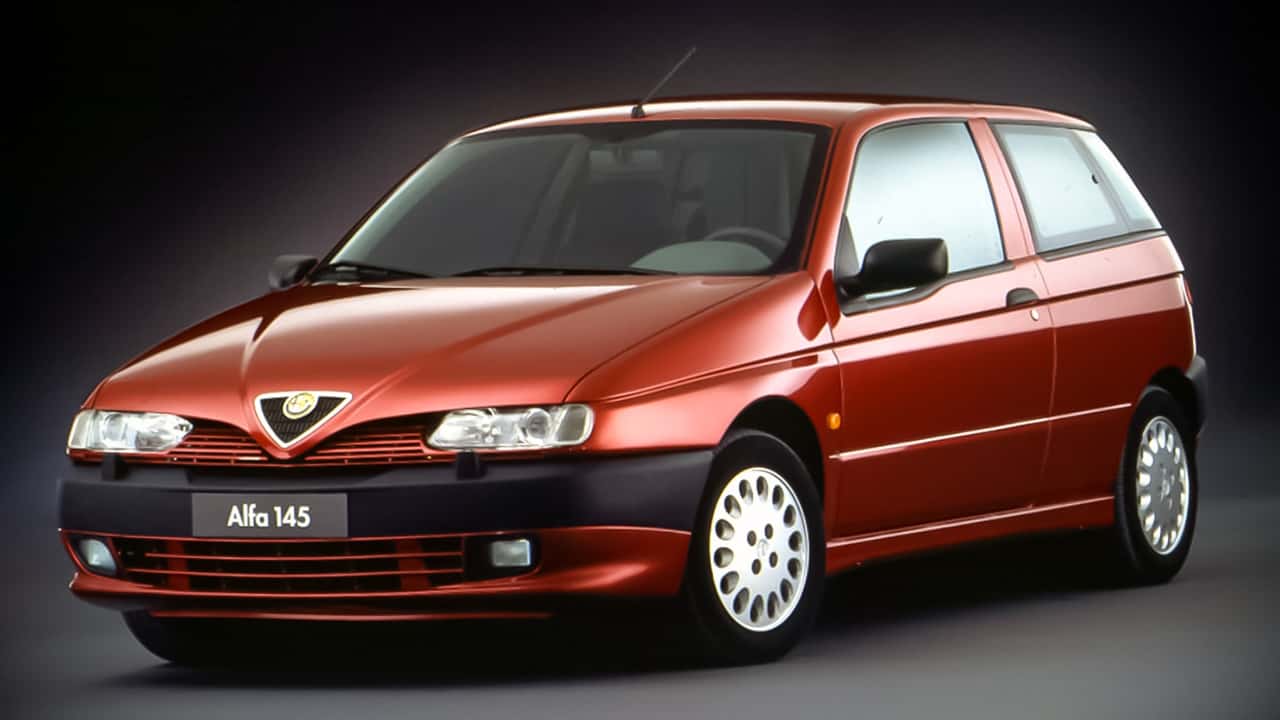

Compact models from Alfa Romeo oscillate between heaven and hell. With the Alfasud, the brand founded the Golf class in 1971, but the modern model rusts in fast motion. It was followed by the ill-fated Arna and the popular 33, whose successor appeared 30 years ago. To be more precise, two successors.
The Alfa Romeo 145 (model 930A) and the 146 (model 930B) were between 4.06 and 4.23 metres long and were offered by the Italian car manufacturer between 1994 and 2000. The 145 is a three-door hatchback saloon, while the 146 is a five-door saloon with a hint of a notchback. However, Alfa does not replace the estate of the 33; it is omitted.
Gallery: Alfa Romeo 145 and 146 (1994-2001)


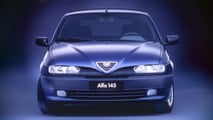
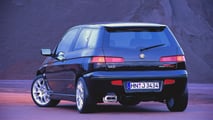
A speedy double
Development of the Tipo 930, which was to replace the ageing 33 in the competitive compact class market, began in 1990. The first offspring of the project, the three-door 145, was presented at the Turin Motor Show in April 1994 and at the Paris Motor Show in July. A simultaneous market launch in Europe was planned for 9 September, but was postponed until October.
In April 1992, work begins on a second car, the 146 or Tipo 930B, which is derived from the 145 and is to be sold alongside it. The 146 was presented at the Bologna Motor Show in November 1994 and went on sale in May 1995.
Alfa Romeo 145 and 146 (1994-2001)
The body design of the 145 goes back to Ermanno Cressoni, Alfa Romeo's long-time head of design, who became head of the Centro Stile after the takeover of Alfa Romeo by Fiat. Cressoni was already responsible for the design of vehicles such as the Alfetta saloon, the Giulietta transaxle, the first Alfa Romeo 33 and the Alfa 75.
Now, with the 145, Cressoni can finally design a vehicle with a step in the lower edge of the door window. Cressoni already wanted this feature for the Fiat Cinquecento, but it was not realised for cost reasons.
Actually a Lancia design
The body of the 145 was originally a design for the Lancia Delta and is very similar to that of the Alfa Romeo 146 with a short notchback. In wind tunnel tests, a polystyrene block was placed on the boot lid to create a hatchback that achieved very good aerodynamic values.
When the board of directors saw this model, they decided that the design was less suited to a Lancia and more suited to an Alfa Romeo. As a result, the front end is given the familiar shape and there are detail solutions typical of the brand.
Fiat Tipo base, but boxer engines
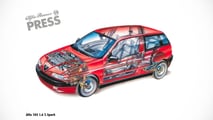
The Alfa Romeo 145 and 146 are based on the floor assembly of the first Fiat Tipo. This was extensively modified to enable the use of the longitudinally mounted boxer engines from Alfa Romeo. As a result, the Alfa Romeo 145 also underwent the modifications that the Fiat Tipo underwent in the course of its model career. The 145 and 146 models are partially galvanised and therefore quite well protected against rust.
The cockpit of the Alfa Romeo 145 and 146
Initially, the 145 is available with the petrol engines already familiar from the Alfasud and the 33, boxer engines with 8 valves with 1.4 (90 PS) and 1.6 litre displacement (103 PS) as well as 1.7 litre displacement and 16 valves (129 PS). A turbocharged diesel engine with a displacement of 2.0 litres and a maximum output of 90 PS is also available. Base price for the 1400 in Germany: just under 24,000 marks.
Externally, the first series can be recognised by the oval tailpipe of the exhaust system, almost flat wheel trims with embossed Alfa Romeo logo and windscreen wipers with plastic covers extending up to the wiper blades. The interior is dominated by a grey dashboard with rectangular air vents.
Top model with cloverleaf
In September 1995, the Alfa Romeo 145 Quadrifoglio Verde was presented at the 56th IAA as the top model in the series. Differences from the other models in the series are the side skirts with green Quadrifoglio emblem, the alloy wheels, sporty seats, modified instruments, a leather steering wheel with red contrasting stitching and a specially tuned sports suspension. The engine is the first TwinSpark engine: a two-litre in-line four-cylinder engine with twin ignition and 150 PS maximum output.
Alfa Romeo 145 mit Twin-Spark-Motor
With the revision in December 1996, the engine range was changed from boxer to in-line four-cylinder engines with twin ignition, as the boxer engines did not achieve the desired performance and fuel consumption values due to the noticeably higher vehicle weight. Four petrol engines with a capacity of 1.4 to 2.0 litres and 16 valves are available, as well as the turbocharged diesel engine.
No external modifications have been made to the bodywork. However, the interior of the vehicles has undergone major changes: A two-tone centre console with redesigned controls for the ventilation as well as round air vents, the steering wheel is fitted with an attached coloured Alfa Romeo logo.
Furthermore, a fabric strip running from left to right, matching the chosen colour of the interior trim, is integrated into the dashboard, which further enhances the interior. The entire dashboard is better foamed to further reduce creaking and rattling noises.
Alfa Romeo 145: Distinctive rear and opening side windows
Under the bonnet, the Alfa Romeo 145 was significantly modified in parallel to the Fiat Tipo in order to improve accident safety. The Fiat Tipo achieved a devastating result in the newly introduced NCAP crash test, which is why the front section of the floor assembly was significantly reinforced to achieve better crash behaviour. All vehicles based on the Fiat also receive these changes, including the Alfa Romeo 145. This considerably increases the unladen weight of the vehicles.
Another facelift was carried out in October 1998. Exterior modifications were made to the bumpers in particular, which were fitted with inserted bumper mouldings and a more rounded appearance. In addition, the bumpers are now painted completely in body colour, apart from a narrow bumper strip. The wheel trims have been given a coloured Alfa Romeo logo.
The 145 in the test
And what did the press say? "Beauty with minor flaws" was the ADAC's verdict on the 145 in 1995, with praise for the amount of space at the front and the functionality, as well as the boot with a capacity of 305 to 735 litres. Criticism was levelled at the clunky gearstick and the gearbox, which the testers felt was too long. The 1.4 and 1.6-litre boxer engines in the 1,147-kilogram Alfa were judged to be "sluggish and tough".
And what does our colleague Stefan Wagner say? Because his first car was a 145...
"Actually, it was the first three, haha. In each case the Quadrifoglio variant built in 1999 or 2000, i.e. after the major facelift. The two-litre engine then produced 155 PS with a modest 187 Nm of torque. The engine was fantastic, but of course needed endless revs. What's more, the gearstick with the long gear lever was a pain.
The chassis and handling were certainly not famous, but were somehow okay. Unforgettable: The far too high seating position and the tiny, very narrow pedals. The quality of workmanship and materials was much better than you would think, especially after the facelift. Even today, the design still proves to be very successful and relatively timeless. Unfortunately, the Alfa 145 and 146 have now largely disappeared from the roads and used car markets."
Production of the 145 ended in December 2000, with Alfa Romeo building a total of 221,037 units of the 145 and 233,295 of the 146.
Alfa Romeo in the present and past:
RECOMMENDED FOR YOU
Why Some Cars Have 'Hidden' Door Handles
New Jersey Woman Starts Up Toyota RAV4. Then It Rains: ‘Never In My Life Have I Seen This’
These Are The Most Spectacular Car Museums
Man Gets Intoxalock Breathalyzer After DUI. Then He Tries To Use It In 90-Degree Heat: ‘They Put A Camera In There Too?!?’
Rare Mazda 767B Engulfed In Flames At Laguna Seca
Ferrari Wants To Turn Taillights Into Active Aero
1958 Ferrari Reappears With A Shocking $5 Million Estimate