Home
News
Trending
‘Girl Did You Sign This?’: Woman’s Lease Is About To Expire. Then She Finds Out The Bank Can Force Her To Pay Thousands More
"The bank can't lose out on money."
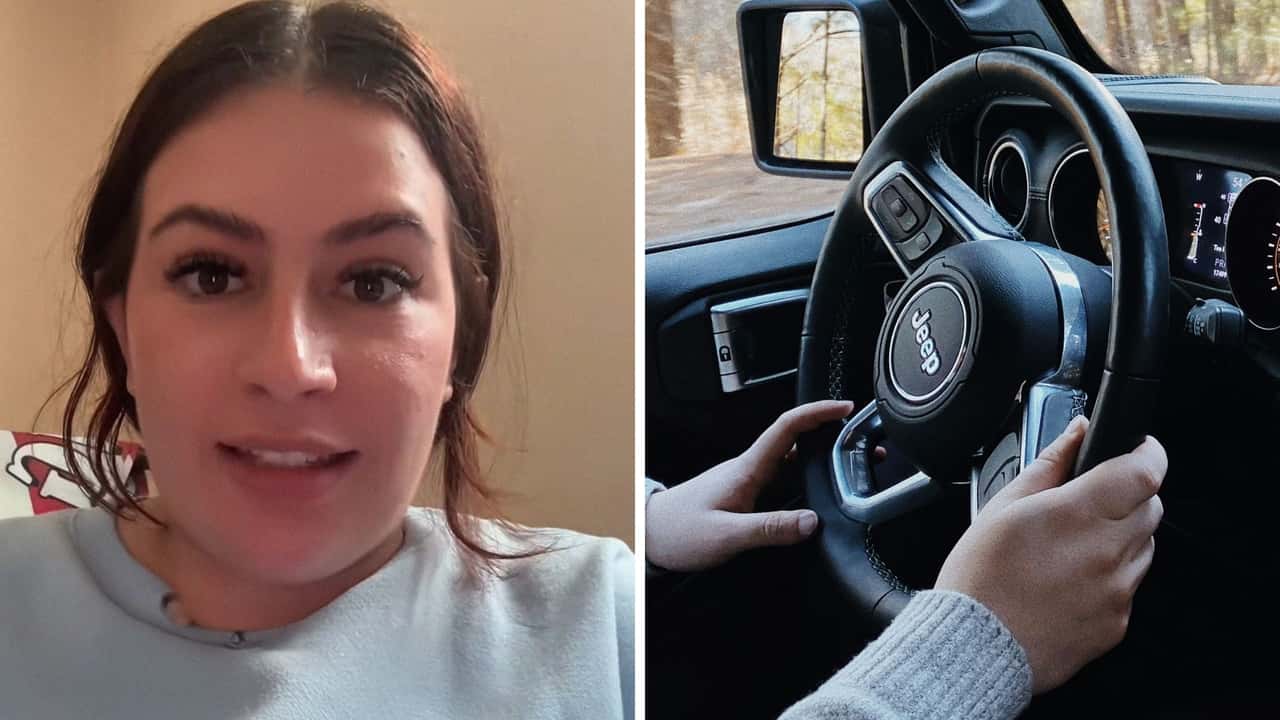
Photo by: carmelaa666 & David Nicolai
JT Wilson 
By: JT Wilson
May 17, at 4:00pm ET
Add Motor1.com as a preferred source in Google
- (https://twitter.com/intent/tweet?url=https%3A%2F%2Fwww.motor1.com%2Fnews%2F796095%2Fstellantis-car-lease-fees%2F&text=%E2%80%98Girl%20Did%20You%20Sign%20This%3F%E2%80%99%3A%20Woman%E2%80%99s%20Lease%20Is%20About%20To%20Expire.%20Then%20She%20Finds%20Out%20The%20Bank%20Can%20Force%20Her%20To%20Pay%20Thousands%20More&via=motor1com)
- copy
Share
Comment
A New York City woman who just finished 36 monthly payments on a Jeep lease says the bank told her she could still owe thousands of dollars after she hands back the keys. The bank explained that it would send the vehicle to auction after her lease expires, and if the car sells for less than its projected value, she is on the hook for the difference.
Commenters with industry experience say the claim doesn’t match how a standard consumer lease works, and several urged her to get a lawyer.
Carmela (@carmelaa666), a hair stylist in New York City, posted the one-minute, 21-second TikTok with on-screen text reading, “Car leasing IM CONFUSED.” The video has drawn thousands of views and a flood of replies from self-identified car salespeople, lease brokers and former Jeep employees, nearly all of whom told her something is wrong.
“The Bank Can’t Lose Out On Money”
Carmela says she leased a brand-new Jeep with zero miles from a dealership on a 36-month term through Stellantis, the parent company’s financial services arm. Her lease matures on June 6 and she has made all her payments. She also says the bank actually charged her for 37 months rather than 36.
She says a representative told her that after the lease ends, the bank will take the car to auction.
“If the bank values the car at $35,000, and we bring it to auction, once I’m done with my contract, with my lease, and they only sell it for $30,000, you owe that $5,000, because the bank can’t lose out on money,” she says, relaying the example she was given. “What are we talking about? I’ve never heard that in my life.”
Carmela says she understands she owes for excess mileage and wear and tear, and is willing to pay those. She also mentions a fee for not re-leasing with Jeep. What she disputes is the idea that she bears the risk of the vehicle not selling for its projected value at auction after her contract ends.
Open-End vs Closed-End Leases
The distinction viewers kept circling back to is whether Carmela signed an open-end or a closed-end lease. The two types work very differently when you turn in the vehicle.
In a closed-end lease, the standard arrangement for consumer car leases in the US, the leasing company bears the depreciation risk. You return the car, pay for excess mileage and wear, and walk away. The residual value is the lessor’s problem.
In an open-end lease, the lessee is responsible for any gap between the vehicle’s projected residual value and what it actually fetches when sold. Open-end leases are more common in commercial fleet arrangements than in consumer deals. They do exist for individual customers, but several commenters with dealership experience said they would be unusual on a standard Jeep retail lease.
What Carmela describes, a bank taking the returned vehicle to auction and billing her for the shortfall, is the textbook definition of an open-end lease. If that’s what she signed, federal law still limits her exposure. Under the Consumer Leasing Act’s so-called three-payment rule, the residual value is presumed unreasonable if it exceeds the car’s realized value by more than three times the base monthly payment, and the lessor has to prove otherwise in court at its own expense.
“This Is Not A Lease Contract”
The comments split into two camps. One group said Carmela’s situation sounds more like a repossession than a standard lease return. The other said it sounds like a legitimate but rarely seen open-end lease that should have been explained at signing.
Gabbycastelli, who said she used to work for Jeep, wrote: “This is not a lease contract. Who are you banking with?” When Carmela replied “Stellantis,” gabbycastelli responded: “You need to call Stellantis immediately because this sounds like they are repoing you.”
Dealcloser1, who said he works in the car business, laid out what a normal lease return looks like: “As long as you completed your full term then you are good to drop it off to any Jeep dealer. The only thing you would be responsible for is if you are over mileage, damages on the car, wear and tear, and if you only bring back one key as opposed to the two it came with.”
Joel offered the open-end explanation: “If the lease is an open end lease, you would be responsible for that amount. A typical lease is a closed end lease where you wouldn’t be responsible for that amount. Check to see if the lease is open ended.”
Holynatt put it more bluntly: “No this is not a standard lease. Girl did you sign this?”
The Contract She Can’t Get
One detail from the comment thread stands out. Carmela says she tried to get a copy of her contract from the bank and was told they “couldn’t send me a new one.” Without the contract in hand, she can’t confirm whether she signed a closed-end or open-end lease.
Stellantis Financial Services’ own lease-end page lists three options at maturity: replace the vehicle, purchase it, or return it to any Chrysler, Dodge, Jeep, Ram, Fiat or Alfa Romeo dealership with a $395 disposition fee. The page makes no mention of auction proceeds or deficiency balances.
Commenter rotyslove shared a similar experience from a coworker: “They called my coworker for the same thing and he just told them I am not paying. Bye. And they never contacted him again. He also had a Jeep.”
What do you think?
View
Comments
Rosetsfaves, who identified herself as a paralegal, advised Carmela to “call a local attorney that specializes in dealer fraud to review your contract.”
Motor1 reached out both to Carmela and Stellantis via email. We’ll be sure to update this if they respond.
We want your opinion!
What would you like to see on Motor1.com?
Take our 3 minute survey.
- The Motor1.com Team
Share this Story
- (https://twitter.com/intent/tweet?url=https%3A%2F%2Fwww.motor1.com%2Fnews%2F796095%2Fstellantis-car-lease-fees%2F&text=%E2%80%98Girl%20Did%20You%20Sign%20This%3F%E2%80%99%3A%20Woman%E2%80%99s%20Lease%20Is%20About%20To%20Expire.%20Then%20She%20Finds%20Out%20The%20Bank%20Can%20Force%20Her%20To%20Pay%20Thousands%20More&via=motor1com)
- copy
GO TO COMMENTS
(
)
Got a tip for us? Email: tips@motor1.com
View all comments ( )
Popular

12 Cars With Names That Make Absolutely No Sense
BMW Kept This Hatchback A Secret For Decades
Bugatti Restores One-Off Veyron With A Mirror-Like Aluminum Body
The Gas BMW M3 Isn't Dead: Next-Gen Prototype Roars
latest articles
- Every Rolls-Royce Has A Hidden Feature Most People Don't Know About Oct 20 - Motor101 -
- Subaru Built A 510-HP Electric Wagon Without Toyota's Help Oct 20 - Official -
- The Strange Reason The Golf GTI Had A Golf Ball Shifter Oct 20 - Motor101 -
- Photos: Porsche's Mission S Concept Takes Over New York City Oct 20 - Design -
- The 2027 Honda Passport TrailSport Looks Noticeably Taller Next To Last Year's Model Oct 20 - Off-Road -
- 12 Cars With Names That Make Absolutely No Sense Oct 20 - Lists -
- The Ford Ranger Is Getting A Bigger V6 For 2027: Report Oct 20 - Rumors -
RECOMMENDED FOR YOU
Cadillac Driver Is Fed Up With Auto Stop. Then She Buys A $9 Item On Amazon To Disable It
Subaru Built A 510-HP Electric Wagon Without Toyota's Help
Woman Buys A Tahoe. Then Her Chevrolet Dealer Calls Her A Week Later And Says She Owes $4,200
The Strange Reason The Golf GTI Had A Golf Ball Shifter
Man Gets Into New Car. Then He Tries To Shift Into Drive—And Crashes Out: 'Who Is Telling Car Manufacturers That?'
Photos: Porsche's Mission S Concept Takes Over New York City
Man Buys Ferrari. Then His Fiance Takes It For A Spin: 'I Don't Know If He's Gonna Be Mad...'