How battery architecture is changing, from modules to cell-to-body
From intermediate elements to cells attached directly to the shell: here's how to increase the energy density of batteries


On combustion cars, the argument is simple: the bigger the tank, the more fuel it holds. On electric cars the matter becomes more complicated. The energy stored inside the battery does not only depend on the size. There are other factors that come into play, which affect the energy density.
This means that two batteries with the same external dimensions can contain very different amounts of energy. But what affects the energy density of an electric car battery? Mainly two things: the chemistry of the cells and the internal architecture. Let us focus on the latter and see what is happening.
Advantages and disadvantages of intermediate modules
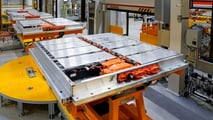
With the spread of lithium-ion batteries, the 'standard' scheme has long involved cells, modules and a battery pack. Opening the casing, in short, would have seen groups of cells grouped into modules (real 'intermediate' elements placed inside the battery) and modules placed side by side, each with its own electrical connections and support systems, placed in turn inside the battery pack proper.
This solution, which is still the most widespread on the market today, has the advantage of having simpler control of battery operation and temperature management. On the other hand, it has numerous 'non-active' elements, i.e. elements that take up space but are unable to store energy.

An open battery with a missing module inside
This type of battery offers a second advantage to manufacturers. It allows the total capacity of the battery to be changed very easily by simply adding or removing modules. This is the case with Volkswagen, to name but one, which on its electric cars in the ID family (those on the MEB platform) offers different battery sizes using the same pack on all of them, but changing the number of modules inside.
The cell-to-pack
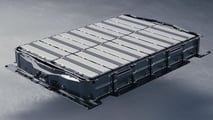
Auto manufacturers and suppliers have, however, developed a more modern architecture. Today, there are module-free batteries on the market, in which the cells are placed directly inside the outer case and appear as a single, uniform, unbroken expanse.
Tesla's cell-to-pack battery made from cylindrical 4680 cells
This way of constructing the battery has led to the creation of batteries with a higher percentage of active material than batteries with modules. Which ultimately means that more energy can be stored in a battery of the same size. However, cell-to-pack batteries (from the cells to the entire battery pack, in short) remain independent elements from the rest of the vehicle and are fixed to the body during the construction phase. In recent times, however, it has been possible to do even better.
When the battery is embedded in the bodyshell
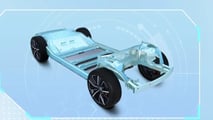
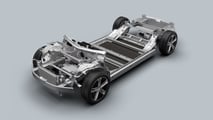
The latest frontier in battery architecture is the so-called cell-to-body. Some manufacturers - BYD comes to mind, whose Seal saloon introduced this solution - produce a body that already includes a cell compartment on the underside. The cells are therefore not mounted on a separate element that is then fixed to the chassis, but directly on the chassis.
The arrangement of the cells inside BYD's Blade battery, which dispenses with modules
This does not increase the percentage of active material inside the battery (the solution in this respect is similar to cell-to-pack), but it does save on components and space at the level of the external housing, resulting in a significant reduction in the weight of the battery, which is integrated into the floor of the car and is in a sense 'fused' with it. In this case, the battery thus performs a real structural function, contributing to the torsional rigidity of the body and acting as a link between the various parts of the chassis.
Batteries Of The Future:
Gallery: How the internal architecture of batteries changes
RECOMMENDED FOR YOU
This Company Built A Simulated Manual For Ferraris Before Ferrari Did
Man Gets 4 New Tires For His Lexus. Then The Shop Calls Him About A Missing Part: 'I Threw That Away'
Ferrari's New 'Manual' Isn't What You Think. Here's How It Works
Woman Buys Chevrolet Tahoe. Then Her Wheel Flies Off. Then The Dealership Ghosts Her—After Agreeing To Take Accountability
Ferrari Finally Brought Back The Manual—Sort Of
The 10 Fastest Cars At Goodwood This Year
Ford Brings Back Veteran Engineers After AI Falls Short: 'It's Only As Good As The People Using It' (Update)