




Volvo EX60 (2026): everything you need to know about the new Swedish electric SUV
Volvo Cars has started production of the new EX60 at the Torslanda plant just outside Gothenburg, with first customer deliveries expected in early summer. It is the first fully electric car designed, developed, and assembled entirely in Sweden, the result of an investment of about 870 million euros to modernize the manufacturing facilities. Market response has already exceeded expectations: orders in Europe have been significantly higher than internal forecasts, prompting the company to increase production volumes as early as 2026.
The Volvo EX60 is the Swedish automaker’s new midsize electric SUV—now part of the Geely group—and represents one of the most anticipated premium-segment launches in recent years. The spiritual successor to the XC60, the best-selling combustion model in Volvo’s history with more than 2.7 million units produced, the EX60 is not simply an electrified version of its predecessor: it is an all-new vehicle, built on a platform developed specifically for battery vehicles called SPA3, designed exclusively for electric vehicles and free of the typical compromises of platforms originally created for combustion engines. Among the most important technical innovations is megacasting, a manufacturing technique that replaces hundreds of separate components with a single large aluminum casting, reducing weight and increasing structural rigidity. The battery is integrated into the floor and becomes a load-bearing part of the body itself, in a cell-to-body configuration.
On the performance front, the numbers speak for themselves. Thanks to its 800-volt architecture, the EX60 supports DC charging power of up to 370 kW: 340 kilometers of range can be recovered in 10 minutes, while charging from 10 to 80% is completed in just 18 minutes. The maximum range declared on the WLTP cycle reaches 810 kilometers, a figure at the top of the class. The lineup is offered with three powertrains: the single-motor P6, the entry-level version with a starting price just over 65,000 euros; the P10 with all-wheel drive and around 500 hp; and the P12, the most powerful version in the lineup. All versions share the same refined dynamic setup, with electronically controlled suspension adjustable in three levels independent of the selected drive mode.
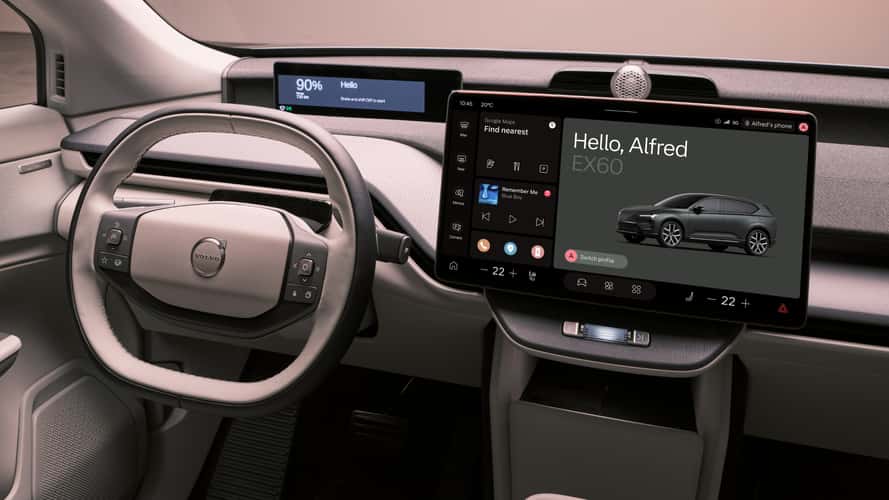
The cabin is minimalist yet well executed: the dashboard moves away from the traditional vertical display to a slightly curved 15-inch horizontal screen, paired with an 11-inch digital instrument cluster positioned high up near the windshield. Materials are high quality—eco-leather, soft-touch plastics, wood trim, and textiles—and interior space is generous, with a flat floor that makes the rear center seat usable as well. Cargo capacity starts at about 600 liters and exceeds 1,600 liters with the seats folded down, plus an additional 50–85 liters in the front compartment under the hood.
The EX60 also comes in a Cross Country variant, with a ride height raised by 20 millimeters, widened wheel arches, stainless-steel underbody protection, and exclusive 21-inch wheels. Its direct rivals are the BMW iX3, electric Mercedes GLC, and Audi Q6 e-tron, but Volvo aims to stand out with longer range, some of the fastest charging times in the segment, and pricing aligned with the XC60 plug-in hybrid—a strategic choice intended to make the switch to electric more accessible without giving up the brand’s premium positioning.