The Volkswagen Group Says The Quiet Part Out Loud: EVs Are Still Less Profitable Than Gas Cars
The company is suffering from its own success: rising EV sales are putting additional pressure on earnings.
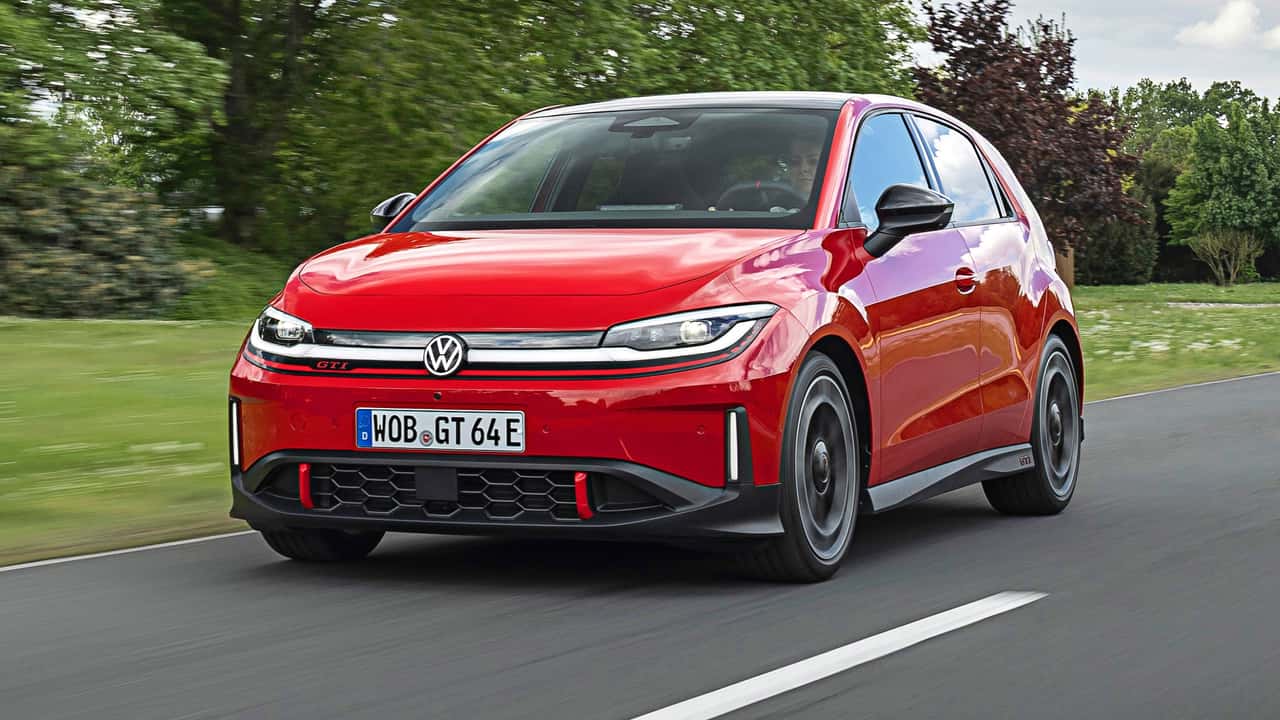

The VW Group is struggling to turn its electric vehicle push into stronger profits, with the German automotive conglomerate openly acknowledging that battery-powered cars still generate lower earnings than their combustion-engine counterparts. The admission comes as the automaker faces mounting pressure from China, U.S. tariffs, and intensifying competition in Europe.
'The market success of our electric vehicles is putting additional pressure on our earnings, because we currently earn less from electric vehicles than from combustion-engine vehicles,' Arno Antlitz, chief financial officer and chief operating officer, said in a statement accompanying the company's nine-month results published today.
The comments highlight a difficult balancing act for the Group. Demand for its electric cars is growing, but selling more EVs isn't necessarily translating into higher profits. The company must invest heavily in its electric lineup while dealing with lower margins, price competition, and a challenging global market.
Volkswagen ID.Every1 concept


The VW Group Is Caught Between A Rock And A Hard Place
The profitability challenge could become even more pronounced with the upcoming entry-level EV. The production version of the ID. Every1 concept is due in 2027 and could revive the ID. Up nameplate, positioning it as the brand's cheapest electric car. While a lower price should make EV ownership more accessible, it could also leave the automaker with razor-thin margins. Building an affordable EV profitably will be another major test for a company already admitting that its more expensive electric models generate less money than combustion-engine vehicles.
But here's the kicker: The VW Group must sell more EVs to lower its fleet-wide CO₂ emissions and avoid potentially hefty fines for missing EU regulatory targets. That puts the automaker between a rock and a hard place: it needs to sell more electric cars to stay compliant, even though those vehicles currently generate lower profits than combustion-engine models.
On the bright side, EVs accounted for 40 percent of the group's order book in Europe through the first nine months of the year, and its Electric Urban Car Family has attracted around 150,000 orders. The company sees the VW ID. Polo, VW ID. Cross, Cupra Raval, and Skoda Epiq as important parts of its push to expand electric mobility in Europe.
While that's good news for its electrification strategy, it creates another profitability headache. Every customer who chooses an EV over a gas-powered model potentially means one fewer sale of a more profitable vehicle, leaving VW with lower margins and factories built for combustion-engine cars that risk becoming underutilized.
2026 Skoda Epiq
2026 Cupra Raval
2026 VW ID. Cross
2026 VW ID. Polo
The VW Group Is Dealing With A Myriad Of Challenges
Other headwinds are compounding the problem. The VW Group points to a “sharply shrinking Chinese” market, increasingly aggressive pricing by Chinese automakers in Europe, and U.S. tariffs. Together, these pressures are making it harder for the group to improve margins across its brands.
'Our operating return on sales after nine months is just 3.8 percent. That means that for every €100 in sales revenue, less than €4 remain as operating profit. That is not enough in the long term. Even in this challenging environment, we want to continue investing in highly competitive vehicles and state-of-the-art technologies for our customers. We can only do this if profitability increases.'
Antlitz says the VW Group has already outlined a broad cost program worth around €31 billion. Its priorities include simplifying the model range, streamlining organizational structures, lowering vehicle costs and overhead expenses, improving factory efficiency, and speeding up technology development.
Cost-Cutting Carnage At The VW Group
As many as 50 percent of the models could eventually be retired, and the Group plans to drastically simplify its parts bin to improve economies of scale further. In addition, the long-running SEAT brand could be phased out, although the Group has yet to make a final decision.
The VW Group is taking drastic measures to get its finances back on track, targeting around 100,000 job cuts worldwide as part of its restructuring plan. It has also warned that it cannot guarantee future production allocations for four German plants (Emden, Zwickau, Hanover, and Neckarsulm) beyond 2031 to 2034, leaving their long-term future uncertain. It's evaluating alternative uses for these sites rather than announcing outright closures, but further factory shutdowns or production cuts remain a possibility as the company seeks to reduce costs and tackle excess capacity.
With profitability under pressure, the VW Group knows the clock is ticking to turn things around: “We cannot afford to lose any time. We must act quickly and decisively.”
More From The VW Group:
RECOMMENDED FOR YOU
The Volkswagen Group Reportedly Wants To Put Chinese Software In European Cars To Cut Costs
Ford’s Strong Profits Show High Gas Prices Aren’t Keeping F-150 Buyers Away
‘Gave You The Midas Touch’: Man Takes Volkswagen To Midas For An Oil Change. He's In Shock When They're Done
Audi Reportedly Exploring A New Off-Road SUV Based On Scout
Volvo, Mercedes And VW Turn To Nvidia For European Self-Driving Push
Toyota Pairs New Platform With Next-Gen Hybrid Built Around All-New Gas Engine
Volkswagen Wanted An Electric Bugatti Tourbillon, But Mate Rimac Pushed For A V16 Engine