Home
Volkswagen
News
The Volkswagen Group Reportedly Wants To Put Chinese Software In European Cars To Cut Costs
Internal calculations suggest the company could save up to €5 billion on its most important model, but VW refuses to comment.
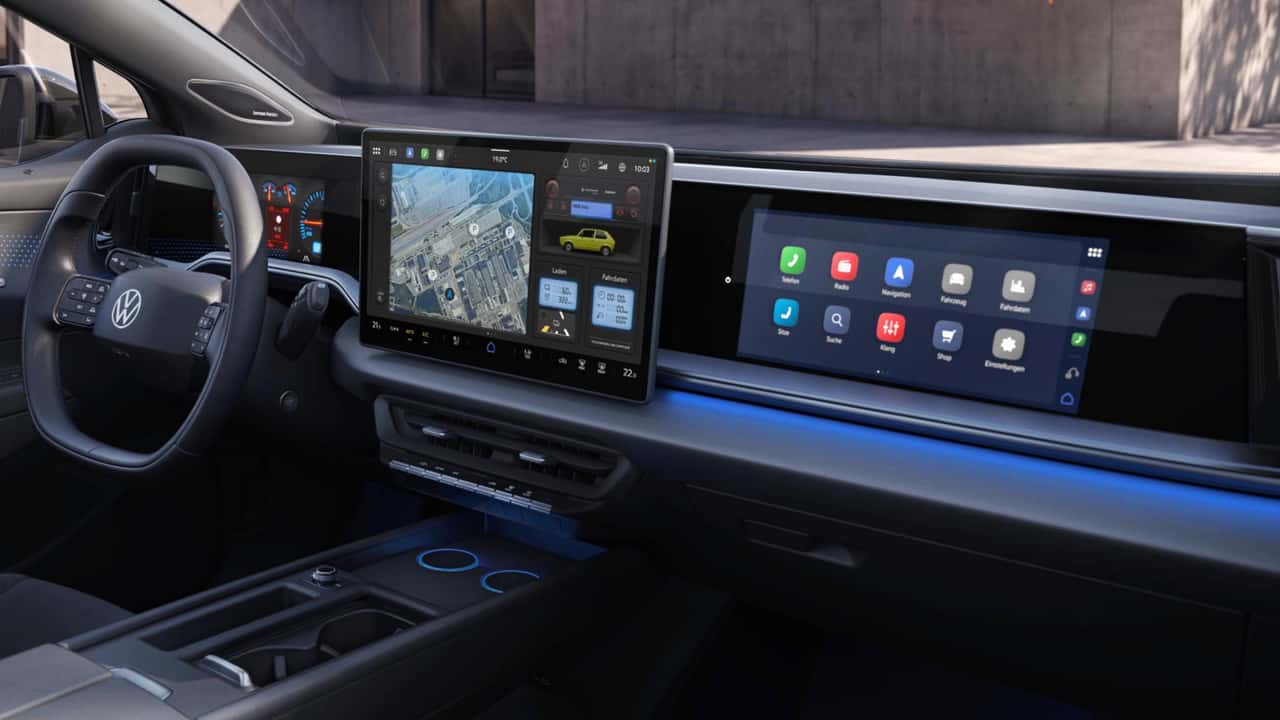
Photo by: Volkswagen
Adrian Padeanu 
By: Adrian Padeanu
Oct 27, at 4:49am ET
Add Motor1.com as a preferred source in Google
- (https://twitter.com/intent/tweet?url=https%3A%2F%2Fwww.motor1.com%2Fnews%2F813348%2Fvw-report-chinese-software-european-cars%2F&text=The%20Volkswagen%20Group%20Reportedly%20Wants%20To%20Put%20Chinese%20Software%20In%20European%20Cars%20To%20Cut%20Costs&via=motor1com)
- copy
Share
Comment
Volkswagen Group could turn to software developed in China for many of its future European cars, potentially saving billions of euros in development costs. According to a report from Manager Magazin, Thomas Schäfer, head of the core brand, wants to expand the use of the group's China-developed electrical and electronic architecture across much of its European lineup, potentially replacing technology planned with American partner Rivian.
The proposal would mark a major shift in the company’s software strategy. Until now, the group has largely planned to use different architectures by market, with technology developed in China intended primarily for local vehicles and software from its global R&D centers earmarked for other regions.
Schäfer now wants to change that approach for many of the group's volume models. If the proposal gets the green light, future electric cars from VW, Skoda, and Cupra could use the China-developed architecture, with potential applications including high-volume products. As for Seat, the Spanish brand's future looks increasingly uncertain, with shutting down as a worst-case scenario under consideration.

2027 VW ID. Tiguan
Photo by: Volkswagen
The VW Group Would Save Billions Of Euros
The financial argument is difficult to ignore. According to Manager Magazin, people familiar with the proposal estimate that VW Group could save between €4 billion and €5 billion ($4.5B and $5.5B) by switching to the Chinese architecture for its most important vehicle segment.
The report also highlights the cost difference between the two development operations. An hour of development work at the Rivian and Volkswagen Group Technologies (RVT) joint venture in Palo Alto reportedly costs roughly four times as much as at the Volkswagen Group China Technology Company (VCTC) in Hefei. The report also says a vehicle like the next-gen electric Tiguan could cost around €8,000 (about $9,000) less to develop if the work were done in China.
Lower development costs could help VW make its future EVs more competitive without sacrificing as much of its already tight margins. That's becoming increasingly important as Chinese automakers expand in Europe with competitively priced electric cars and increasingly sophisticated technology.
VW's Chinese Software Is Already Taking Shape
2026 VW ID. UNYX 08
Photos by: Volkswagen
2026 VW ID. UNYX 08
Photos by: Volkswagen
This isn't simply VW buying a ready-made system from a Chinese supplier. VW's Chinese operations developed the architecture, known as China Electrical Architecture (CEA), building on the company's collaboration with Xpeng, which began in 2023. VW later developed the architecture at VCTC, working alongside Cariad, the group's software division, and its Chinese subsidiary. According to the report, VW also holds the intellectual property rights.
CEA uses a zonal electrical and electronic architecture designed to simplify vehicle electronics and reduce complexity. The technology supports over-the-air updates, allowing remote software improvements rather than requiring owners to visit a dealership for every update.
Schäfer's proposal reportedly covers future electric vehicles larger than the ID. Polo, including the ID. Golf, the successor to the ID. Tiguan, and a potential electric replacement for the Passat. It would make sense for the latter to merge with the ID.7, but nothing is official yet.
On a related cost-cutting note, VW Group is reportedly done developing new platforms for combustion-engine cars. That doesn't mean existing models will be neglected, as updates are still planned, but they will continue to use the same underpinnings. With the EV take rate in Europe at 30.5 percent in September, according to the European Automobile Manufacturers' Association (ACEA), that's hardly surprising.
Volkswagen ID.Every1 concept
17


Source: Volkswagen
What About The VW-Rivian Partnership?
The proposal creates an obvious complication for VW's partnership with Rivian. Announced in mid-2024, the joint venture was established to help the German group overcome longstanding software-development problems and accelerate the rollout of its next-generation electrical architecture.
The partnership has not yet created a production vehicle. VW's entry-level electric car due in 2027, based on the ID. Every1 concept, is expected to be the first to use the technology. By contrast, the Chinese-developed CEA is already being used in production vehicles.
That doesn't necessarily mean VW will abandon Rivian. The report describes a potential reshuffling of responsibilities, with the Chinese architecture serving more volume models while Rivian's software remains relevant to other vehicles and markets. Meanwhile, Audi and Porsche have their own reasons to keep relying on the American partnership.
For now, the proposal remains a strategic plan, not a finalized decision. Schäfer has reportedly presented the idea to the board, and the reaction has been positive. However, the company still needs to resolve questions about costs, development timelines, and regulatory requirements.
What do you think?
View
Comments
If You Can't Beat Them, Join Them?
If the plan goes ahead, future EVs from the group's mainstream brands could rely on technology developed in China to compete more effectively in Europe. It would be an ironic twist for a group that once struggled to keep pace with Chinese software development: the technology it needs to remain competitive at home may ultimately come from its own operations on the other side of the world.
We reached out to VW for comment, but a company spokesperson declined to discuss the report.
More From VW:
Volkswagen Group Warns 'We Have No Time To Lose' As Problems Worsen
VW Group Boss Admits The Real Problem: Its Cars Aren't Profitable Enough
The VW Group Is Gutting Its Lineup. Up To Half Its Models Could Die
Here's How The Volkswagen Group Plans To Simplify Its Parts Bin
Source: Manager Magazin (subscription required)
We want your opinion!
What would you like to see on Motor1.com?
Take our 3 minute survey.
- The Motor1.com Team
Share this Story
- (https://twitter.com/intent/tweet?url=https%3A%2F%2Fwww.motor1.com%2Fnews%2F813348%2Fvw-report-chinese-software-european-cars%2F&text=The%20Volkswagen%20Group%20Reportedly%20Wants%20To%20Put%20Chinese%20Software%20In%20European%20Cars%20To%20Cut%20Costs&via=motor1com)
- copy
GO TO COMMENTS
(
)
Got a tip for us? Email: tips@motor1.com
View all comments ( )
Popular
The 15 Best Movie Cars of All Time, Ranked
Porsche Is Building 15 One-Offs, Including A $15 Million Car
The Volkswagen Group Reportedly Wants To Put Chinese Software In European Cars To Cut Costs
Audi Reveals Which Models It Plans To Build In America
latest articles
- The VW Group Reportedly Wants To Put Chinese Software In European Cars To Cut Costs Oct 27 - Rumors -
- Florida Man Wants To Buy A Toyota 4Runner. Then He Learns He Can Only Afford The Base Model—So He Goes Bold Oct 27 - Trending -
- Chevy Wants The Next Corvette To Stay Affordable, Even With More Power Oct 27 - Pricing -
- Audi Reveals Which Models It Plans To Build In America Oct 27 - Official -
- Tony Stark's Acura NSX Roadster From 'The Avengers' Is For Sale, But There's A Catch Oct 27 - For Sale -
- Why So Many Sports Cars Have Fake Vents Oct 26 - Motor101 -
- Woman Shops For Dodge. Then The Salesman Catches Her Doing A Straw Purchase Oct 26 - Trending -
RECOMMENDED FOR YOU
‘Gave You The Midas Touch’: Man Takes Volkswagen To Midas For An Oil Change. He's In Shock When They're Done
Florida Man Wants To Buy A Toyota 4Runner. Then He Learns He Can Only Afford The Base Model—So He Goes Bold
Volvo, Mercedes And VW Turn To Nvidia For European Self-Driving Push
Chevy Wants The Next Corvette To Stay Affordable, Even With More Power
Volkswagen Wanted An Electric Bugatti Tourbillon, But Mate Rimac Pushed For A V16 Engine
Audi Reveals Which Models It Plans To Build In America
The Strange Reason The Golf GTI Had A Golf Ball Shifter